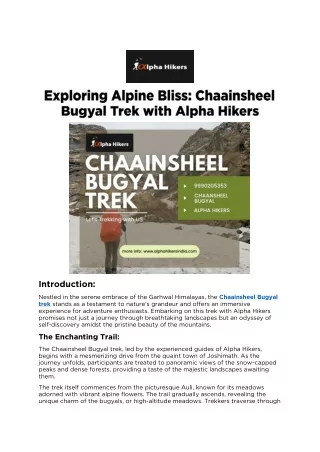
dayara bugyal trek package
Trekking in the Himalayas is one of the most rewarding experiences for adventure enthusiasts.<br>From the rugged trails of Nepal to the serene alpine meadows of India, high-altitude treks offer<br>breathtaking landscapes and a chance to connect with nature.

dayara bugyal trek package
E N D
Presentation Transcript
High-Altitude Challenges: Preparing for Tough Trekking Conditions in India and Nepal Trekking in the Himalayas is one of the most rewarding experiences for adventure enthusiasts. From the rugged trails of Nepal to the serene alpine meadows of India, high-altitude treks offer breathtaking landscapes and a chance to connect with nature. However, these treks also present unique challenges. The higher you go, the tougher the conditions become, and proper preparation is essential to ensure both safety and enjoyment. In this article, we’ll explore the specific challenges of high-altitude trekking in India and Nepal and provide tips on how to prepare for these demanding conditions. The Physical and Mental Demands of High-Altitude Trekking
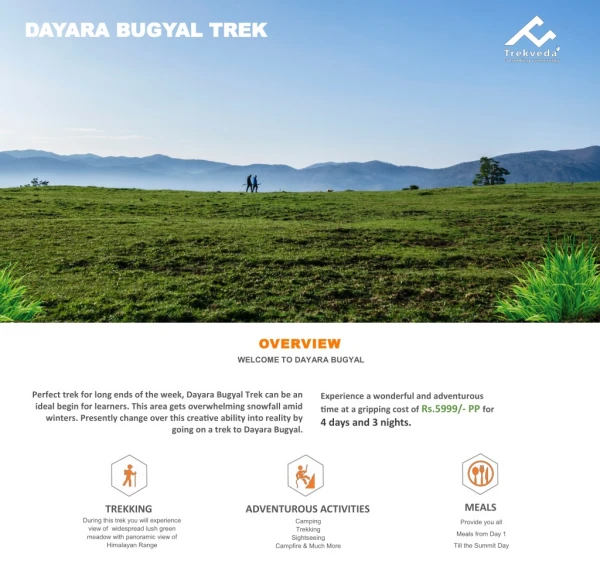
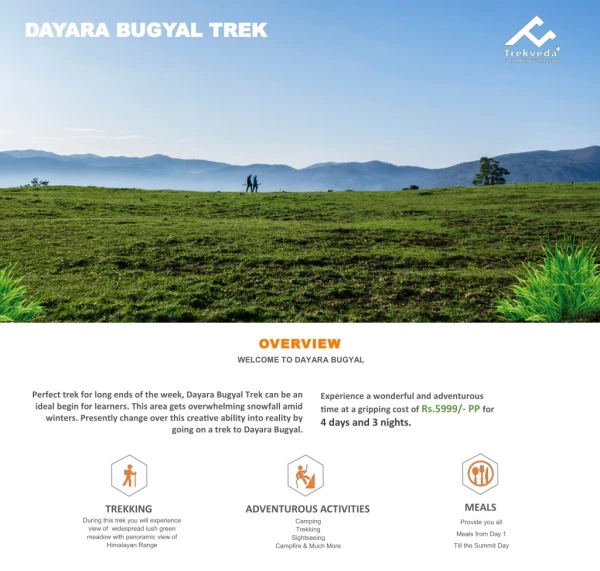
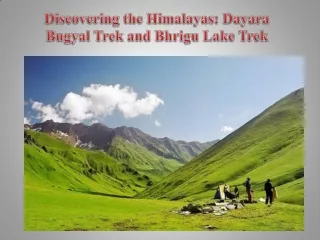
High-altitude trekking pushes your body to its limits due to the lower oxygen levels at higher elevations. As you ascend, the air becomes thinner, and your body has to work harder to perform even simple tasks. This can lead to altitude sickness, fatigue, and a general sense of exhaustion if you're not adequately prepared. One of the best ways to prepare is by gradually acclimatizing to the altitude. Many treks in India and Nepal include rest days at higher elevations, allowing your body to adjust to the reduced oxygen. Building up your cardiovascular strength before the trek is also critical. Running, cycling, and swimming can improve your endurance and help you handle the rigors of the trail. For instance, the Dayara Bugyal trek package, a popular option in Uttarakhand, India, takes trekkers through lush meadows to elevations above 12,000 feet. While considered moderate, the trek still requires a reasonable level of fitness due to the steep ascents and challenging terrain. Preparing for a trek like Dayara Bugyal involves more than just fitness; it requires mental preparation to stay calm and focused in tough conditions, particularly when dealing with altitude-related symptoms. Altitude Sickness: Symptoms and Prevention One of the most significant challenges of high-altitude trekking is altitude sickness, which occurs when your body struggles to adjust to lower oxygen levels. Symptoms of altitude sickness can range from mild headaches and nausea to more severe conditions like High Altitude Pulmonary Edema (HAPE) or High Altitude Cerebral Edema (HACE), both of which can be life-threatening. To avoid altitude sickness, it's essential to pace yourself and stay hydrated. Proper hydration helps your body cope with the dry, cold air at higher altitudes. Also, ensuring your trek includes acclimatization days is critical. Popular treks like the Dayara Bugyal trek package often include rest days that allow trekkers to adjust to the altitude and avoid sudden ascents, which can worsen symptoms. Medications like acetazolamide (Diamox) can help prevent and reduce the symptoms of altitude sickness. However, it's important to consult a doctor before taking any medication. Moreover, always listen to your body. If you start feeling the symptoms of altitude sickness, it’s crucial to rest, descend, or seek medical attention if necessary. Continuing to ascend can exacerbate the problem and lead to serious complications. Weather Conditions: Unpredictable and Extreme In the high-altitude regions of India and Nepal, the weather can be extremely unpredictable. Conditions can change rapidly from bright sunshine to snowstorms or heavy rain within hours. Trekking during the monsoon season in Nepal, for example, can lead to slippery trails and landslides, while trekking in winter in India can present challenges like deep snow and sub-zero temperatures.
It's essential to prepare for all possible weather conditions when embarking on a high-altitude trek. Layered clothing is key, allowing you to adapt to changing temperatures throughout the day. Your base layer should wick moisture away from the skin, the middle layer should provide insulation, and the outer layer should be windproof and waterproof. When trekking to high-altitude destinations like Nepal’s Everest Base Camp or India’s Roopkund Lake, packing essentials like a high-quality sleeping bag, thermal wear, gloves, and woolen socks is vital. You’ll also need trekking poles to help navigate rough and uneven terrain, particularly when dealing with snow or rain. Additionally, investing in sturdy trekking boots with good ankle support is essential. High-altitude treks often involve rocky, uneven terrain, and the last thing you want is a twisted ankle several days into your adventure. Navigating Remote Terrain Many high-altitude treks take you into remote regions far from civilization. Whether you're exploring Nepal's Annapurna Circuit or India’s Zanskar Valley, these treks require self-sufficiency and proper planning. It's essential to be prepared for long stretches without access to amenities like shops, electricity, or mobile phone coverage. Carrying a well-stocked first aid kit is a must. Basic medical supplies, including bandages, antiseptic wipes, blister pads, and pain relievers, can make a huge difference when you're days away from the nearest town. In addition, a portable water filter or water purification tablets are essential, as safe drinking water can be hard to come by in remote areas. Hiring a local guide or joining a guided trek is another way to ensure safety. Experienced guides know the terrain and weather conditions intimately, and they can provide invaluable advice on navigating tricky sections of the trail or dealing with altitude-related issues. Staying Motivated in Tough Conditions Trekking at high altitudes can be physically and mentally exhausting, and there will likely be moments when you feel like giving up. Maintaining a positive mindset is crucial for overcoming tough conditions. Break your journey into smaller, manageable goals rather than focusing on the entire trek. Connecting with fellow trekkers can also provide a significant morale boost. Sharing stories, encouraging one another, and tackling challenges as a group can make the trek more enjoyable and less daunting. Additionally, focusing on the stunning landscapes, from snow-capped peaks to verdant valleys, can help keep your spirits high. After all, the reward of reaching your destination—whether it's the picturesque Dayara Bugyal meadows in India or the awe-inspiring Annapurna Base Camp in Nepal—makes every challenge worth it.
Nutrition and Hydration: Fueling Your Trek At high altitudes, your body burns more calories than usual, making it essential to fuel up on nutritious, energy-rich foods. Carrying high-calorie snacks like nuts, energy bars, and dried fruit can provide a quick energy boost during long trekking days. Meals should be hearty and balanced, with a good mix of carbohydrates, protein, and healthy fats. Staying hydrated is also critical. Dehydration can exacerbate altitude sickness and lead to fatigue. It’s recommended to drink at least 3-4 liters of water daily while trekking at high altitudes. However, because the cold can suppress your thirst, it’s important to remind yourself to drink regularly, even if you don’t feel thirsty. Final Thoughts High-altitude trekking in India and Nepal offers unparalleled beauty and adventure, but it also demands serious preparation. From dealing with altitude sickness to navigating unpredictable weather and remote terrains, there are numerous challenges that trekkers must overcome. By focusing on physical fitness, mental resilience, and proper gear, you can tackle these challenges head-on and enjoy the extraordinary landscapes that await at the roof of the world. Whether you’re exploring the lush meadows of the Dayara Bugyal trek package or conquering the heights of Nepal’s Everest Base Camp, preparation is the key to ensuring a safe and unforgettable adventure.