Download
1 / 6
0 likes | 0 Vues
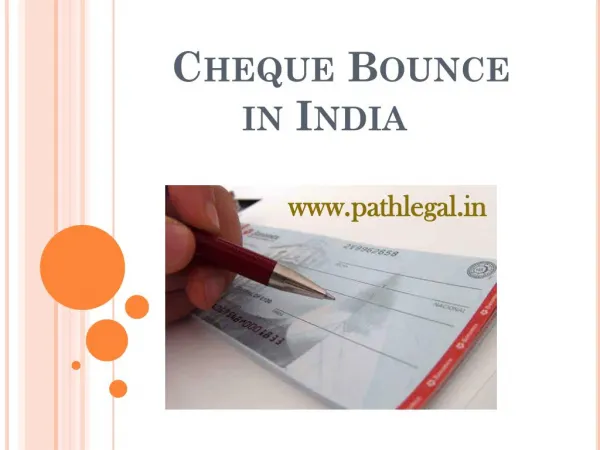
Cheque Bounce Lawyer Delhi<br><br>A cheque is one of the most trusted and commonly used financial instruments in India. However, when a cheque gets dishonouredu2014popularly known as cheque bounceu2014it can immediately disrupt business operations, strain personal relationships, and cause financial loss. If you are facing a cheque bounce issue under Section 138 of the Negotiable Instruments Act, 1881, consulting an experienced cheque bounce lawyer becomes crucial.

E N D
Cheque Bounce Lawyer A cheque is one of the most trusted and commonly used financial instruments in India. However, when a cheque gets dishonoured—popularly known as cheque bounce—it can immediately disrupt business operations, strain personal relationships, and cause financial loss. If you are facing a cheque bounce issue under Section 138 of the Negotiable Instruments Act, 1881, consulting an experienced cheque bounce lawyer becomes crucial. At Arora & Arora Advocates, we provide professional legal support, timely action, and strategic representation to help clients recover their dues efficiently and lawfully. This article will give you a complete understanding of cheque bounce cases, legal remedies, procedures, timelines, and why having an expert cheque bounce lawyer by your side makes all the difference. What Is a Cheque Bounce? A cheque is said to be “bounced” when the bank refuses to honour the payment. Common reasons include: ● Insufficient funds in the drawer’s account ● Signature mismatch ● Overwriting or alterations on the cheque ● Account closed or inactive ● Stop-payment instructions ● Post-dated cheque presented earlier than the date ● Technical errors or torn cheques Even though some reasons are technical, cheque bounce due to insufficient funds or stop payment can lead to criminal liability under Section 138 N.I. Act.
Legal Consequences of Cheque Bounce in India When a cheque bounces for lack of funds or similar reasons, the payee (the person receiving the cheque) has the right to: 1. Send a legal notice within 30 days of receiving the bank memo. 2. Demand payment within 15 days from the date the notice is served. 3. If payment is not made, file a criminal complaint under Section 138. The offender may face: ● Imprisonment up to 2 years ● Monetary penalty up to twice the cheque amount ● Court directions to pay compensation Given these serious consequences, both the payer and payee must handle the matter carefully with the help of a skilled cheque bounce lawyer. Why You Need a Cheque Bounce Lawyer Handling a cheque bounce case is not just about filing a complaint. It requires deep legal knowledge, proper documentation, adherence to timelines, and strategic representation in court. A professional cheque bounce lawyer helps you with: 1. Drafting and Sending the Legal Notice A valid notice is the foundation of a strong case. Any mistake in the notice can lead to dismissal. Skilled lawyers ensure: ● Notice is drafted as per legal requirements ● Sent via appropriate channels (usually registered post or speed post) ● Proof of delivery is documented 2. Filing a Criminal Complaint
If the drawer fails to make payment within 15 days, your lawyer helps file the complaint within the next 30 days. 3. Representation in Court Your lawyer presents your case, submits evidence, and argues to secure compensation or recovery. 4. Negotiation and Settlement Sometimes an amicable settlement saves time, money, and energy. A lawyer ensures your rights and interests are protected. 5. Documentation and Compliance From cheque copies to bank memos, proof of delivery, identity documents, affidavits—your lawyer ensures nothing is missed. At Arora & Arora Advocates, we assist clients across all stages of cheque bounce matters with precision and professionalism. Step-by-Step Process of Filing a Cheque Bounce Case Step 1: Receipt of Cheque Return Memo When the bank returns the cheque, it issues a memo with the reason for dishonour. Step 2: Issuing a Legal Notice A legal notice must be served within 30 days from the date of receiving the memo. Step 3: Waiting for Payment The drawer has 15 days to make the payment after receiving the notice. Step 4: Filing the Complaint If payment is not received, a complaint is filed before the Magistrate within 30 days from the expiry of the notice period. Step 5: Court Proceedings The court may issue summons, warrants, and further directions. Step 6: Final Judgment
The court may order imprisonment, fine, or compensation to the complainant. A cheque bounce lawyer ensures every step follows the correct timeline to maintain the case’s validity. Common Defenses Used in Cheque Bounce Cases A professional lawyer can also help defend you if someone files a cheque bounce case against you. Common defense strategies include: ● Cheque was issued as a security ● No legally enforceable debt existed ● Cheque was stolen or misused ● Signature was forged ● Amount filled without consent ● Payment had already been made ● Notice was not received A lawyer analyses the facts and prepares a strong defense based on evidence and legal precedents. Civil Vs. Criminal Remedies in Cheque Bounce A cheque bounce case can involve both: Criminal Action (Section 138 N.I. Act) ● Punishment ● Penalties ● Compensation Civil Action (Summary Suit / Recovery Suit)
● Claim full cheque amount ● Interest ● Legal costs Many clients choose to pursue both remedies simultaneously to increase the chances of recovering dues faster. How Arora & Arora Advocates Helps You in Cheque Bounce Cases Our firm offers end-to-end services for cheque bounce matters, including: ● Drafting and sending legal notices ● Case filing and documentation support ● Court representation ● Defense in cheque bounce cases ● Negotiations and settlements ● Compliance with timelines ● Tracking case progress ● Strategic approach for faster resolution We emphasize professionalism, transparency, and result-oriented legal representation. Tips to Avoid Cheque Bounce Issues Whether you are issuing or receiving cheques, follow these preventive measures: ● Ensure sufficient balance in your account ● Avoid post-dated or stale cheques
● Never sign blank cheques ● Keep transaction records ● Verify cheque details (date, amount, signature) ● Communicate with the payee before issuing stop-payment instructions These simple steps can help avoid legal complications. Conclusion: Consult a Trusted Cheque Bounce Lawyer Today A cheque bounce is not just a financial setback—it is a legal issue that must be handled with precision and care. Whether you want to file a complaint or defend yourself, timely action is crucial. A knowledgeable cheque bounce lawyer ensures your rights are protected and your case is handled efficiently according to Indian law.