Data Analytics Using Python_Credo Systemz
Data Analytics Using Python_Credo Systemz https://www.credosystemz.com/python-for-data-analytics/

Data Analytics Using Python_Credo Systemz
E N D
Presentation Transcript
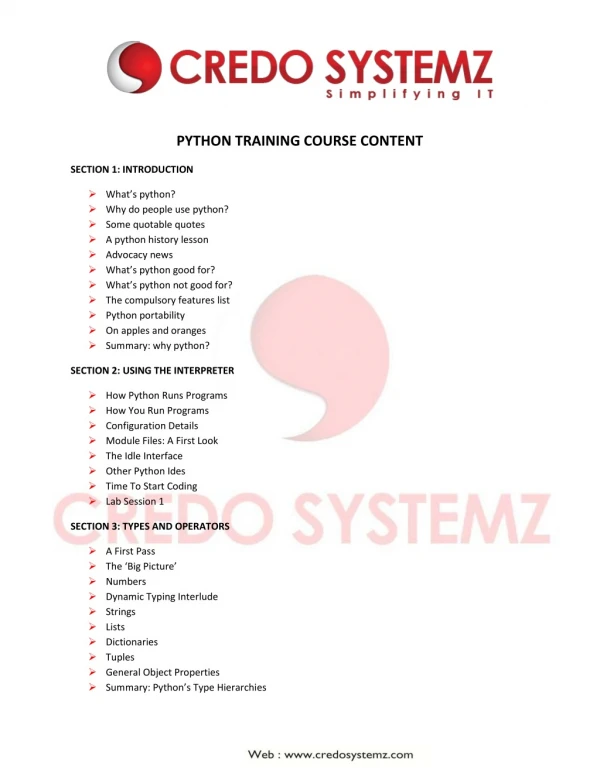
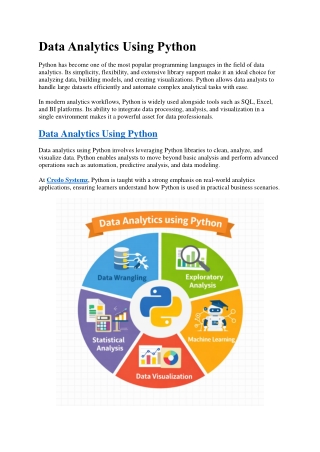
Data Analytics Using Python Python has become one of the most popular programming languages in the field of data analytics. Its simplicity, flexibility, and extensive library support make it an ideal choice for analyzing data, building models, and creating visualizations. Python allows data analysts to handle large datasets efficiently and automate complex analytical tasks with ease. In modern analytics workflows, Python is widely used alongside tools such as SQL, Excel, and BI platforms. Its ability to integrate data processing, analysis, and visualization in a single environment makes it a powerful asset for data professionals. Data Analytics Using Python Data analytics using Python involves leveraging Python libraries to clean, analyze, and visualize data. Python enables analysts to move beyond basic analysis and perform advanced operations such as automation, predictive analysis, and data modeling. At Credo Systemz, Python is taught with a strong emphasis on real-world analytics applications, ensuring learners understand how Python is used in practical business scenarios.
Key advantages of using Python for data analytics include: Simple and readable syntax Extensive library ecosystem Ability to handle large datasets Automation of repetitive tasks Strong community support These advantages make Python suitable for both beginners and experienced analysts. Popular Python Libraries for Data Analytics Python’s strength lies in its powerful libraries that support different stages of the analytics process. Commonly used Python libraries include: NumPy for numerical computations Pandas for data manipulation and analysis Matplotlib for basic data visualization Seaborn for advanced visualizations These libraries help analysts perform complex operations efficiently and accurately. Data Cleaning and Preparation Using Python Python is widely used for data cleaning and preparation due to its flexibility and automation capabilities. Analysts can handle missing values, duplicates, and inconsistencies programmatically. Data cleaning tasks performed using Python: Removing duplicate records Handling missing or null values Standardizing data formats Detecting and treating outliers Transforming raw data into usable formats Automating these tasks saves time and reduces manual errors. What is Data Analytics? Data analytics is the process of examining data to uncover insights, trends, and patterns that support decision-making. Python enhances this process by enabling deeper analysis and automation that go beyond manual tools. Using Python allows analysts to explore data more efficiently and derive insights at scale.
Data Analysis and Exploration Using Python Python enables exploratory data analysis (EDA), which helps analysts understand the structure and behavior of datasets before applying advanced techniques. EDA using Python helps analysts to: Understand data distribution Identify correlations between variables Detect anomalies and outliers Validate assumptions Exploratory analysis is a critical step in generating meaningful insights. Data Visualization Using Python Python supports powerful visualization capabilities that help communicate insights clearly. Visualization techniques using Python include: Line and bar charts for trends Histograms for distribution analysis Scatter plots for relationship analysis Heatmaps for correlation insights These visualizations help transform analytical results into actionable insights. Automation and Efficiency in Data Analytics One of Python’s key strengths is automation. Analysts can write scripts to automate repetitive tasks such as data extraction, cleaning, and reporting. Benefits of automation using Python: Saves time and effort Reduces human error Improves consistency Enhances productivity Automation allows analysts to focus more on insights rather than manual processes. Role of Python in Advanced Analytics Python is widely used in advanced analytics and predictive modeling. It supports techniques such as regression analysis, classification, and basic machine learning. Python supports advanced analytics by:
Enabling predictive analysis Supporting statistical modeling Handling large and complex datasets Integrating with machine learning frameworks This makes Python a future-ready skill for analytics professionals. SQL for Data Analysis Python often works alongside SQL in analytics projects. SQL is used to extract data from databases, while Python is used for deeper analysis and visualization. Combining Python with SQL creates a powerful analytics workflow that enhances data- driven decision-making. Learning Python for Data Analytics Learning Python becomes effective when learners apply concepts to real-world datasets and scenarios. Hands-on practice helps build confidence and analytical thinking. At Credo Systemz, learners gain practical Python exposure through structured exercises, real-time examples, and analytics projects. Programs such as data analytics training in Chennai focus on building Python skills aligned with current industry needs. Conclusion Python has become an essential tool in data analytics due to its simplicity, versatility, and powerful libraries. From data cleaning and analysis to visualization and automation, Python supports every stage of the analytics process. By mastering Python, analysts can improve efficiency, scalability, and insight generation, making it a valuable skill for a successful data analytics career.