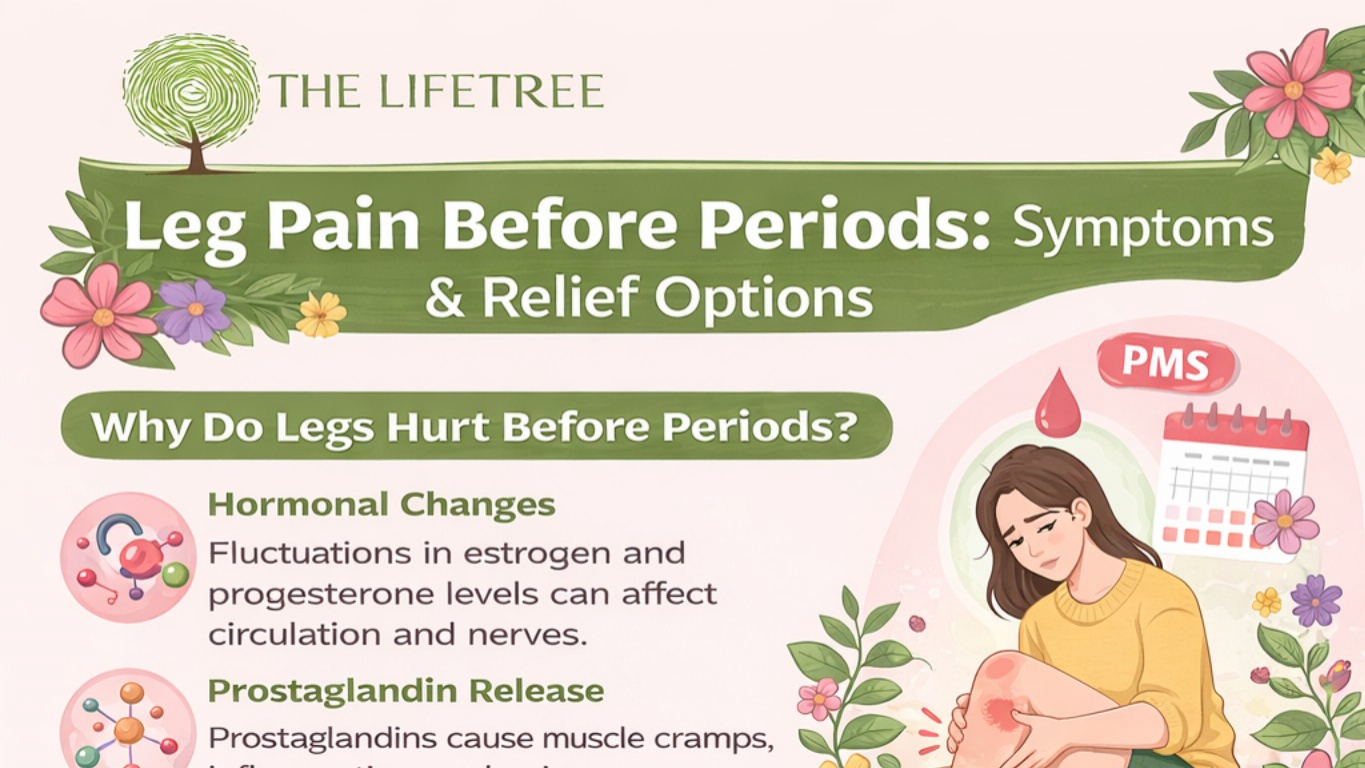
Leg Pain Before Periods: Causes, Symptoms & Effective Relief Options For many people who menstruate, leg pain before periods can be an unexpected and uncomfortable symptom. What starts as mild aching in the thighs or calves sometimes feels like muscle heaviness or cramping — and it can even interfere with daily activities. While this isn’t always serious, understanding why it happens and how to manage it can make that pre-period week much more comfortable. Why Does Leg Pain Happen Before Your Period? Leg pain tied to your cycle isn’t “just in your head.” Here are the main reasons it occurs: 1. Hormonal Fluctuations Before your period starts, levels of hormones such as progesterone and prostaglandins change. Prostaglandins — hormone-like substances involved in uterine contractions — can also affect nerves and muscles, spreading discomfort to the legs. 2. Referred Pain from the Pelvis Nerves that supply the uterus, lower back, and legs are closely connected. When cramps begin in the pelvic area, the sensation can be felt in the thighs and calves — a phenomenon called referred pain. 3. Circulation Changes and Muscle Tension Hormonal shifts can influence blood flow and muscle tone, leading to feelings of heaviness or aching in the legs. Fluid retention around your cycle can also contribute to that “tight” sensation. 4. Underlying Conditions In some cases, conditions like endometriosis can irritate nerves (like the sciatic or obturator nerves), causing leg pain that becomes worse before or during periods. Common Symptoms People Report Pre-period leg pain may feel like: Dull, aching pain in the thighs or lower legs Muscle heaviness or fatigue Period-timed cramps that start a few days before bleeding Pain that radiates from the pelvis down the leg Sensations intensified by standing, walking, or hormonal changes If the pain is severe, comes with swelling, numbness, or doesn’t go away with typical relief strategies, it’s worth getting evaluated by a healthcare provider. Effective Ways to Find Relief Whether your leg pain is mild or moderate, there are several approaches that many people find helpful: 👉 Lifestyle Tips 🔹 Warm Compress or Heating Pad Applying heat to your legs can relax tense muscles and improve blood flow — just like it does for cramps in the abdomen. 🔹 Gentle Exercise & Stretching Light movement like walking, yoga, or stretching can improve circulation and release muscle tension. 🔹 Stay Hydrated Good hydration supports muscle function and can reduce cramping. 👉 Dietary Changes That Help ✔ Reduce salt and caffeine — these can contribute to bloating and fluid retention. ✔ Eat magnesium-rich foods such as bananas, nuts, seeds, and leafy greens — magnesium may help relax muscles and reduce pain. ✔ Include herbal teas or anti-inflammatory foods such as ginger and turmeric. 👉 Pain Relief Options Over-the-counter pain relievers, like NSAIDs (e.g., ibuprofen), can be effective, especially if taken early. Physiotherapy or targeted stretches may help if nerve involvement (like sciatica) is suspected. Consult a healthcare professional if pain is severe or linked with conditions like endometriosis — sometimes hormonal therapies or medical management are recommended. When to See a Doctor It’s usually okay to manage mild leg pain at home, but you should speak to a healthcare provider if: ✔ Pain is intense, sharp, or worsening ✔ There’s swelling, redness, or numbness ✔ It interferes with daily life ✔ You suspect an underlying condition such as endometriosis Final Thoughts Leg pain before periods is more common than you might think, and it’s usually linked to hormonal changes and how your body signals pain. With simple lifestyle tweaks, diet adjustments, and appropriate self-care, most people find noticeable relief. But if the discomfort is interfering with life, professional guidance can make a big difference. If you’d like, I can also create a shorter version of thi