Understanding the Emerald Ash Borer: Facts, Impact, and Control Measures
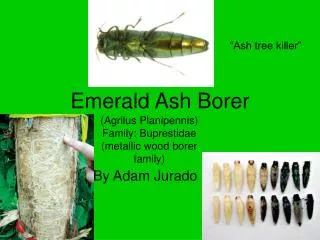
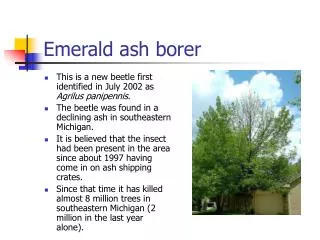
The Emerald Ash Borer (EAB), native to Asia, was first detected in the U.S. in 2002 and affects all major North American ash species. Core infestations are concentrated in Southeast Michigan and the pest is now present in 14 states and parts of southern Canada. EAB larvae damage trees by burrowing into the bark and consuming vital tissue, leading to tree girdling. Ash wood, known for its toughness and elasticity, is valuable in furniture production, with an estimated 8 billion ash trees worth around $280 billion. Control efforts include quarantines, wasp releases, and insecticide applications.


Understanding the Emerald Ash Borer: Facts, Impact, and Control Measures
E N D
Presentation Transcript
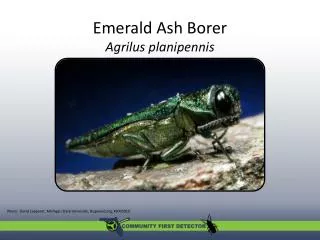
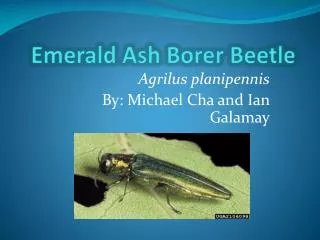
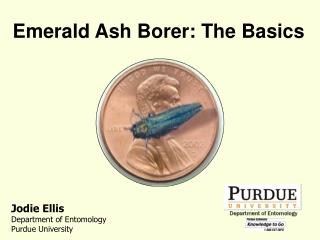
Emerald Ash Borer Agrilusplanipennis
Some Facts • Originally from Asia • First US detection was in 2002 • Effects all major North American Ash Species • Core infestation is concentrated in SE Michigan
Spread • Have a presence in 14 states and parts of southern Canada • Ash is a popular type of firewood • Thought to be spread by transfer of firewood
Mechanism of attack • Adults lay eggs in crevices of bark • Larvae burrow into bark • Larvae consume cambium and phloem, tree is girdled.
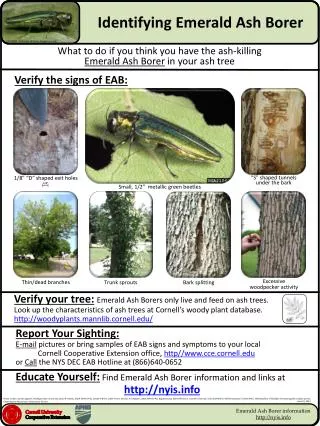
Detection • Canopy dieback • Discolored leaves • Bark Splitting • D-shaped exit wounds
Effects on us • Ash wood is tough, strong, and elastic. • Used in manufacture of furniture • 8 billion ash trees valued at $280 billion
Control and Eradication • Quarantine zones • Release of wasps • Various insecticides