Download
1 / 18
180 likes | 390 Vues
This overview explores the pivotal phases in The Hague's history, focusing on significant treaties and the establishment of the International Court of Justice (ICJ). It begins with the Jay Treaty in 1794, transitioning through the Alabama Claims Arbitration in 1872, leading to the 1899 Peace Conference initiated by Czar Nicholas II. The legacy of World War II's influence on global law culminates in the formation of the ICJ in 1946 at the Peace Palace. The article highlights the roles of judges, case types, and how disputes are resolved, emphasizing the ongoing importance of international legal cooperation.

E N D
History • 1st Phase: • Jay Treaty 1794 • U.S. and Great Britain differences • Later European and some American Countries (States)
History • 2nd Phase: • Alabama Claims Arbitration 1872 • U.S. and United Kingdom • More Countries take part
History • 3rdPhase: • The Hague Peace Conference 1899 • Czar Nicholas (Russia) initiates • Asian States, Mexico added • Arbitration only (Hear differences and decide)
History • 4thPhase: • World War II • 1942, U.S. And United Kingdom • Post War International Court • 1943, China, U.S., USSR, Great Britain • Court open to all peace loving States
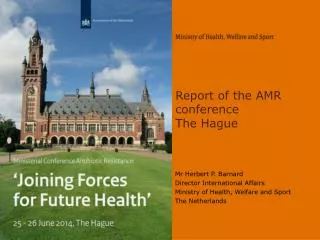
The Court • International Court of Justice formed, 1946 • Location: Peace Palace The Hague, Netherlands • Justice Organ of the United Nations • Disputes between States heard • What could some of these differences deal with?
The Court • 15 Judges, 9 year terms • Chosen by: • UN General Assembly • UN Security Council
The Court • 5 Judges chosen every 3 years • Continuous body, always has 10 seated • Judges may be re-elected • Majority vote in both UN bodies • Held in NY city, at the UN
The Court • President and Vice President of the Court elected • 3 year terms • Any State can nominate judges • No State can have two Judges at once
Dismissing Judges • All 14 agree to dismiss one • Judge can be dismissed • Never happened • How does the U.S. dismiss Justices? • House: Impeach • Senate: Tries the case
The Current Judges • President: Peter Tomka (Slovakia) • Vice President: Bernardo Sepulveda Amor (Mexico) • Lower Judges States: • Japan, France, New Zealand, Morocco • Russian Federation, Brazil, Somalia • United Kingdom of Great Britain and Northern Ireland • China, U.S., Italy, Uganda, Italy • Registrar: Philippe Couvreur (Belgium)
How the Court works • Two types of cases heard • Contentious cases • Advisory cases
Contentious Cases • Only UN countries bring cases • Registrar: Keeps Agents updated on the case • Agents: Represent the States involved • Makes arguments before the court
Contentious Cases • Judges deliberate on camera • Issue Judgments in public • Any Judge may write an opinion
Advisory cases • Who may ask for an advisory Opinion: • UN, UN Security Council • Three other UN Chambers • 16 UN agencies • Deal with legal questions
Advisory cases • Court may get information from States involved • No private groups can give information • No binding effect • Take the advice or not