Classic Models In the Writing Center
70 likes | 209 Vues
This article explores the innovative strategies employed in writing education, emphasizing the role of imitation in developing writing skills. By drawing parallels to cognitive science, particularly the function of mirror neurons, it highlights how students can replicate effective writing styles through observation. The text discusses various teaching methods, including the use of templates, non-directive and directive approaches, and the significance of crafting strong topic sentences and theses. Ultimately, it serves as a guide for educators and aspiring writers to enhance their craft through structured learning techniques.


Classic Models In the Writing Center
E N D
Presentation Transcript
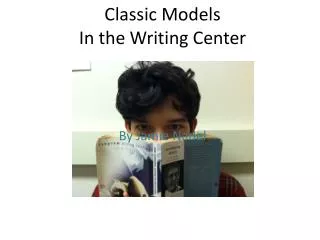
Classic Models In the Writing Center By Jamie Nadel
While still a young man, John Courtney Boot had, as his publisher proclaimed, ‘achieved an ensured and enviable position in contemporary letters.’ –Scoop by Evelyn Waugh, p.1 While essentially unintimidating, the British aristocrats had, as their contemporaries noted, forged a meaningful and memorable victory in the document of the Magna Carta.
Imitation Cognition and Writing“Learning by Watching” • Mirror Neurons allow us to replicate the actions of others • Professors use templates to teach style in writing classes • They Say, I Say by Gerald Graff and Cathy Birkenstein
The Reason and The Focus • Non-directive + Directive • Theses and Topic Sentences • Declarative and Organizing What do you mean? Model Topic Sentence
The Method • STEP 1: Identify the Problem • STEP 2: Choose a Model* • STEP 3: Imitation Attempts • STEP 4: Discussion
The Discussion • Understanding the tricks • Comparison • Ask Questions
The Nuance Community of Writers