The Power of Sensory Imagery in Writing
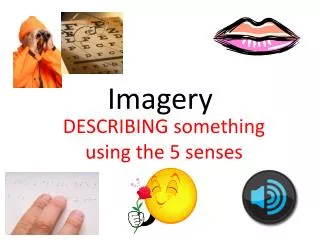
Sensory detail imagery enhances writing by engaging readers' senses. This technique offers vivid descriptions that evoke sight, sound, smell, taste, and touch, transporting readers into the scene. For example, the sun's beams shimmer on ocean waves, roses exude a haunting fragrance, eerie sounds echo outside a cabin, cheesecake's flavor delights the palate, and an icy breeze sends shivers down the spine. By incorporating these sensory elements, writers create immersive experiences that resonate deeply with their audience.

The Power of Sensory Imagery in Writing
E N D
Presentation Transcript
Imagery Using Sensory Detail
Imagery • describes something that can be seen, heard, touched, tasted, or smelled (the five senses).
Sight • The sun’s beams shimmered and danced on the ocean’s gentle waves.
Smell • The fragrant roses drifted through the room like elusive ghosts.
Sound • Although they could not see outside the cabin, they could hear the eerie tapping, tapping, tapping, of his knife upon their door.
Taste • The cheesecake’s exquisite flavor traveled from his tongue to his spine.
Touch • The icy breeze gently brushed against the hair on her neck, and goose-bumps shortly followed.