Download
1 / 6
80 likes | 548 Vues
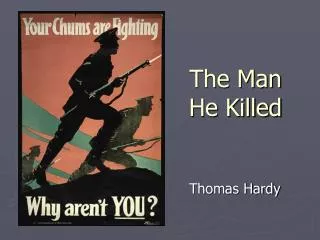
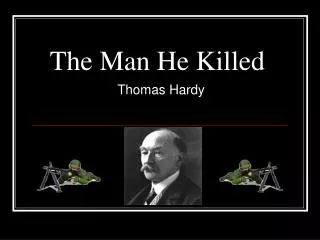
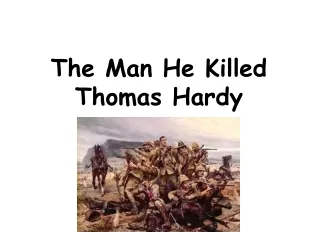
In Thomas Hardy's poem "The Man He Killed," the narrator reflects on the absurdity of war through a personal account of killing an enemy soldier. The use of first-person narration and informal language emphasizes a sense of camaraderie that could have existed under different circumstances, suggesting that war turns friends into foes, erasing shared humanity. As he grapples with the reasons for his actions and the futility of conflict, Hardy delivers a poignant commentary on the tragic nature of war, where personal connections are lost amidst the chaos of battle.

E N D
Neither the soldier nor the reader ever find out the name of this man. The Man He Killed ‘Had he and I but met By some old ancient inn, We should have sat us down to wet Right many a nipperkin! Speech marks indicate someone telling a story. Use of first person reinforces it is a personal account. Use of first person plural implies friendship, spending time drinking together. A small measure of spirits. Colloquial language also implies informal banter and friendship.
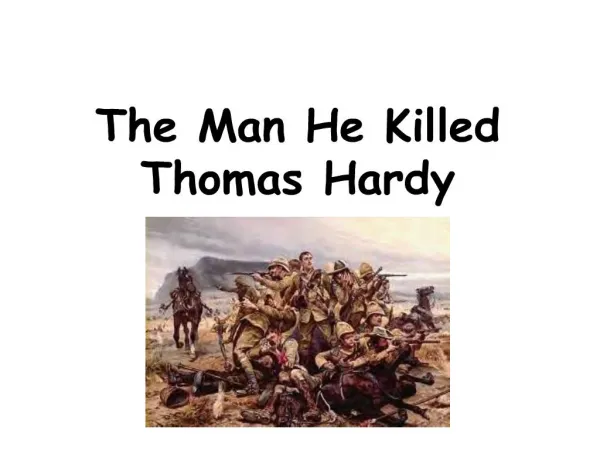
Soldier’s viewpoint now, organised and ready for war... ‘But ranged as infantry And staring face to face, I shot at him as he at me, And killed him in his place. Contrast with image from previous image of looking at each other across a table in a pub. Both trying to kill each other – no choice.
‘I shot him dead because – Because he was my foe, Just so: my foe of course he was; That’s clear enough; although Rhythm breaks and dash signifies hesitation. Cannot really explain reasons why. Repetition suggests he is trying to persuade himself that this was a good enough reason. Sounds like his superior’s language rather than his own? Enjambment emphasises his confusion.
‘He thought he’d ‘list, perhaps, Off-hand like – just as I – Was out of work – had sold his traps – No other reason why. Enlist = to join the army. Colloquial language, traps = belongings. Dashes imply thoughts or memories quickly returning to him.
‘Yes quaint and curious war is! You shoot a fellow down You’d treat if met where any bar is, Or help to half a crown.’ Quaint = pleasing in an odd or old fashioned way. Curious = rather strange Both words totally inadequate expression of the horror of war. Friend, fellow man = we are all human and part of the same world if not the same country Buy a drink. Roughly £5 today.