Empowering Young Women: The Value Girls Program in Kenya
The Value Girls Program, implemented in Nyanza and Western Province, Kenya, aims to enhance the socio-economic welfare of young women aged 14-24 from 2008-2012. Funded by the Nike Foundation and USAID, it focuses on strengthening participation in high-growth value chains, improving access to credit, and fostering economic development through mentorship and financial literacy. Notable results include increased incomes for 71% of participants, 75% having savings accounts, and 1121 loans disbursed with a 90% repayment rate, empowering young women as economic agents in their communities.

Empowering Young Women: The Value Girls Program in Kenya
E N D
Presentation Transcript
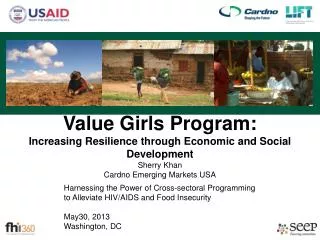
Value Girls Program: Increasing Resilience through Economic and Social DevelopmentSherry KhanCardno Emerging Markets USA
Background • Target population: Young women 14-24 years • Location: Nyanza and Western Province, Kenya • Objective: Improve the socio-economic welfare of these young women • Approach: Strengthen participation in high growth value chains • Period of performance: 2008-2012 • Funders: Nike Foundation and USAID
Conceptual Approach Market System Her Household Value Girl
Program Model KBDS Local Facilitating Partners Program Management Savings Mobilization Economic Improve socio-economic development of girls and young women Core Strategies Core Components Access to Credit Social Production and Market Linkages Support Activities Men and Boys Technical Service Providers Business Development Financial Literacy Mentorship
Results • Young women in enterprises: 2202 • Men & boys reached: 1643 • % of girls with increased incomes: 71% • % of girls with savings accounts: 75% • Loans disbursed: 1121 valued ~$145,000 • Loan repayment rate: 90% • Increased confidence & decision making
Lessons Learned • Who does it? Who pays? • A phased approach helps manage risk • “Learning by doing” is attractive to young women • Despite low incomes they save regularly • Young women often have the best solutions to their problems – they’re resourceful • Be demand, not supply, driven • Don’t shield young women from market risks • Involve men and boys early on
Challenges • Starting a business takes time • Operating in a culture of handouts • Value Girls’ understanding of project objectives low – older women caught on more quickly • Constant changes in market • Previous bad experience with financial institutions
Assets • Social support • Business education • Own enterprises • Savings • Financial literacy and access to finance • Increased respect at home & in community • Higher self esteem They are now economic agents of the household and community.
Thank you! Sherry.Khan@Cardno.com