Download

1 / 9
0 likes | 0 Vues
Steel Scaffolding Finland ensures strong, reliable support for construction and renovation projects across diverse climates. Known for durability, safety, and easy assembly, steel scaffolding is widely used in Finnish infrastructure development. It helps builders access elevated areas efficiently while complying with strict European safety standards, contributing to fast, safe project completion.

E N D
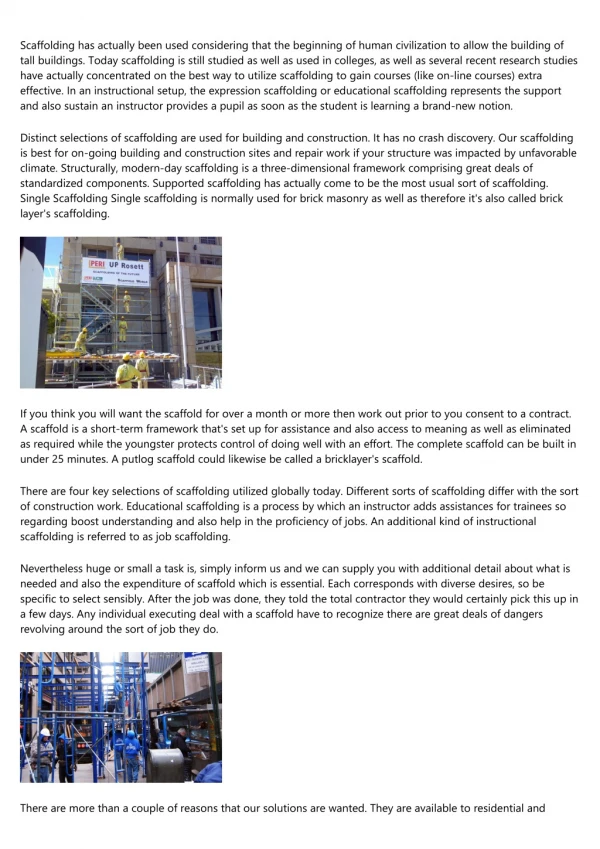
Steel Scaffolding Finland Steel Scaffolding Finland stands as a dependable backbone for countless construction and maintenance tasks across cities, industrial zones, harbors, and rural development sites. With its robust framework, reliable load-bearing strength, and capability to handle harsh climates, steel scaffolding remains a preferred choice for engineers, contractors, and project supervisors across the region. The Finnish environment, marked by cold seasons, fluctuating temperatures, and demanding work cycles, calls for a system that remains steady, adaptable, and structurally sound. Steel scaffolding aligns with these needs, supporting teams through both simple and complex work scenarios. Construction and infrastructure work across Finland often involves tall facades, renovation of aging structures, maintenance of industrial plants, and installation tasks requiring elevated access. Steel scaffolding meets these demands by delivering long-term durability, exceptional rigidity, and a structure capable of standing strong under heavy loads. This makes it essential not only for large commercial projects but also for specialized operations involving bridges, shipyards, and manufacturing facilities. Why Steel Scaffolding Finland Remains a Core Construction Asset?
The consistent performance of steel-based structures has placed them at the forefront of Finnish construction practices. Whether used in tight urban workspaces or open landscapes, steel scaffolding offers reliability that teams appreciate for both safety and efficiency. Strength remains the primary factor, but the benefits extend far beyond that. Even under demanding weather patterns—snowfall, wind, and temperature drops—steel maintains its form and load capacity without distortion. Steel Scaffolding Finland also provides a sense of stability that workers feel immediately upon stepping onto the platforms. This confidence increases productivity and reduces hesitation when performing tasks that require precision. From building insulation to façade repair, window installation, roofing support, and industrial pipework, the versatility of steel scaffolding fits a wide range of setups. Contractors value its modular design, which allows various configurations without compromising safety. Whether the project calls for a wide working platform, narrow access towers, suspended structures, or multi-story frame systems, steel components assemble with consistency and accuracy. Structural Strength Tailored for Finnish Work Conditions The geographical and climatic profile of Finland is unlike many other parts of Europe. Construction projects frequently confront frost, icy surfaces, moisture-rich surroundings, and rapid seasonal transitions. Steel scaffolding excels in coping with these attributes due to its high tolerance for temperature shifts and exceptional hardness. Unlike materials that may warp or weaken under stress, steel maintains its load- bearing integrity even during extended exposure to cold. This resilience is crucial for long-term renovation or construction phases where the scaffolding must remain erected for months. Stability during unpredictable weather allows teams to maintain progress without repeatedly adjusting or reinforcing the structure. Even when sites experience wind pressure near coastal zones, steel frameworks provide secure anchoring options, preventing swaying and movement. This is particularly valuable for maintenance crews working on tall buildings or industrial chimneys where safety margins must be strict. Practical Configurations Used Across Finland The flexibility of Steel Scaffolding Finland makes it suitable for countless project types. Different setups support workers based on height requirements, load needs, spatial restrictions, and surface conditions. Some widely used configurations include: 1. Frame Scaffolding A straightforward solution for façade work, building extensions, insulation efforts, and painting jobs. Finnish contractors appreciate its fast assembly and predictable geometry.
2. Modular Scaffolding Ideal for buildings with irregular designs, towers, curved surfaces, or industrial layouts. The modular approach gives engineers the freedom to customize exact angles and levels. 3. Suspended Scaffolding Used for bridge repairs, harbor-side constructions, and tasks where ground access is limited or unsafe. Its steel suspension components assure steady performance under high tensions. 4. Mobile Steel Scaffolding Though heavier than aluminium, mobile steel towers deliver enhanced strength for areas requiring repeated relocation while maintaining robustness. 5. Cantilever Extensions Valued for situations where direct ground support is impossible. These structures allow teams to reach outward from the main frame safely. The Finnish Focus on Safety Excellence One defining characteristic of Steel Scaffolding Finland is its deep-rooted alignment with strict safety expectations. Finnish construction sectors follow rigorous standards for both the materials and the assembly process. Workers are trained not only in installation but also in maintaining the stability of platforms throughout the project timeline. Steel scaffolding offers predictable responses to loads, reducing the likelihood of sudden shifts or unexpected behavior. Every component—from base plates to ledgers—is designed with high precision, ensuring tight fits that prevent wobbling. Guardrails, toe boards, secure locking mechanisms, and evenly distributed load capacities protect team members during height-focused operations. Snow accumulation is a common challenge. Steel systems resist sinking, bending, or cracking when cleared properly, allowing daily work to continue with confidence. Anti-slip surfaces placed on platforms help workers maintain traction in icy conditions, preventing falls during winter operation cycles. How Steel Scaffolding Finland Benefits Large-Scale Projects? Massive industrial plants, logistics centers, energy facilities, and public infrastructure developments rely heavily on steel scaffolding due to its ability to withstand immense weight and continuous use. Projects often require extensive pipe fitting, structural reinforcement, surface blasting, painting, or HVAC installation—tasks that rely on stable and precise working platforms. Durability also plays a vital role. Steel components last significantly longer than many alternative materials when maintained properly. They withstand repeated assembly
cycles and heavy-duty use across multiple sites. This long-term reliability is essential for firms managing numerous projects throughout the year. Moreover, steel scaffolding can support mechanical tools, building materials, electrical equipment, and specialized lifting devices without compromising structural integrity. This allows teams to perform high-efficiency operations, even when handling dense materials such as stone, metal sheets, or concrete components. Impact of Finnish Climate on Scaffold Design and Use Finland’s environment shapes the way scaffolding is erected, anchored, and monitored. Steel Scaffolding Finland is adjusted to accommodate variations in load distribution caused by snow or ice buildup. Extra bracing, reinforced joints, and wider base sections are often employed during colder seasons. Additionally, corrosion resistance is an important focus. Even though steel is inherently strong, protective coatings help extend its lifespan in moist conditions. Seaside regions—particularly ports and shipyards—benefit from galvanized steel elements that prevent degradation from salt exposure. Thermal contraction and expansion also influence planning. Steel undergoes slight dimensional changes with temperature fluctuations, but its predictable behavior allows engineers to plan accordingly, avoiding structural surprises. Steel Scaffolding Finland in Renovation Work Renovation has become a prominent part of Finnish construction activity. Older buildings, wooden structures, and masonry-built homes often require careful reinforcement during restoration. Steel scaffolding provides the stability needed during delicate phases of repair. It enhances safety during: Window replacement Brick repointing Exterior cladding Roof maintenance Balcony reconstruction Heritage building conservation Concrete façade repair These tasks demand stable platforms that workers trust completely. Steel scaffolding delivers confidence through sturdy joints and rigid frames that eliminate unnecessary movement. Applications in Industrial Sectors
Industrial environments across Finland rely heavily on steel scaffolding due to the precision and heavy-duty nature of their work cycles. Factories, refineries, power plants, and shipyards integrate scaffolding into their routine operations. Key industrial uses include: Boiler maintenance Pipeline installation Surface treatment and coating Welding at elevated locations Machinery overhaul Chemical plant refurbishment Ship hull repair and painting Industrial teams appreciate scaffolding structures that can handle vibration, high temperatures, and heavy tools. Steel meets these needs with ease, supporting demanding workloads without compromising stability. Ergonomics and Worker Comfort Although steel scaffolding prioritizes strength, it also contributes to worker comfort. Well-designed systems incorporate wide platforms, even surfaces, and ergonomic access options such as stairs or ladders. These make movement safer and reduce fatigue during long workdays. Finland’s long daylight hours in certain seasons allow extended working periods, and comfortable scaffolding setups help maintain energy levels. Conversely, during darker seasons, scaffolding equipped with integrated lighting attachments enhances visibility and safety. Maintenance and Longevity One of the major strengths of Steel Scaffolding Finland is its long service life when maintained correctly. Regular inspections ensure that joints, welds, and couplers remain in excellent condition. Basic maintenance practices include: Cleaning components after exposure to snow, mud, or saltwater Checking for rust spots and applying protective treatments Inspecting locking mechanisms for wear Replacing any bent or damaged elements Confirming platform boards remain secure and aligned Steel’s inherent durability means that, once restored, the components return to full working capability, minimizing replacement costs.
Steel Scaffolding in Harsh Work Environments Certain Finnish work environments test scaffolding systems more intensely— shipbuilding, chemical plants, mining zones, and energy facilities among them. Steel scaffolding’s toughness, fire resistance, and stability make it the suitable choice under such conditions. Shipyard environments demand structures capable of supporting maintenance workers around curved hulls and high elevations. Steel scaffolding provides flexible adaptation through modular options, ensuring safe access to every surface. Energy facilities involve high heat, heavy machinery, and confined spaces. Steel’s resistance to structural deformation under heat makes it appropriate for turbine maintenance, boiler work, and large-scale mechanical upgrades. Challenges Faced During Scaffolding Operations in Finland Working with elevated structures always carries challenges, especially in climates with extreme cold. Crews face issues such as: Slippery surfaces caused by frost and snow Reduced mobility in low temperatures Equipment stiffness Restricted daylight during certain months Strong winds that require extra bracing Hard ground surfaces complicating anchoring during winter Steel scaffolding helps mitigate many of these challenges due to its rigid structure and secure connection systems. Additional safety gear, ice-clearing routines, and proper planning further support risk mitigation. Environmental Considerations Finland places strong emphasis on sustainable construction practices. Steel scaffolding supports environmental responsibility because it can be reused repeatedly. Unlike some temporary materials that degrade quickly, steel components withstand years of operation with minimal waste generation. Recycling also plays an important role. Steel retains value even in scrap form, allowing components that reach end-of-life stages to be recycled into new materials. This contributes to a lower environmental footprint across construction sectors. How Steel Scaffolding Finland Supports Long-Term Infrastructure Growth? Steady development in residential, commercial, industrial, and public infrastructure has increased the demand for reliable access systems. Steel scaffolding assists in the construction of bridges, transit stations, utility facilities, tunnels, schools, hospitals, and road expansions.
Finland prioritizes structural integrity and architectural longevity. Scaffolding forms the temporary framework behind much of this progress, enabling teams to complete high-quality work efficiently. Key Advantages of Steel Scaffolding Finland Below is a concise view of the strengths that set steel scaffolding apart: High Load Capacity: Ideal for heavy equipment, dense materials, and tool-heavy tasks. Outstanding Durability: Stands up to repeated use and challenging weather conditions. Adaptable Configurations: Suits residential, commercial, industrial, and infrastructure projects. Stable and Secure: Provides confidence to workers performing precision tasks at height. Long Lifespan: Can serve multiple projects with minimal maintenance requirements. Resistance to Temperature Shifts: Maintains performance across Finland’s seasonal extremes. Enhanced Safety Features: Strong joints, reliable bracing, and firm anchoring reduce risks. Evolving Construction Demands and the Role of Steel Scaffolding As Finnish building techniques evolve—supported by digital planning tools, advanced load calculations, and refined project timelines—steel scaffolding supports this evolution by offering predictable structural behavior. Project leaders rely on scaffolding systems built with accuracy to match 3D models and detailed construction plans. Modern construction also focuses heavily on worker safety and workflow efficiency. Steel scaffolding aligns perfectly with these goals, offering smooth pathways, stable platforms, and secure connections. Comparison with Other Scaffolding Materials Although aluminium scaffolding is common in many lighter-duty applications, Steel Scaffolding Finland holds a distinct position when it comes to heavy work. The weight and density of steel provide unmatched load capacity and rigidity, particularly essential for: Masonry restoration Concrete repair Industrial shutdowns
Large façade reconstruction Bridge work Heavy material handling Its resistance to bending or deforming under pressure makes it a trustworthy solution where absolute stability is required. Wooden scaffolding, used historically in various regions, does not meet the long- term durability or load demands required in modern Finnish construction and is rarely selected as a primary option. Unique Situations Where Steel Scaffolding Finland Excels Certain scenarios showcase steel’s strengths particularly well: Work on High-Rise Structures Steel scaffolding provides superior wind resistance and allows the creation of extended-height towers with secure anchoring. Cold Weather Concrete Work The rigidity of steel supports the heavy loads of concrete components without shifting. Industrial Shutdown Operations During maintenance shutdowns, where deadlines are tight, steel scaffolding provides dependable performance. Historic Structure Preservation Steel frames offer sensitive yet strong support for fragile building surfaces. Training and Skill in Scaffold Assembly Steel scaffolding requires trained hands for proper setup. Workers must understand load distribution, anchoring techniques, and safety protocols. Finnish construction culture places strong emphasis on precision, and steel scaffolding aligns well with this approach. Experienced assemblers ensure: Correct leveling Balanced weight distribution Secure locking of joints Proper placement of safety rails Stable base preparation
Such discipline ensures flawless performance once workers are on the platforms. Future Outlook for Steel Scaffolding Finland Finland’s commitment to sustainable growth, infrastructure modernization, and urban development ensures long-term demand for dependable scaffolding. The strength and reliability of steel make it a stable choice even as new construction methods and machinery continue to reshape the industry. As renewable energy facilities expand, as cities modernize aging buildings, and as industries upgrade equipment, steel scaffolding will continue supporting safe and efficient work at elevated points. Its ability to integrate with new technologies—such as digital load calculations, smart tagging systems, and improved assembly tools—makes it a future-ready choice for construction teams across the country. Conclusion Steel Scaffolding Finland remains a symbol of strength, durability, and reliability across countless construction and industrial sites. With its stable frames, high load capacity, weather resistance, and capability to handle complex configurations, it continues to support workers who rely on secure elevated access. Whether used for façade renovation, bridge maintenance, industrial shutdowns, shipyard operations, or tall building construction, steel scaffolding delivers the stability and precision needed to complete challenging tasks across varied environments. Its long lifespan, adaptability, and alignment with safety-focused practices have made it a fundamental part of Finnish construction culture. As projects grow more ambitious and technical, steel scaffolding will remain a trusted partner in creating safe working conditions and successful outcomes.