Comparing Odoo with monolithic ERPs
0 likes | 2 Vues
This PDF explains how Odoou2019s Composable ERP replaces rigid ERP systems with a flexible, modular approach. It shows how modular apps, quick configuration, and seamless integrations help businesses scale, adapt, and optimize operations with less complexity. Ideal for leaders exploring modern ERP strategies.


Comparing Odoo with monolithic ERPs
E N D
Presentation Transcript
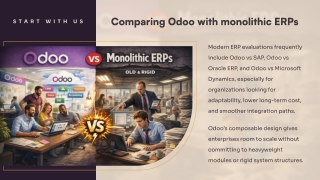
Comparing Odoo with monolithic ERPs Modern ERP evaluations frequently include Odoo vs SAP, Odoo vs Oracle ERP, and Odoo vs Microsoft Dynamics, especially for organizations looking for adaptability, lower long-term cost, and smoother integration paths. Odoo’s composable design gives enterprises room to scale without committing to heavyweight modules or rigid system structures.
SAP vs. Odoo – Flexibility gap Enterprises comparing Odoo vs SAP often find that SAP’s rigid module dependencies slow change cycles. Odoo’s modular ERP architecture supports rapid adaptation, allowing teams to activate, extend, or modify features without lengthy redevelopment. For organizations that need pace, Odoo offers a practical alternative that aligns with evolving operational workflows. Odoo benefits Faster configuration cycles Lightweight module onboarding Minimal dependency chains Lower change management effort Faster prototype-to-production flow
Oracle vs. Odoo – Cost & customization delta In the Odoo vs Oracle ERP comparison, Oracle typically carries higher long-term overhead due to specialized resources and complex governance layers. Odoo delivers meaningful ERP cost efficiency by reducing licensing fees and cutting customization timelines. This makes Odoo more attractive for enterprises wanting predictable budgets without limiting growth or operational expansion. Odoo benefits Lower implementation cost Faster change cycles Affordable license structure Reduced vendor dependency Leaner maintenance footprint
Microsoft Dynamics vs. Odoo – Integration Flexibility When evaluating Odoo vs Microsoft Dynamics, businesses often find Dynamics requires more configuration effort for cross-system connectivity. Odoo’s architecture pairs naturally with modern APIs and strong ERP integration services, making it easier to connect CRM, eCommerce, finance, and custom systems. This integration readiness speeds multi-platform operations and lowers total integration overhead. Odoo benefits Easier API extension Faster connector development Lower integration cost Simplified multi-system orchestration Better compatibility with external tools
Original Source:- https://www.agileinfoways.com/blogs/odoo- composable-erp-vs-monolithic-systems For More Blogs:- https://www.agileinfoways.com/blogs Our Contact Details :- +1 470-772-5053 inquiry@agileinfoways.com Florida (Fort Lauderdale) 4905 NW 105th Dr, Coral Springs, FL 33076