Transcendentalism
90 likes | 98 Vues
Explore the transcendentalist movement in America between 1830-1850, led by Ralph Waldo Emerson and Henry David Thoreau. Learn about its influence on literature and art, its rejection of societal norms, and its emphasis on spiritual transcendence in nature.


Transcendentalism
E N D
Presentation Transcript
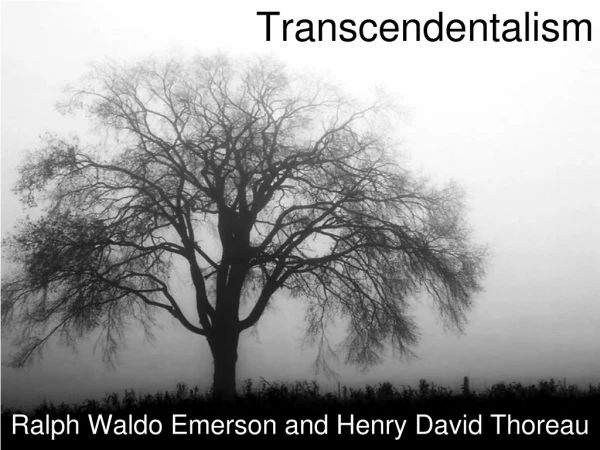
Transcendentalism Ralph Waldo Emerson and Henry David Thoreau
American between 1830 - 1850 A Relatively New Nation • A time of self-definition • Effort to distinguish itself from Europe Economic and Social Changes • Industrialization and urbanization • Factories with poor working conditions • A new breed of materialism
Transcendentalism • An American philosophical movement that influenced literature (Emily Dickinson, Walt Whitman) and art (The Hudson River School) • A protest against American society at that time • An offshoot of European Romanticism (Goethe, Coleridge, Wordsworth)
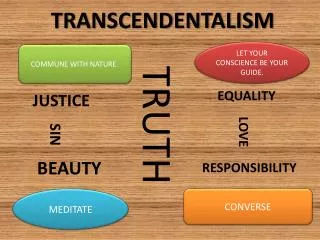
Tenets ofTranscendentalism • Man is inherently good • Society corrupts man’s goodness • Conformity is death • Rely on your intuition • The Oversoul connects God, man, and nature • Find spiritual transcendence in nature
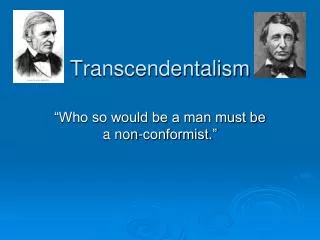
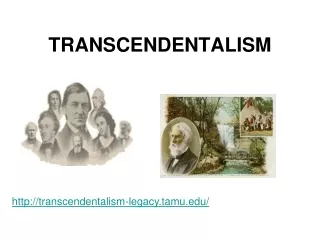
Ralph Waldo Emerson (1803-1882) • An essayist, poet, and speaker • Schoolmaster, ordained minister, abolitionist • Writes “Nature” and “Self-Reliance” • Deeply spiritual but leaves the church • Friend of Henry David Thoreau and Nathaniel Hawthorne
Henry David Thoreau (1817-1862) • Emerson, the movement’s founding philosopher • Thoreau, its most devoted practitioner • Lives for two years in the woods on Emerson’s land • Poet, essayist, naturalist, abolitionist • Writes Walden and “Civil Disobedience”
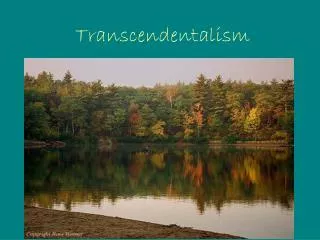
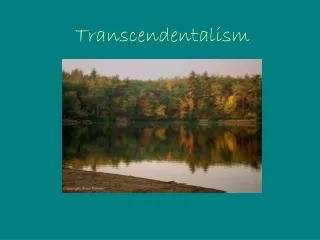
Quickwrite: • Could you live here alone for two years? Why/Why not? • What would you miss? What would you enjoy?
Homework: • Find a song with lyrics that express Transcendentalist beliefs. • Write down the artist, title, and the lyrics that exhibit Transcendentalist thought.