The Role of City-States in Ancient Greek Society: Acropolis, Polis, and Citizenship
140 likes | 282 Vues
Ancient Greek city-states, or 'poleis', were independent communities defined by shared identity and governance. Citizens enjoyed rights and responsibilities, fostering loyalty but leading to distrust among city-states. The Acropolis, a fortress and religious site, symbolized defense and community unity. Greeks expanded to new territories for resources and trade, establishing colonies that spread their culture. The rise of tyranny weakened aristocratic power, paving the way for democracy, where the populace engaged in governance. Understanding these structures is key to grasping ancient Greek civilization.


The Role of City-States in Ancient Greek Society: Acropolis, Polis, and Citizenship
E N D
Presentation Transcript
Do Now: 9/18 Describe your community. How does your community provide for the needs of their citizens?
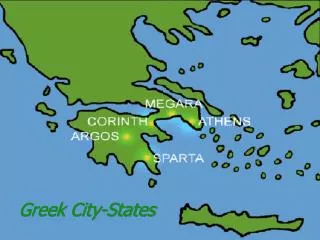
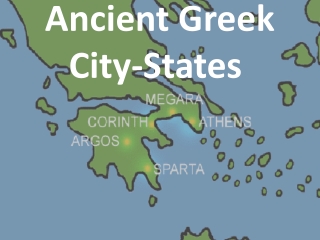
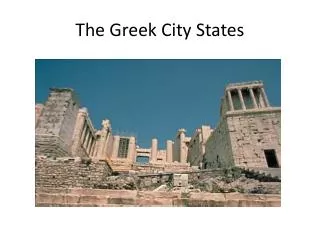
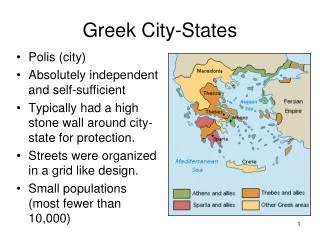
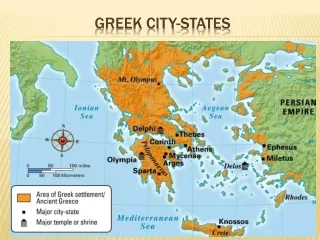
POLIS *Independent City-State *Intense loyalty of citizens *Develop autonomous traditions -Own form of government -Artistic styles -Founding myths Acropolis– fortified high ground Agora– marketplace, built below the Acropolis where people could assemble. ACROPOLIS
“We must regard every citizen as belonging to the state”- Aristotle POLIS -A community of people that shared a common identity and common goals. -Citizens had rights, but also had responsibilities. -Loyalty to city-state had a negative side. - city-states distrusted one another - divided Greece -Eventually led to its decline
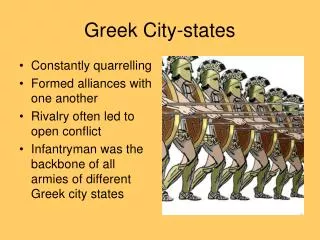
Military • Hoplite-heavily armed foot soldier • Round shield • Short sword • Thrusting spear (9ft.) • Phalanx: rectangular formation, soldiers created a wall of shields to protect each other.
The ACROPOLIS For purposes of defense, Athenians naturally chose elevated ground to build. The Acropolis was used for not only defensive purposes such as a look out, but also for religious purposes.
Greek Expansion • Between 750-550 BC, Greeks leave their homelands to settle in new territories. • Desire for good farmland • Overpopulation • Growth of trade • Each new Greek colony became a new polis
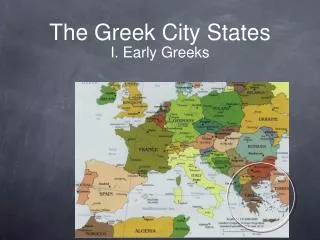
Greek Colonies • Colonies established along coastlines (Med. Sea) • Southern Italy • Southern France • Eastern Spain • Northern Africa • Black Sea • City of Byzantium-became Constantinople-current day Istanbul, Turkey • Colonization = increased trade + industry + influence • Greeks spread culture and political ideas throughout the Mediterranean and got economic advantages
Tyranny • Expansion of trade and industry created new group of wealthy individuals in city-states • Wanted political power but could not gain it in current city states because of the rulers already in place • Seized power by force from the wealthy aristocrats. • Help the poor • Built new marketplaces, temples and walls • Fell out of favor by 6th century B.C.E • Greeks believed in rule by law, which tyranny went against • Rule of tyrants ended rule of aristocrats in city-states • End of tyranny allowed many new people to participate in gov’t, developed new types of govt. • Democracy: government by the people • Some city-states remained an oligarchy: rule by the few
Exit Ticket Explain the difference between an Acropolisand Polis.