Exploring Perspectives on Conflict in Non-Fiction: Essential Skills for KS4
310 likes | 440 Vues
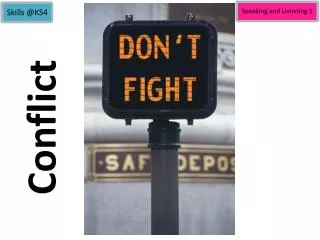
This session focuses on reading and critically responding to various non-fiction articles and reports on conflict. Students will explore perspectives on topics ranging from parenting strategies to historical controversies, assessing the purpose and viewpoints expressed. Key discussions will include how different reports articulate their messages and the role of argumentation in communication. By engaging with diverse viewpoints, students will enhance their critical thinking and analytical skills, preparing them for thoughtful discussions on significant issues.


Exploring Perspectives on Conflict in Non-Fiction: Essential Skills for KS4
E N D
Presentation Transcript
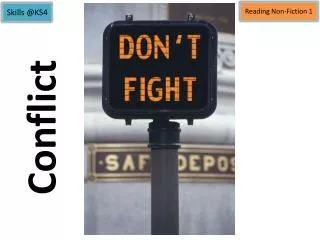
Reading Non-Fiction 1 Skills @KS4 Conflict
In this session you will: Read and respond critically to an article/point of view and discuss the points made links
Today’s article Parenting – how to cope with teens
Essential Questions • Whose point of view is the article from? How do you know? • What is the purpose of the article? How do you know? • Do you agree with the points made in the article? • Which points do you wish your parents knew? • Which points do you wish your teachers knew?
Reading Non-Fiction 2 Skills @KS4 Conflict
In this session you will: Read and respond critically to a report/point of view and discuss the points made links
Today’s report Arguing could be good for you
Essential Questions • What is the purpose of the report? How do you know? Does it do anything else? • How many experts have been used in the writing of this report? Why is this important? • How does the report differ from the article on teens and parents from last week? • Are you told ‘not to argue’ by parents/teachers? • Are there different types of arguing? • Should we teach ‘argument skills’?
Reading Non-Fiction 3 Skills @KS4 Conflict
You can call me Al • Under African Skies
In this session you will: Read and respond critically to an article/point of view and discuss the points made links
Today’s article Paul Simon has no regrets over ‘Graceland’ controversy
Paul Simon • Part of the duo Simon and Garfunkel • In the 1980 he went to South Africa to collaborate with African artists on his new album Graceland • It was a massive hit – but he was widely criticised for breaking a UN boycott of Apartheid. Many Western artists were actively involved in supporting the boycott. • Paul Simon says he went there to make music – not to support Apartheid
Essential Questions • What is the purpose of the article? • How does this article differ from the previous articles and reports? • Do you think that Paul Simon was right to do what he did? • Can you think of similar situation today with a celebrity/musician who might be misunderstood/criticised?
Reading Non-Fiction 4 Skills @KS4 Conflict
In this session you will: Read and respond critically to a front page report/point of view and discuss the points made links
Today’s report 1977: Steve Biko dies in custody
Essential Questions • What is the purpose of the report? • How does this report differ from the previous reports? • What evidence is there in this report that this event was critical for the South African movement, and of immense international significance?
Reading Non-Fiction 5 Skills @KS4 Conflict
In this session you will: Read and respond critically to an article/point of view and discuss the points made links
Today’s article The Brothers Who Made a Stand
Essential Questions • What is the purpose of the article? • What have you learnt from this article about the way that conscientious objectors were treated? • If, as in some South American countries and Middle Eastern countries, conscription was mandatory (you had to sign up) what might your objections be that you could lead to your becoming a conscientious objector?
Reading Non-Fiction 6 Skills @KS4 Conflict
In this session you will: Read and respond critically to an article/point of view and discuss the points made links
Today’s article The Battle of
Essential Questions • What is the purpose of the article? • The article uses far more emotive language than some of the others that we have looked at. Pick some of these words out. • Were they right to riot? • Are riots the best way to make a point – even if the point is a very good one? • Thinking back to the WW1 brothers: why didn’t conscientious objectors riot to get their point across?