Examining Sediment Distribution and Lithostratigraphy: Insights from January 31, 2001
This document explores sediment distribution, focusing on wind-blown ash layers and various sediment types such as clay, terrigenous, and carbonate ooze. It highlights identification tools in lithology, including color, grain size, composition, and texture, as well as the role of spectrophotometers. Additionally, it discusses reef distribution and sediment types on reef surfaces, such as silts, skeletal remains, mud, and clays. The text also covers definitions of stratigraphy and lithostratigraphy, emphasizing the organization and correlation of rock formations. Insights are provided by guest expert Dr. Peter Blum.


Examining Sediment Distribution and Lithostratigraphy: Insights from January 31, 2001
E N D
Presentation Transcript
Topic:Sediments Broadcast 3: January 31, 2001 Mrs. Joan Linsley
Wind Blown Ash Layer Sediment Types Clay Terrigenous Carbonate Ooze
Identification Tools/Lithology: • Color • Grain Size • Composition • Texture Spectro- photometer
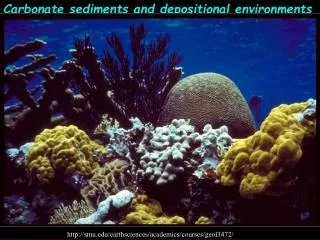
Reef Sediment Types Lives on Surface Silts Skeletal Remains Mud Clays
Definitions • Stratigraphy: The science of studying rock layers, or strata. It is concerned with all characters and attributes of rocks as strata, the order in which they were formed, and the matching, or correlation, of similar strata between different locations. • Lithostratigraphy: The part of stratigraphy that organizes rocks into units (formations), and correlates rocks between different locations, based on their lithology.
Guest • Dr. Peter Blum Staff Scientist