Advanced Access Control Mechanism for Web Documents in the Milano Model
The Milano Model offers a sophisticated access control mechanism tailored for web documents, enhancing traditional DBMS and web-based approaches. It features more expressive filtering policies and refined user management, allowing the flexible specification of filtering rules based on user identities and profiles. Institutions can easily manage user filtering policies, streamlining the task for schools and firms. The model supports multi-strategy filtering, utilizing both NKRL EUFORBIA labels and PICS content labels, while facilitating granular positive and negative policies alongside effective exception management.

Advanced Access Control Mechanism for Web Documents in the Milano Model
E N D
Presentation Transcript
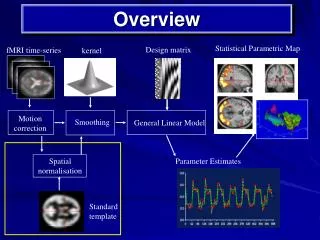
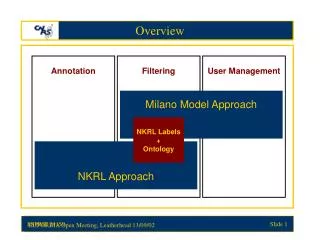
Overview Annotation Filtering User Management Milano Model Approach NKRL Labels +Ontology NKRL Approach
The Milano Model • The Milano Model is a flexible access control mechanism for Web documents • It extends the traditional approaches developed for both DBMS and Web environments • Two main extensions: • More expressive filtering policies • More refined user management
User Management Main features: • Flexible specification of filtering policies based not only on user identities but also on their profile • Users are assigned a set of credentials based on their characteristics • This approach simplifies the work of institutional users (e.g. schools and firms), who have to specify and manage filtering policies for a great number of users according to their profile
Filtering Policies Main features: • Multistrategy (content-independent/content-dependent) filtering of Web documents • Content-based filtering almost independent from the annotation approach • Support for both: • NKRL EUFORBIA labels • PICS content labels (in particular, ICRA/RSACi content labels) • Positive and negative policies at different granularity levels • Exception management and policy propagation