Embracing the Beautiful Chaos of Teaching World Languages
10 likes | 113 Vues
Teaching world languages is a multifaceted journey that challenges both students and teachers to broaden their perspectives and appreciate diverse cultures. As Lori Szymanski reminds us, we should not shoulder the entire burden of student outcomes. Nancy Gates emphasizes the importance of processing time in learning. Crystal Cannon advocates for empowering students to lead their own learning experiences, often leading to impressive results. The pivotal question posed by George Couros remains: Are our schools preparing students for the future or clinging to outdated methods?


Embracing the Beautiful Chaos of Teaching World Languages
E N D
Presentation Transcript
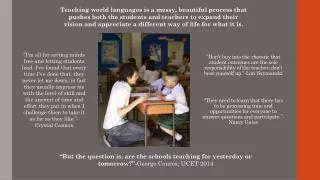
Teaching world languages is a messy, beautiful process that pushes both the students and teachers to expand their vision and appreciate a different way of life for what it is. “Don't buy into the rhetoric that student outcomes are the sole responsibility of the teacher; don't beat yourself up.”-Lori Szymanski“They need to learn that there has to be processing time and opportunities for everyone to answer questions and participate.”-Nancy Gates “I'm all for setting minds free and letting students lead. I've found that every time I've done that, they never let me down, in fact they usually impress me with the level of skill and the amount of time and effort they put in when I challenge them to take it as far as they like.”-Crystal Cannon “But the question is, are the schools teaching for yesterday or tomorrow?”-George Couros, UCET 2014