Download
1 / 12
120 likes | 240 Vues
JavaServer Pages (JSP) is a dynamic web technology that converts script files into executable Java modules, enabling the creation of interactive content. Introduced in 1999, it allows developers to integrate dynamic elements into web pages seamlessly. Complementary technologies like JavaServer Faces (JSF) enhance user interactions, while Tomcat serves as a web server for executing JSP code. With the incorporation of Expression Language (EL) and JSTL, JSP has evolved significantly, aligning with modern web development practices through its latest updates.

E N D
JavaServer Pages (JSP) is a technology that helps you create such dynamically generated pages by converting script files into executable Java modules • JavaServer Faces (JSF) is a package that facilitates interactivity with the page viewers • Tomcat is an application that can execute your code and act as a web server for your dynamic pages.
What is JSP? • JSP is a technology that lets you add dynamic content to web pages • JSP was introduced in 1999. • Additional tags – JSP Standard Tab Library (JSTL) • JSTL is a collection of custom tags libraries that encapsulates the functionality of many JSP standard applications. • JSP Expression Language (EL) came along with JSTL • In 2003, with the introduction of JSP 2.0, EL was incorporated into the JSP specification. • In 2004, JavaServer Faces (JSF), focused on building user interfaces (UIs) and used JSP by default as the underlying scripting language.
May 2006, JavaServer Pages 2.1 effectively aligned JSP and JSF technologies. • Latest Java version 7 as of July 2011, version 8 in mid 2013(?) • Tomcat (7.0) supports Servlets 3.1 (The servlet is a Java programming language class used to extend the capabilities of a server.)
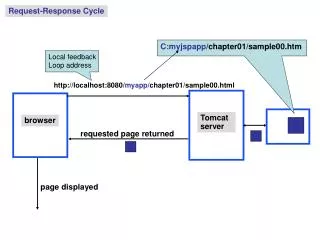
Hello World • Access http://localhost:8080/test