Download
1 / 13
130 likes | 243 Vues
This comprehensive analysis explores the trajectory of volunteered geographic information (VGI), from state-run geographic data to user-generated content. We delve into its historical context, including community mapping initiatives and modern tools like OpenStreetMap and Google Earth. The evolution of mapping practices highlights the roles of citizens as contributors, the integration of diverse activities such as hiking and biking into mapping, and the profound implications for local knowledge and emergency response. The text also discusses challenges, the digital divide, and VGI's revolutionary influence in geography education, community engagement, and data accessibility.

E N D
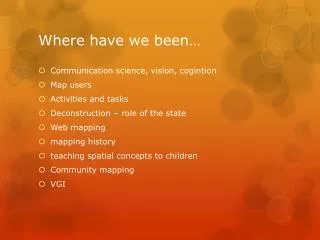
Where have we been… • Communication science, vision, cogintion • Map users • Activities and tasks • Deconstruction – role of the state • Web mapping • mapping history • teaching spatial concepts to children • Community mapping • VGI
VGI… What is it? Citizens as censors, the world volunteered…
VGI Evolution 1. Historical Map Place names
VGI Evolution 2. Gazetteer Place name lists And associated maps
VGI Evolution • From the State run geographic information to: • User-generated geographic information • Wikimapia (like fllickr referencing photos) • Google Earth • Openstreetmap
Openstreetmap • Started 2004 by Steve Coast in England • Walk, bike, hike, drive recording tracks with a GPS • Recording redrawn on a computer, additional info added (street names0 • Uploaded into a central database • Problems?
Openstreetmap • Many cities mapped to a level of detail greater than google maps (or Yahoo or Microsoft). • Data more current than many other offerings • Opencyclemap • Special versions • topo map integration, • kml export for import into Google Earth • Export to shape files • Wikiprojecthaitihttp://haiti.openstreetmap.nl/
VGI terminology • Web 2.0 – real applications running on the web - broad, diffuse, interacts with many people simultaneously, real time collaboration • Humans as sensors: satellites, openstreetmap GPS • Citizen science: bird counts, e-flora • Participant populations: truckers, farmers • Early warnings: Indian ocean tsunami, hurricane Katrina emergency response
VGI questions • Why do people do this? • Authority? • Standards = authority = state mapping agencies • Google maps… • Digital divide versus ‘open’ data
VGI value • Learn about remote places • Plan trips • Provide background, travellogs • Cheap source of geographic info • Military and commercial intelligence… • Local activities about local people in geographic locations that go unnoticed • Life at the local level – interesting lasting compelling value to geographers.