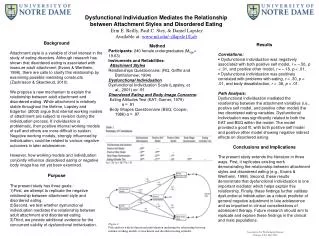
Impact of Error Recognition Curriculum on Laparoscopic Suturing Training: A Double-Blind Trial
This randomized double-blinded trial aimed to evaluate the effects of an error recognition curriculum on technical proficiency in laparoscopic suturing among novice surgeons. Thirty novices were divided into control and intervention groups. The study included pre- and post-training assessments based on suturing task time and the Objective Structured Assessment of Technical Skill (OSATS) scores, as well as error recognition through video analysis. Results indicated that while the error recognition module did slow down task performance, it did not significantly improve OSATS scores. Future research should explore modifications to instructional timing and learner grouping.

Impact of Error Recognition Curriculum on Laparoscopic Suturing Training: A Double-Blind Trial
E N D
Presentation Transcript
Randomized double-blinded trial investigating the impact of a curriculum focused on error recognition on laparoscopic suturing training J Bingener, T Boyd, K Van Sickle, I Jung, A Saha, J Winston, P Lopez, H Ojeda, W Schwesinger, D Anastakis
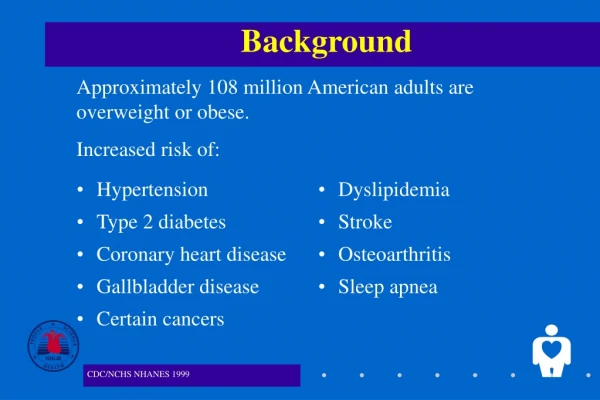
Background • Laparoscopic intracorporeal suturing not easy to learn • Best learned outside patient care setting • Computer and box training tools
Background • Suturing skills – imitation learning • “ this is how I do it” - “don’t do it like this” • Knowledge based errors
Surgical skill is predicted by the ability to detect errors (Bann S et al. Am J Surg 189 (2005) 412-415) Observed surgical skill (OSATS) Error detection on 22 models presented
Question Will the inclusion of an error recognition module in the laparoscopic suturing curriculum • enable error recognition and • improve the technical proficiency of the learner?
Study design • Study population: • 30 novices • randomized to A: control group B: intervention group • Learners blinded to group assignment • Video-instruction for laparoscopic suturing
Questionnaire Suturing video (1) Pretest: suturing task time OSATS video score Group B Group A Error recognition video (2) Suturing practice Suturing practice post test: post test: OSATS video score Error counting video (3) Error counting video (3) OSATS video score Suturing task time Suturing task time
Study design • No feed-back during study • Same investigator • Study period: 2 summer months • Time line Group A Group B
Metrics • Pre and post training laparoscopic suturing task time (seconds) • Pre and post training OSATS score (1-5) • Post training error recognition score (% errors recognized in video compared to experts)
Reviewer preparation • Reviewers watched novice and expert video for “calibration” • Blinded to group assignment • Independent review after study period • Kendall’s Tau for correlation 0.6 <τ <0.99
OSATS sub-scores p=0.63 P=0.53 Mean OSATS scores for instrument handling Mean OSATS scores for task forward flow
p=0.43 p=0.62 Mean OSATS scores for knowledge of task Mean OSATS scores for respect for tissue p=0.066 Mean OSATS scores for time motion efficiency
Results - summary • Additional error recognition teaching • Slowed down learner in task performance • Did not change OSAT scores • Led to cognitive error recognition
Visual information overload? Group B Corrrect pattern Error pattern Incorrect pattern Group A • Timing of error teaching module • Time to practice • Repetitive practice • Separate days
Attentional capacity threshold Attentional resources Use of Attentional Resources Gallagher et al Gaining additional knowledge Comprehending Attending instruction Judgement & Decision making Depth & Spatial judgments Psychomotor performance Novice surgeon Pre-trained Novice Master surgeon
Future Research Directions • Modify instruction timing • Modify learner group (pre-trained novice/ intermediate learner) • Use video-game experience as randomization criterion