In today’s service-driven IT environments, organizations must deliver reliable, consistent, and customer-focused IT services. This is where IT Service Management (ITSM) plays a vital role. ITSM is not just about managing technology; it is about managing services in a structured and measurable way. Understanding how ITSM processes are structured, documented, and monitored is essential for organizations aiming to achieve service excellence and for professionals pursuing ISO 20000 Lead Implementer Training, where these elements form the foundation of an effective IT service management system.
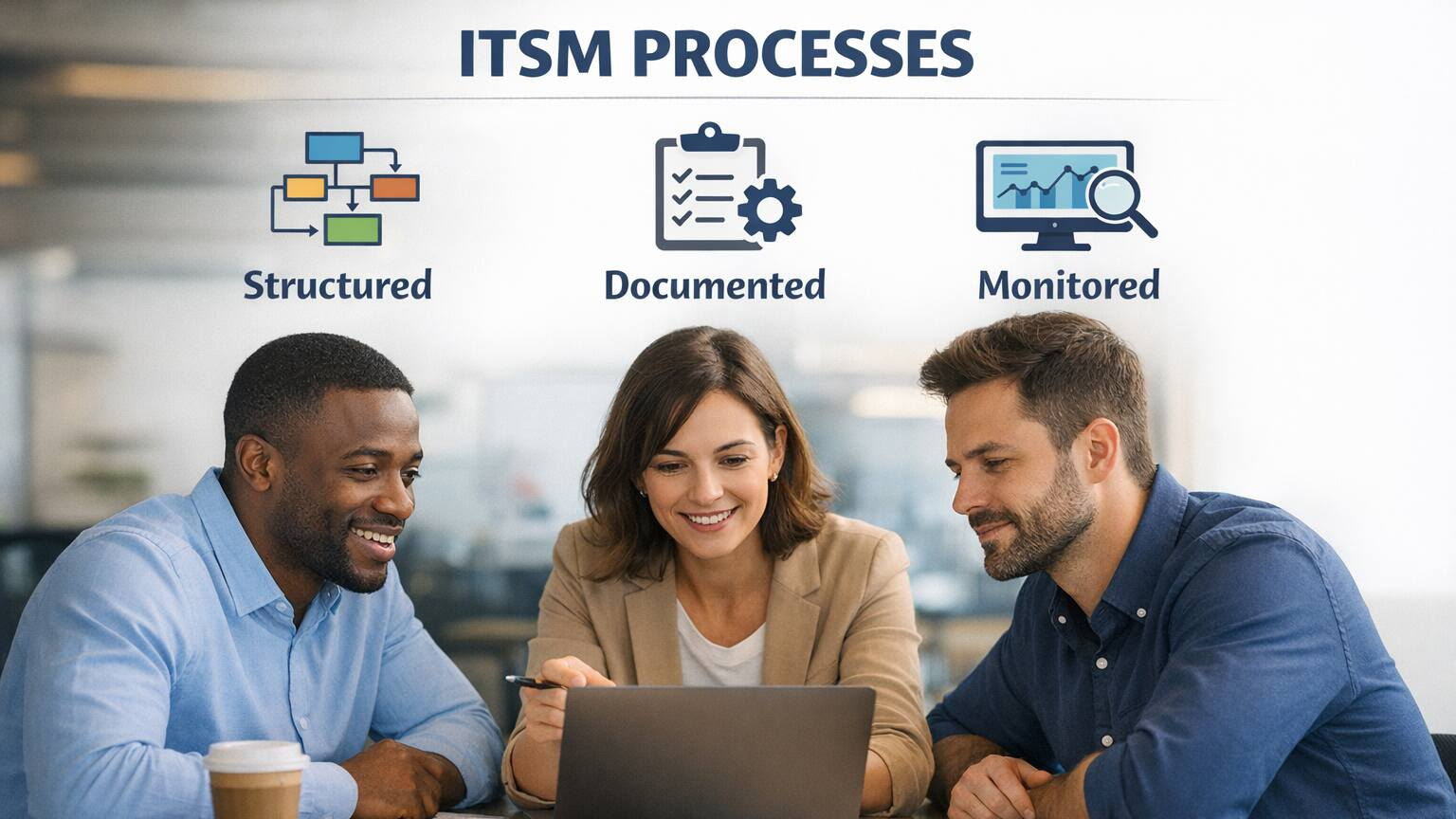
Structuring ITSM Processes
The structure of ITSM processes is based on a lifecycle approach that aligns IT services with business needs. Each process is clearly defined with a specific purpose, scope, and set of activities. Common ITSM processes include incident management, problem management, change management, service level management, and configuration management.
Structuring begins with identifying service requirements and defining how IT will support business objectives. Roles and responsibilities are assigned to ensure accountability, and process owners are appointed to oversee effectiveness. In ISO 20000 Lead Implementer Training, professionals learn how to design these processes so they are repeatable, consistent, and scalable across the organization. A well-structured ITSM framework ensures that services are delivered efficiently while minimizing risks and disruptions.
Documenting ITSM Processes
Documentation is a critical component of ITSM, as it provides clarity, consistency, and traceability. ITSM documentation typically includes policies, process procedures, work instructions, service catalogues, and records. Each document defines how a process should be performed, who is responsible, and what inputs and outputs are required.
Proper documentation ensures that ITSM processes are not dependent on individuals but can be followed consistently by different teams. ISO 20000 places strong emphasis on maintaining documented information to demonstrate control and compliance. Through ISO 20000 Lead Implementer Training, participants gain practical knowledge on creating and maintaining ITSM documentation that supports audits, continual improvement, and knowledge transfer within the organization.
Monitoring ITSM Processes
Monitoring ensures that ITSM processes are performing as intended and delivering value to the business. This involves defining key performance indicators (KPIs) and metrics that measure efficiency, effectiveness, and service quality. Examples include incident resolution time, service availability, change success rate, and customer satisfaction levels.
Regular monitoring allows organizations to identify gaps, trends, and areas for improvement. Data collected through monitoring is reviewed during management reviews and used to drive corrective and preventive actions. In ISO 20000 Lead Implementer Training, professionals learn how to establish monitoring mechanisms that align with business objectives and support continual improvement of the IT service management system.
Integration of Structure, Documentation, and Monitoring
The true strength of ITSM lies in the integration of structured processes, comprehensive documentation, and effective monitoring. Structured processes define what needs to be done, documentation explains how it should be done, and monitoring confirms whether it is working. Together, these elements create a controlled and transparent ITSM environment that supports compliance, quality, and customer satisfaction.