In today’s digital-first business environment, organizations face a wide range of information security risks—from cyberattacks and data breaches to insider threats and system failures. Identifying these risks accurately is the foundation of an effective Information Security Management System (ISMS). ISO 27001 Lead Implementer Training plays a crucial role in equipping professionals with structured, practical, and internationally accepted techniques for risk identification, ensuring that information assets are protected in a systematic and proactive manner.
Importance of IT Security Risk Identification in ISO 27001
ISO 27001 is a risk-based standard, meaning that all information security controls are selected and implemented based on identified risks. Without proper IT Security risk identification, organizations may either overlook critical threats or invest resources in unnecessary controls. ISO 27001 Lead Implementer Training emphasizes that risk identification is not a one-time activity but an ongoing process that evolves with changes in technology, business processes, and the threat landscape.
Through training, participants learn how to recognize potential events that could compromise the confidentiality, integrity, or availability of information. This understanding ensures that security decisions are aligned with real business risks rather than assumptions.
IT Security Risk Identification Techniques Taught in Training
The ISO 27001 Lead Implementer Training covers a variety of proven risk identification techniques. These include brainstorming sessions, checklists based on historical incidents, threat modelling, and process analysis. Participants also learn how to use inputs from incident reports, audit findings, and vulnerability assessments to identify recurring or emerging risks.
Another important technique taught is stakeholder involvement. Training highlights the importance of engaging process owners, IT teams, and management in risk identification activities. This collaborative approach ensures that both technical and operational risks are captured, leading to a more comprehensive risk register.
Identifying Threats, Vulnerabilities, and Impacts
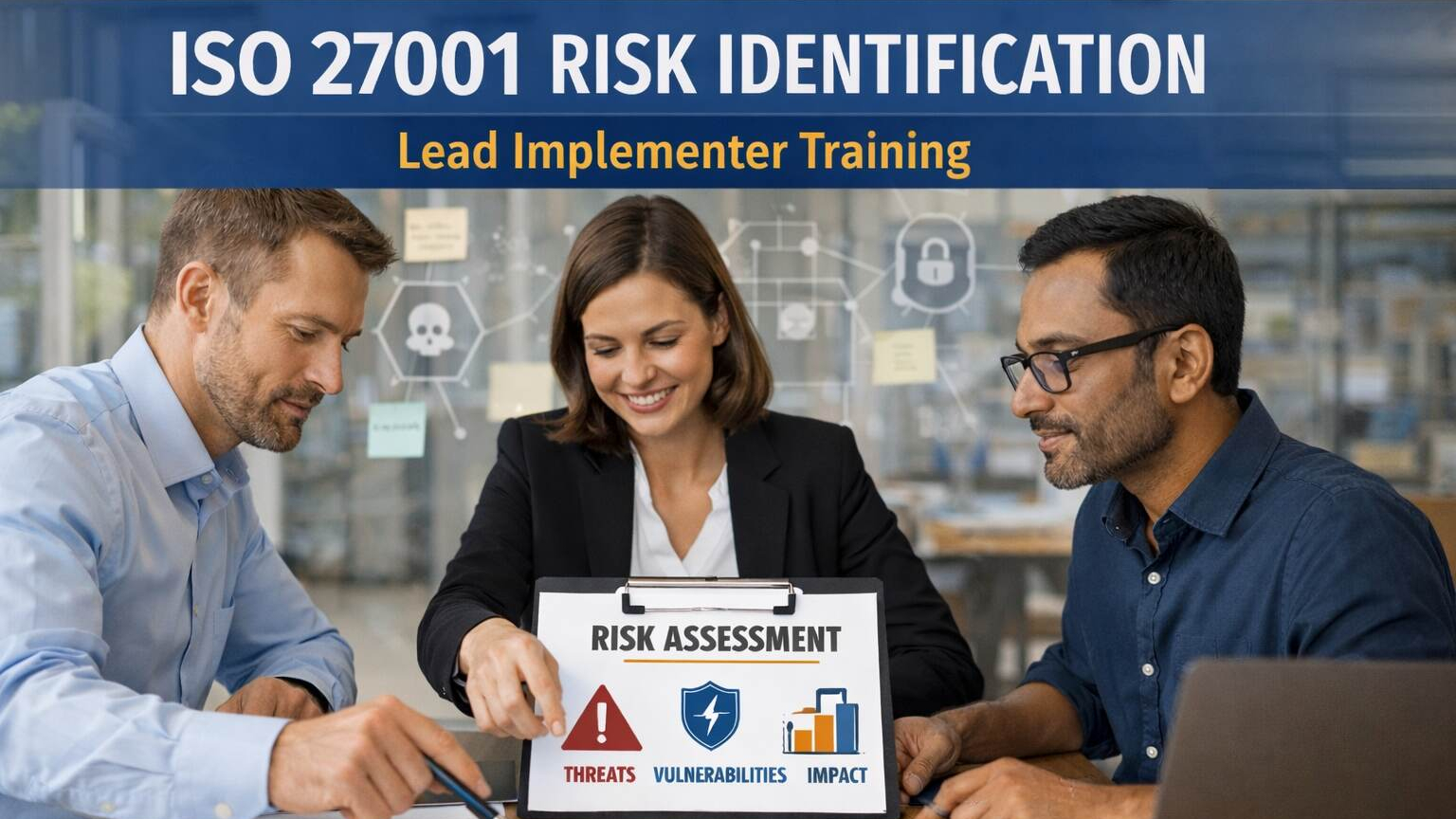
A core concept taught during the training is the relationship between threats, vulnerabilities, and impacts. Lead implementers learn how to identify potential threats such as cyberattacks, human errors, natural disasters, or regulatory non-compliance. They also learn to recognize vulnerabilities like outdated software, weak access controls, lack of awareness, or inadequate procedures.
Training emphasizes assessing the potential impact of each risk on business operations, reputation, legal compliance, and financial performance. This helps organizations prioritize risks effectively and focus on those that could cause the most harm if realized.
Aligning IT Security Risk Identification with Annex A Controls
ISO 27001 Lead Implementer Training also explains how IT Security Risk identification feeds directly into control selection using Annex A controls. Once risks are identified, trainees learn how to map them to relevant controls to reduce or manage those risks. This alignment ensures that security measures are justified, traceable, and auditable.
Participants gain practical knowledge of preparing risk assessment reports and maintaining a risk register, which are critical documented information requirements under ISO 27001. These documents demonstrate that risks have been systematically identified and evaluated, supporting certification and ongoing compliance.
Continuous IT Security Risk Identification and Improvement
An important lesson from ISO 27001 Lead Implementer Training is that risk identification is not static. Organizations must continuously monitor changes such as new technologies, business expansions, regulatory updates, or emerging cyber threats. Training prepares lead implementers to integrate risk identification into management reviews, internal audits, and continual improvement processes.
This proactive mindset helps organizations stay resilient and adapt their ISMS to changing risk scenarios, rather than reacting after incidents occur.
Conclusion
IT Security Risk identification through ISO 27001 Lead Implementer Training provides professionals with the knowledge, tools, and confidence to recognize information security risks in a systematic and effective way. By understanding organizational context, identifying assets, analysing threats and vulnerabilities, and aligning risks with appropriate controls, trained lead implementers play a vital role in building robust and resilient ISMS frameworks. Ultimately, this structured approach not only supports ISO 27001 certification but also strengthens overall business security and trust in an increasingly complex digital landscape.