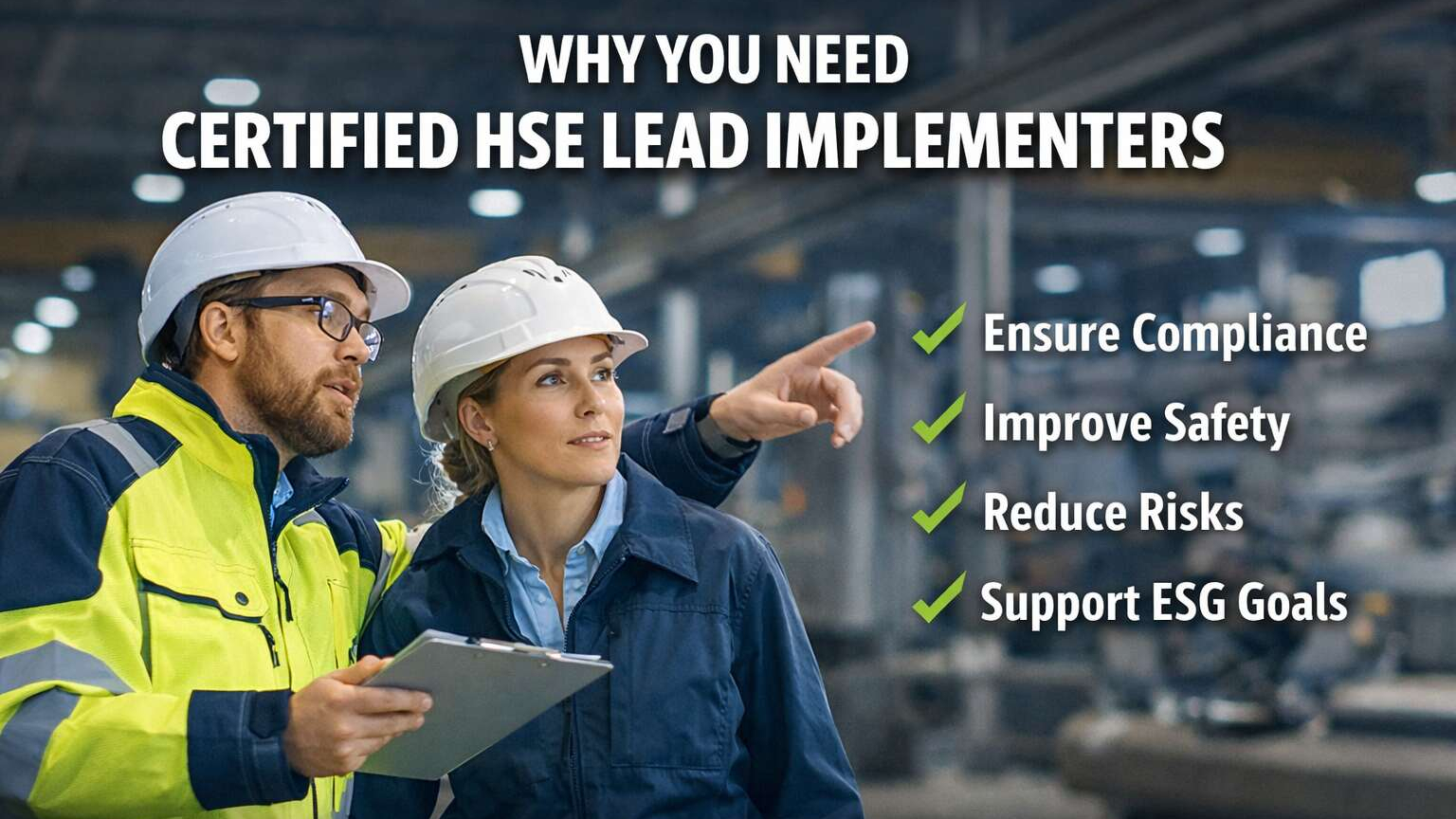
In today’s complex and modern business environment, every organisation faces increasing pressure towards safe working conditions, protect the environment, and comply with legal requirement due to their moral and social responsibilities towards the society. Workplace accidents, environmental incidents, and regulatory non-compliance can lead to serious financial losses, reputational damage, and even business shutdowns. This is why organizations increasingly recognize the value of professionals who have completed HSE Lead Implementer Training and are capable of building and maintaining effective Health, Safety, and Environment (HSE) management systems.
Role of a Certified HSE Lead Implementer
A Certified HSE Lead Implementer is responsible for planning, implementing, monitoring, and continually improving an organization’s HSE management system. Unlike general safety officers, certified lead implementers possess in-depth knowledge of international standards such as ISO 45001 and ISO 14001. HSE Lead Implementer equips with professional and practical skills to translate HSE requirements into real operational controls, ensuring that safety and environmental practices are embedded into daily business activities.
Ensuring Compliance with Legal and Regulatory Requirements
One of the most critical reasons organizations need certified HSE Lead Implementers is regulatory compliance. Occupational health, safety, and environmental laws vary across regions and industries and are constantly evolving. A trained HSE Lead Implementer understands compliance obligations, helps maintain statutory records, and ensures adherence to applicable laws. This proactive approach reduces the risk of penalties, legal actions, and operational disruptions caused by non-compliance.
Effective Implementation of HSE Management Systems
Implementing an HSE management system is not just about documentation; it requires structured planning and execution. Professionals who have completed HSE Lead Implementer Training are skilled in conducting gap analysis, developing HSE policies, defining objectives, and implementing risk-based controls. They ensure that HSE processes align with organizational goals and integrate smoothly with other management systems, creating a unified and efficient framework.
Reducing Workplace Accidents
Certified HSE Lead Implementers play a vital role in identifying hazards, assessing risks, and implementing preventive measures. By applying systematic risk assessment techniques, they help reduce workplace accidents, occupational illnesses, and environmental damage. Additionally, they establish incident reporting and investigation processes that identify root causes and prevent recurrence, contributing to continuous improvement in safety performance.
Strengthening Organizational Safety Culture
A strong safety culture is essential for long-term HSE success. HSE Lead Implementer Training emphasizes leadership involvement, worker participation, and effective communication. Certified professionals promote awareness, conduct training programs, and encourage employee engagement in HSE initiatives. This fosters accountability and shared responsibility for safety across all organizational levels.
Improving Business Performance and Operational Efficiency
Effective HSE management directly impacts business performance. Fewer accidents mean reduced downtime, lower compensation claims, and improved productivity. Organizations benefit from cost savings, higher employee morale, and improved operational efficiency. Certified HSE Lead Implementers help organizations achieve these benefits by focusing on prevention rather than reaction.
Preparing for Audits and Certifications
Organizations pursuing ISO certifications rely heavily on certified HSE Lead Implementers for audit readiness. These professionals conduct internal audits, address non-conformities, and support management reviews. Their role ensures ongoing compliance and successful external certification audits.
Conclusion
Organizations need certified HSE Lead Implementers to ensure compliance, reduce risks, improve safety culture, and achieve sustainable business growth. Investing in HSE Lead Implementer Training is not just a compliance requirement but a strategic decision that delivers long-term value, resilience, and competitive advantage in today’s demanding business landscape.