Download
1 / 5
50 likes | 149 Vues
This initiative focuses on improving the safety and rights of Hispanic day laborers through effective communication, training, and access to legal resources. It emphasizes the need for OSHA standards that protect vulnerable populations, particularly women and children, in high-risk industries like construction and agriculture. With a focus on traffic safety issues, worker education, and the ‘whistleblower’ mentality, this framework aims to empower workers to report injuries freely while addressing barriers such as language, legal services, and unsafe working conditions.

E N D
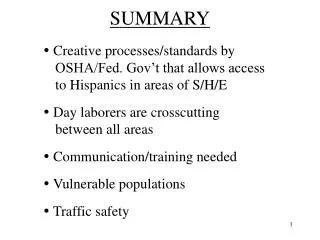
SUMMARY Creative processes/standards by OSHA/Fed. Gov’t that allows access to Hispanics in areas of S/H/E Day laborers are crosscutting between all areas Communication/training needed Vulnerable populations Traffic safety
ISSUES Protect workers - Free to report injuries - “Whistle blower” mentality - Worker education, training, communication > Spanish language Traffic safety issues - Migrant farmworkers - Women Violence in workplace Legal services - Rights - Permits - Database info/system > support H/S
TRAFFIC SAFETY Travel to and from work Women and Maquiladona’s Standards/definitions to protect workers Traffic safety all encompassing - Leading cause of death under 24 Licensing issues > uninsured motorists Own traffic safety tract? Profiling Non-usage of child safety seats Pedestrian safety Vulnerable populations - Women - Children - Elderly - Language - Undocumented workers/day laborers - Driver fatigue/impaired driving (motor trace)
CONSTRUCTION Falls not just Hispanic Language barriers Hispanics tend to work in riskier trades Knowledge of rights Who:- Center project to workers rights- Industry > construction companies- Small business/foreman supervisors- Day laborers
WHO Latina/women’s groups - Mana - Dialogue on diversity - Now > more active in S/H/E area BLS - Data National manufacturing standards Agriculture and children