The Bimetallism Debate: Understanding the Compromise of 1878 and its Impact on the Money Question
The Compromise of 1878 established limited silver coinage at a ratio of 16:1, aiming to address economic struggles during President Hayes's administration. The Bland-Allison Act sought to increase government silver purchases, but it was repealed in 1893 under Harrison, highlighting ongoing tensions in monetary policy. The demand for more money in circulation fueled desires for silver, benefiting debtors and farmers through lower interest loans. Despite the rise and fall of the Greenback Party, the struggle between gold-backed currency and silver coinage persisted, reflecting broader economic interests.

The Bimetallism Debate: Understanding the Compromise of 1878 and its Impact on the Money Question
E N D
Presentation Transcript
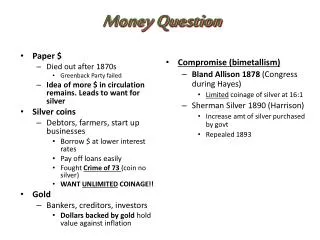
Compromise (bimetallism) Bland Allison 1878 (Congress during Hayes) Limited coinage of silver at 16:1 Sherman Silver 1890 (Harrison) Increase amt of silver purchased by govt Repealed 1893 Money Question • Paper $ • Died out after 1870s • Greenback Party failed • Idea of more $ in circulation remains. Leads to want for silver • Silver coins • Debtors, farmers, start up businesses • Borrow $ at lower interest rates • Pay off loans easily • Fought Crime of 73 (coin no silver) • WANT UNLIMITED COINAGE!! • Gold • Bankers, creditors, investors • Dollars backed by gold hold value against inflation