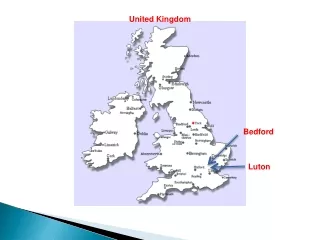
Understanding Communication and Negotiation in the UK: Cultural Insights and Practical Tips
This presentation delves into the impact of cultural background on communication and negotiation practices in the United Kingdom. It covers vital aspects such as verbal and non-verbal communication styles, dimensions of culture including universalism, individualism, specificity, and time orientation. Attendees will gain practical tips for successful negotiations, including the importance of written agreements, the role of professionalism, and the subtleties of British humor. Equipped with this knowledge, negotiators can enhance their approach to cross-cultural exchanges effectively.

Understanding Communication and Negotiation in the UK: Cultural Insights and Practical Tips
E N D
Presentation Transcript
United Kingdom communication, negotiations and cultural background By Adam Kowol and Edyta Szumieł
Presentation outline • Cultural background • Verbal communication • Non-verbal communication • Practical tips for negotiators
Dimensions of culture • Universalism (versusparticularism) • Individualism (versuscommunitarianism) • Specificity (versusdiffuseness) • Status by achievement (versus ascription) • Sequential (versus synchronic)
Universalism • Universalist approach:„What is good and right can be defined and always applies” • Implications: • contracts are very important, always in writing, „a deal is a deal” (unwilling to renegotiate deals) • lawyers are introduced into the process of negotiation • personal relationship often ignored, negotiators tend to get down to business quickly • rational and professional arguments • uniform procedures imposed by the head office • transparency and consistency
Individualism • People regard themselves primarily as individuals rather than as part of a group • Implications: • more frequent use of "I" form • a single representative feels comfortable taking decisions • personal responsibility, no need to consult with superiors • consensus is not deemed necessary (no need to convince everyone) • the decision-making process is short • risk: delays in the implementation phase, disparity between decision and implementation • during negotiations the translator is supposed to be neutral
Specificity • Low-context culture:not much background information is required for effective communication • Implications: • not afraid of losing face • do not take things personally • straightforward communication, open criticism • work and private life are sharply separated • don't mix business with pleasure • personal questions are not welcome • they get straight to the point (from specific to general) • importance of specific, measurable objectives • meetings have clear structure (timing, agendas) • only relevant titles and skills are worth mentioning
Achievement-oriented culture • You are judged on what you have accomplished:status is not attributed by birth, kinship, connections, gender or age • Implications: • the first question is likely to be "What did you study?", not "Where did you study?" • academic titles are often considered irrelevant in business environment • importance of data and technical considerations
Time as sequence • Time is a series of passing events • Implications: • importance of schedules • preference for following initial plans • it is rude to be even a few minutes late • time is money
A commanding social presence • Desired qualities of a gentleman: • grace • good style • sense of humour • eloquence • composure
Other cultural characteristics • the British prefer talking over doing • form is very important • they pay more attention to numbers (e.g. financial data) than material products • preoccupied with abstract ideas • public debates and discussions are out of touch with reality
Verbal communication • Content • Form
Content • Low-context: • concentrate on the subject matter • Topics: • the English are generally open-minded • welcome topics: the weather, sports, current affairs, British history, culture and popular music • avoid personal questions and topics such as politics or religion
British humour • Often used to release emotions • General features: • puns • nonsense • smut and innuendo • black humour • eccentricity • satire and sarcasm • understatement and irony
Form • Do not interrupt anybody • Speak in complete sentences • Avoid sloppy language • Phrase sentences correctly
Non-verbal communication • Kinesics • Oculesics • Haptics • Proxemics • Paralanguage • Object communication
Kinesics • Gestures: • British gestures are restrained • excessive gesticulation can come across as aggressive behaviour • Facial expressions: • emotional displays, positive or negative, are frowned upon • the British "keep a stiff upper lip" • facial expressions are kept to a minimum
Oculesics • Prolonged eye-to-eye contact can be interpreted as impolite behaviour
Haptics • Touching is avoided, only handshake is acceptable • Backslapping and hugging are not welcome
Proxemics • Do not intrude into their personal space • Keep your interlocutor at arm’s length • Stand next to each other rather than opposite
Paralanguage • Definition • part of nonverbal communication • how something is said rather than what is said • Talk in a monotone • Speak in low, measured tones without raising the voice
Object communication • Clothing • conservative dress is the norm • a dark suit is recommended • extremely informal clothing is not considered appropriate
Practical tips • Make appointments a few days in advance • Exchange business cards • Be polite and friendly, even under stress • "How do you do?" is a greeting, not a question • Smile a lot • Make sure you have clean shoes and fingernails • Remember names • Do not overstay your welcome