Columbus' Landing in the Bahamas: 1847 Painting and Indigenous Representation
40 likes | 176 Vues
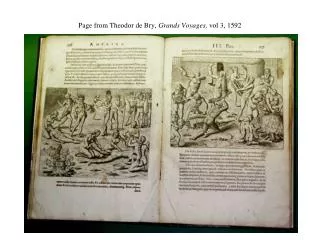
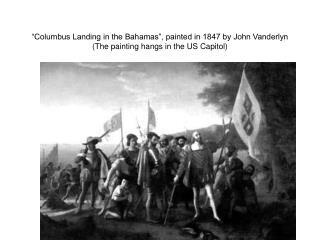
Explore the historical significance of John Vanderlyn's 1847 painting "Columbus Landing in the Bahamas," which is displayed in the US Capitol. This artwork portrays Christopher Columbus's arrival in the New World and the initial encounters with indigenous peoples. Complementing this narrative is Theodore de Bry's illustration from Bartolomé de las Casas' 1552 work "A Brief Relation of the Destruction of the Indies," highlighting the treatment of natives during European colonization. The exhibition also references Charles Hudson's "Knights of Spain, Warriors of the Sun," discussing Hernando de Soto and Native American chiefdoms.


Columbus' Landing in the Bahamas: 1847 Painting and Indigenous Representation
E N D
Presentation Transcript
“Columbus Landing in the Bahamas”, painted in 1847 by John Vanderlyn(The painting hangs in the US Capitol)
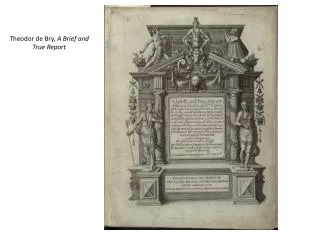
Illustration by Theodore de Bry for a German edition ofBrevisima Relacion de la destruycion de las Indias ("A Brief Relation of the destruction of the Indies")By Bartolome de las Casas, 1552. "Knights of Spain, Warriors of the Sun: Hernando de Soto and the South's Ancient Chiefdoms", by Charles Hudson