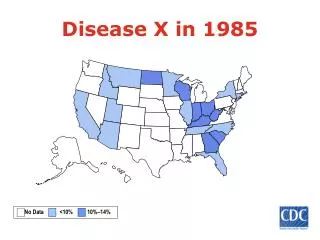
Disease X in 1985
530 likes | 657 Vues
Obesity has become a significant public health concern in the United States, with approximately 66% of adults classified as overweight or obese. This presentation reviews the epidemiology of obesity from 1985 to 2006, highlighting trends in Body Mass Index (BMI) classifications and associated comorbidities. It discusses the multifaceted causes of obesity including genetic, environmental, and behavioral factors, and outlines its substantial health impacts, including increased risks for diabetes, heart disease, and depression.


Disease X in 1985
E N D
Presentation Transcript
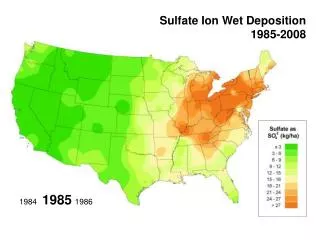
Disease X in 1985 No Data <10% 10%–14%
Disease X in 1986 No Data <10% 10%–14%
Disease X in 1987 No Data <10% 10%–14%
Disease X in 1988 No Data <10% 10%–14%
Disease X in 1989 No Data <10% 10%–14%
Disease X in 1990 No Data <10% 10%–14%
Disease X in 1991 No Data <10% 10%–14% 15%–19%
Disease X in 1992 No Data <10% 10%–14% 15%–19%
Disease X in 1993 No Data <10% 10%–14% 15%–19%
Disease X in 1994 No Data <10% 10%–14% 15%–19%
Disease X in 1995 No Data <10% 10%–14% 15%–19%
Disease X in 1996 No Data <10% 10%–14% 15%–19%
Disease X in 1997 No Data <10% 10%–14 15%–19% ≥20%
Disease X in 1998 No Data <10% 10%–14 15%–19% ≥20%
Disease X in 1999 No Data <10% 10%–14 15%–19% ≥20%
Disease X in 2000 No Data <10% 10%–14 15%–19% ≥20%
Disease X in 2001 No Data <10% 10%–14% 15%–19% 20%–24% ≥25%
Disease X in 2002 No Data <10% 10%–14% 15%–19% 20%–24% ≥25%
Disease X in 2003 No Data <10% 10%–14% 15%–19% 20%–24% ≥25%
Disease X in 2004 No Data <10% 10%–14% 15%–19% 20%–24% ≥25%
Disease X in 2005 No Data <10% 10%–14% 15%–19% 20%–24% 25%–29% ≥30%
Obesity* Among U.S. Adults, 2006 (*BMI ≥30, or ~ 30 lbs. overweight for 5’ 4” person) No Data <10% 10%–14% 15%–19% 20%–24% 25%–29% ≥30% Alcohol Medical Scholars Program
OBESITY: AN EXPANDING EPIDEMIC Alcohol Medical Scholars Program
Obesity • Major public health concern • Related to high calorie intake • Influenced by • Physiology • Environment • Genes Alcohol Medical Scholars Program
Covered Topics Obesity • Definition and epidemiology • Comorbid illness • Mechanism of disease • Treatment Alcohol Medical Scholars Program
Obesity Body mass index (BMI)=kg/m2 Alcohol Medical Scholars Program
Who is obese? • 66% in United States overweight or obese • 32% obese • 5% extreme obesity • Mexican American 76% • Non-Hispanic Black 76% • Non-Hispanic White 64% Alcohol Medical Scholars Program
Covered Topics Obesity • Definition and epidemiology • Comorbid illness • Mechanism of disease • Treatment Alcohol Medical Scholars Program
So what? • 300,000 obesity-related deaths/year in US • 5x risk for diabetes • 5x risk for gallbladder disease • More depression and bipolar disorder • More deaths from heart disease Alcohol Medical Scholars Program
Covered Topics Obesity • Definition and epidemiology • Comorbid illness • Mechanism of disease • Treatment Alcohol Medical Scholars Program
Mechanisms of Obesity • Environment • Types of food available • Increased portion size • Sedentary lifestyle Alcohol Medical Scholars Program
Mechanisms of Obesity • 50% of risk is genetic • Concordance: 60% dizygotic 75% monozygotic • Adoptee weight more like biological parents • Gene mutations • Leptin • Proopiomelanocortin (POMC) • Bred in or out of mice Alcohol Medical Scholars Program
Mechanisms of Obesity: Feeding • Dopamine with food • Opioids will feeding Ghrelin Leptin Alcohol Medical Scholars Program
ACTH Stress Eating and Opioids POMC β-endorphin • Stress consumption of comfort food • Opiates sugar intake Stress Reward Feeding α-MSH Alcohol Medical Scholars Program
Emotional factors Stress, boredom Intrinsic factors Leptin Ghrelin Dopamine Extrinsic factors food-related cue & availability Signals that Control Feeding Hypothalamus Alcohol Medical Scholars Program
Dopamine and Reward • Dopamine critical to reward • Pleasure dopamine • Drugs • Sex • Food • Too much pleasure dopamine • Drugs • Food Alcohol Medical Scholars Program
Control Obese Dopamine and Obesity p < 0.002 • Obese • Control BMI p = 0.3 Dopamine Receptor Concentration Dopamine D2 receptor imaging Wang et al, Lancet 2001 Alcohol Medical Scholars Program
Food Craving • When do we crave? • Chronic stress • Food deprivation • What do we crave? • Sweets • Carbohydrates Alcohol Medical Scholars Program
Carbohydrates (mmmm…) • Dopamine • Opiates • Serotonin • Alcohol is carbohydrate rich • Is food • Is drug Alcohol Medical Scholars Program
From Chocolate to Morphine • Sugar preferring rats • Increased cocaine • Increased morphine • Increased alcohol Alcohol Medical Scholars Program
Drug Withdrawal and Sweets • Increased sweets consumption after • Smoking cessation • Alcohol abstinence • Opiate withdrawal • Cocaine withdrawal • No impairment in taste Alcohol Medical Scholars Program
Weight Loss and Alcohol • Calorie restricted body wants calories • Prefers carbohydrates • Calorie deprived rats drink alcohol • Surgically treated obesity • Decreased calorie intake • Overcome size restriction by liquid calories • Standard drink = 100 calories Alcohol Medical Scholars Program
Covered Topics Obesity • Definition and epidemiology • Comorbid illness • Mechanism of disease • Treatment Alcohol Medical Scholars Program
Weight Loss Strategies • Improve health • Address behavioral change • Address neurobiological change? Alcohol Medical Scholars Program
Treatment: Surgery • Roux-en-Y • Restrict stomach size / decrease absorption • 25% in body weight • Vertical banded gastroplasty • Restrict stomach size • 15% in body weight Alcohol Medical Scholars Program
Treatment: Behavioral • Brief Intervention • Medical consequences • Impact of dietary change • Impact of exercise • Diet and exercise 5% in body weight Alcohol Medical Scholars Program
Treatment: Behavioral • Overeaters Anonymous • Get peer network • Change attitudes • Cognitive behavioral therapy • Help patient change view of eating • Help change behavior to weight loss • Help recognize and avoid risk situations Alcohol Medical Scholars Program
Treatment: Behavioral • Motivational interviewing • Emphasize change • Discuss resistance • Encourage acceptable change • Behavioral therapy alone 5% weight Alcohol Medical Scholars Program
Treatment: Medications • Decrease appetite / increase metabolism • Sibutramine: inhibits monoamine reuptake • Rimonabant: cannabinoid receptor antagonist • Decrease absorption • Orlistat: fat absorption in gut • Decrease appetite • Naltrexone?: opioid antagonist • Medications 5% in body weight Alcohol Medical Scholars Program
Conclusions • Obesity morbidity and mortality • Overlapping neuropathways with addiction • Treatments • Surgical • Behavioral • Pharmacological Alcohol Medical Scholars Program