Understanding the Consequences of Deflation in the Economy
20 likes | 140 Vues
Deflation can lead to a cycle of decreased consumer spending, as individuals may delay purchases anticipating lower prices. This reduction in aggregate demand (AD) intensifies recessionary pressures, causing prices to drop further. Additionally, the real value of debts increases, becoming harder to manage as wages fall. High real interest rates discourage spending, while squeezing profit margins leads businesses to cut costs, resulting in unemployment. Falling asset prices decrease financial confidence, prompting individuals to save more and spend less, perpetuating economic decline.


Understanding the Consequences of Deflation in the Economy
E N D
Presentation Transcript
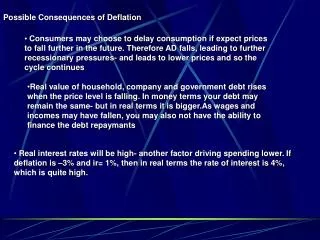
Possible Consequences of Deflation • Consumers may choose to delay consumption if expect prices to fall further in the future. Therefore AD falls, leading to further recessionary pressures- and leads to lower prices and so the cycle continues • Real value of household, company and government debt rises when the price level is falling. In money terms your debt may remain the same- but in real terms it is bigger.As wages and incomes may have fallen, you may also not have the ability to finance the debt repaymants • Real interest rates will be high- another factor driving spending lower. If deflation is –3% and ir= 1%, then in real terms the rate of interest is 4%, which is quite high.
Company profit margins come under pressure - leading to higher unemployment as firms seek to reduce costs • Falling asset prices hit personal sector financial wealth and confidence leading to further declines in aggregate demand. Eg if house prices and shares fall in value- then you are going to feel poorer. You’ll save more and spend less-again increasing recessionary pressures, within the economy