Understanding Passive Solar Energy: Design, History, and Benefits
Passive solar energy utilizes the sun’s natural energy to heat and cool living spaces without mechanical systems. This sustainable design approach has roots dating back over 2500 years, with ancient civilizations leveraging the sun’s power in architectural features. By optimizing building materials and orientations, passive systems can maintain comfortable indoor temperatures with minimal maintenance and no moving parts. Discover how passive solar energy can reduce fossil fuel reliance and promote energy efficiency in modern homes.


Understanding Passive Solar Energy: Design, History, and Benefits
E N D
Presentation Transcript
Passive Solar Energy By Emmi Miller and Jenny Sulouff
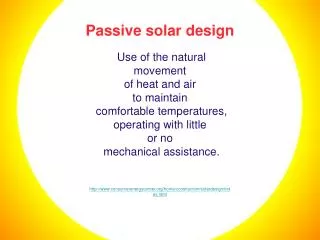
Defining Passive solar energy • Passive solar design refers to the use of the sun’s energy for the heating and cooling of living spaces. In this approach, the building itself or some element of it takes advantage of natural energy characteristics in materials and air created by exposure to the sun. Passive systems are simple, have few moving parts, and require minimal maintenance and require no mechanical systems.
Uses of passive solar energy • Make a side show of the items that can use solar energy.
Passive energy in History • Was used over 2500 years • Greece • Cities • Streets • East-west, and North-south • Housing Materials • Rome • “Sun Furnace” • mica or glass
In history continued • The English Dutch • South facing green houses • Exotic plants in winter • Night time canvas covers http://www.californiasolarcenter.org/history_passive.html
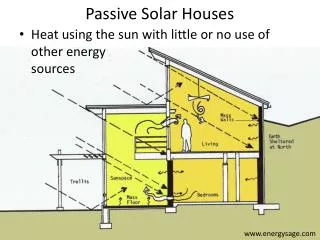
How passive solar power works • http://passivesolar.sustainablesources.com/
Why Passive Solar Power • Once you set up a passive solar system the energy you receive is free. • Maintence
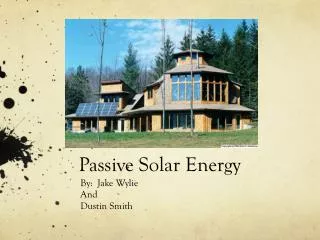
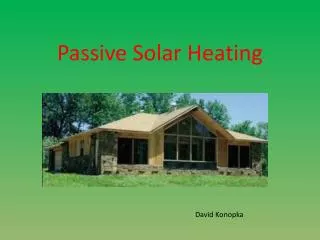
Passive Solar Homes • http://www.enertia.com/?gclid=COWJ16TltZ8CFaM45QodLhgb3A