Hawksbill
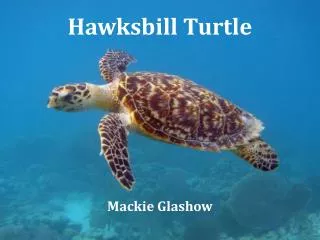
The Hawksbill turtle, a critically endangered species, is typically found along coastal reefs, rocky areas, and lagoons. They are easily identifiable by the scales in front of their eyes and a narrow head with a bird-like beak. Their underside ranges from light yellow to white, often adorned with black markings. Hawksbill turtles primarily feed on sponges, anemones, squid, and shrimp. Unfortunately, they face significant threats from harvesting for their beautiful shells, which are used in fashion and jewelry. Female Hawksbills lay up to 160 eggs every 2-3 years, with hatching occurring in about 60 days.


Hawksbill
E N D
Presentation Transcript
Hawksbill Jen and Zack
HabitatCan usually be found along coastal reefs, rocky areas and lagoons.
Identification The hawksbill has scales in front of its eyes. The head is narrow with a straight bird-like beak. The underside is light yellow to white and sometimes has black markings.
Threats Harvesting for their shell for hair fashion and jewelry is a danger to hawksbill turtles.
Reproduction Every 2, 3, or more years the mom lays up to 160 eggs in each nest. It takes about 60 days for the eggs to hatch.