Download
1 / 6
60 likes | 202 Vues
The Windham Region comprises 27 rural towns and a total population of 47,000. With two EECBG projects totaling $210,000 in grants, the Energy Committee is guiding energy audits and retrofits to improve local buildings. Anticipated annual savings include over $22,000 and 966 MMBtu of energy. Challenges include managing historic buildings and balancing small town needs with project management. As we look ahead, our focus will be on education and seeking further funding opportunities. For inquiries, contact Kate McCarthy at mccarthy@sover.net.

E N D
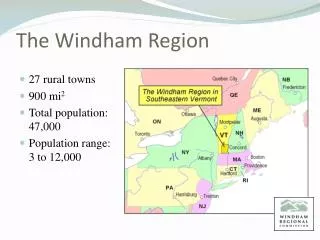
The Windham Region • 27 rural towns • 900 mi2 • Total population: 47,000 • Population range: 3 to 12,000
EECBG projects • Two grants totaling $210,000 – one via state, one federal • Energy Committee guidance • Audits and retrofits • Federal: 14 audits, 4 retrofits • County: 3 audits, 4 retrofits • Anticipated annual savings: • Money: over $22,000 • Energy: 966 MMBtu
Opportunities • Support continued use of buildings in established village centers • Provide support on technical issues (NEPA, Sec. 106) • Put a dollar amount on energy (and savings!) • Help towns understand their buildings better
Challenges • Historic buildings, some with pre-existing problems • Balancing town needs (small projects) with time spent on project management • Small towns with limited staff • Weatherization: an evolving field
Looking ahead • Our next steps • Finishing out the grant • Focus on education • Apply for additional funds? • Remaining questions • Can certain federal processes be streamlined? • What is the most efficient way to help small, rural towns? • What would be the best use of any future grants?
Contact Kate McCarthy Assistant Planner and EECBG Project Coordinator mccarthy@sover.net (802) 257-4547, x. 108