Download
1 / 7
70 likes | 210 Vues
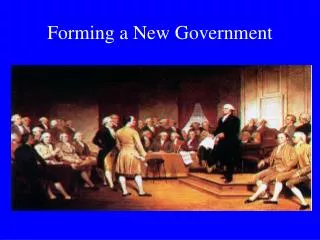
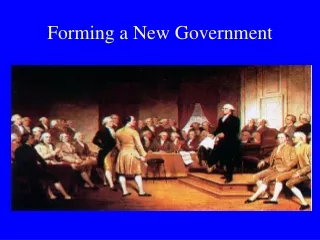
This overview explores the key events leading to the establishment of the U.S. government, including the guidelines set by the Northwest Ordinance of 1787 for governing western lands and admitting new states. It highlights Shay’s Rebellion, where farmers in Massachusetts protested against debt repayment, leading to the need for a stronger federal government. The Constitutional Convention of May 1787 brought together 55 delegates, including notable figures like Washington and Madison, resulting in the Great Compromise, the 3/5 Compromise, and the establishment of a federal trade framework and presidential powers.

E N D
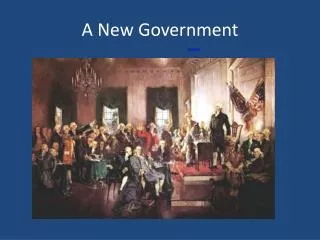
Painting A New Government
Under the Articles A. Northwest Ordinance 1787 1. Allowed for governing lands in the west 2. Allowed for new states B. Shay’s Rebellion 1. Western Mass. Farmers rebel over paying debts 2. Mass. militia has to put down rebellion
II. Constitutional Convention A. May 1787 55 delegates meet in Philadelphia 1. Previous meetings in Va. And Md. had not worked 2. President of the convention =Washington 3. Other notable delegates: Madison, Hamilton, Franklin (missing; Jefferson, Adams)
B. Virginia Plan (Madison) 1. Proposes 3 Branches a. Congress with 2 houses (bicameral) b. lower house chosen by the people upper house chosen by the lower C. New Jersey Plan 1. 3 Branches a. Unicameral Congress (one house) b. Each state gets one vote
III. The Great Compromise • A. The New Jersey and Virginia Plans are combined • 1. The Senate is the Upper House (selected by the States) and each state gets two Senators • 2. The House of Representatives is the Lower House and each state gets at least one vote, more votes are given to states with larger populations
IV. The 3/5 Compromise • A. Northern States did not want slaves to count toward representation • B. Southern States think they should count • C. Eventually the compromise is that slaves would count as 3/5 of a person for the purpose of representation
V. Trade • A. Northern states want federal control of trade • B. South wants state control • C. Compromise = Congress controls foreign trade, can tax imports not exports, no laws about the slave trade allowed for 20 years VI. President A. Many delegates afraid of one person with so much power B. Compromise = President whom Congress can impeach