Understanding Plot and Characterization in English Novels: A Comprehensive Guide
80 likes | 201 Vues
This guide explores key literary terms in English novels, focusing on plot structure and characterization. It covers Aristotle’s plot-line, including exposition, rising action, climax, falling action, and resolution, alongside Labov's narrative structure. The analysis of characters—protagonists, antagonists, and their dynamics—highlights elements like physical description and relationships. Additionally, it deepens understanding of conflicts, themes, setting, and literary devices such as imagery, symbolism, and figurative language. Perfect for students and literature enthusiasts.


Understanding Plot and Characterization in English Novels: A Comprehensive Guide
E N D
Presentation Transcript
Literary Terms English novel Engl2349 Dr. Sami S. Breem
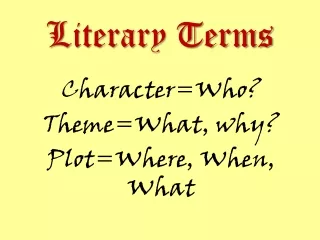
Plot • plot/events/actions • Aristotle’s plot-line/structure/diagram • introduction/exposition • rising action/development • climax/turning point • falling action • end/deouement • Labov's structure • coda
Characterization • protagonist/hero/central/main character • antagonist/anti-hero • antagonistic force • techniques used to analyze character: • physical description • what characters say/do • relationship with other characters • narrator’s comments
Characterization (continued) • Type of change: • round vs. flat • static vs. dynamic • changed vs. unchanged • developed vs. undeveloped • character (symbol) • Character (representation in the real world) • Significance of names
Conflict Complication/clash between opposing forces: • character vs. character • character vs. nature • character vs. social problems • internal conflict
Literary Terms (continued) • themes • setting • imagery • motif • allegory • microcosm vs. macrocosm • foreshadowing
Literary Terms (continued) • symbolism • conventional/traditional • literary • figurative language, for example: • metaphor • simile • personification • irony
Literary Terms (continued) • intertextuality • text vs. context • speech and thought presentation • stylistic analysis • deixis • deixis of time • deixis of place • deictic verbs/adverbs/adjectives/nouns • social deixis • definite vs. indefinite articles