Flicker: Minimal TCB Code Execution
This document discusses a minimal Trusted Computing Base (TCB) code execution method aimed at improving password security through remote attestation and verification mechanisms. It highlights issues like password reuse, exposure, and verification challenges. The paper evaluates existing security techniques including secure boot, virtual machine isolation, and remote verification. It also addresses the implications of software updates on security and presents Flicker as a potential solution, focusing on minimizing the TCB while ensuring integrity in system security operations.

Flicker: Minimal TCB Code Execution
E N D
Presentation Transcript
Flicker:Minimal TCB Code Execution Jonathan M. McCune Carnegie Mellon University March 27, 2008 Bryan Parno, Arvind Seshadri Adrian Perrig, Michael Reiter
Password Reuse • People often use 1 password for 2+ websites • Banking, social networking, file sharing, … P A S S W O R D
Password Exposure • Password provided to compromised web server P A S S W O R D My-hobby.com www.myhobby.com is compromised!
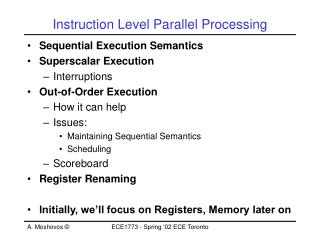
Password Verification • What if… • A compromised OS cannot learn the password • Only essential code can access password • Decrypt SSL traffic • Salt and hash password • Compare with stored hash • Output MATCH or FAILURE • Can remotely verify this is so • Requires strong system security • What about zero knowledge protocols? • A viable alternative for passwords • Our techniques are more general • Password verification is just an example
Outline • Existing approaches to system security • Remote attestation and verification • Static root of trust for measurement • Dynamic root of trust for measurement • Flicker: Minimal TCB Code Execution • Optional • Example: IBM Integrity Measurement Arch. • Specifics of AMD SVM / Intel TXT
Some Current Approaches • Program code in ROM • Secure boot • Virtual-machine-based isolation • Evaluation metric: size of Trusted Computing Base (TCB) App1 App2 App3 Operating System Hardware
Security Properties to Consider • How can we trust operations that our devices perform? • How can we trust App1? • What if App2 has a security vulnerability? • What if Operating System has a security vulnerability? App1 App2 App3 Operating System Hardware
Program Code in ROM • Advantages • Simplicity • Adversary cannot inject any additional software • Disadvantages • Cannot update software (without exchanging ROM) • Adversary can still use control-flow attack • Entire system is in TCB, no isolation • Verdict • Impractical for current systems • Code updates are critical • Bug fixes • New features A1 A2 A3 Operating System Hardware
Secure Boot • Boot process uses signature chain • BIOS verifies signature on boot loader • Boot loader verifies signature on OS, ... • Advantages • Only approved software can be loaded • Assuming no vulnerabilities • Disadvantages • Adversary only needs to compromise singe component • Entire system is in TCB, no isolation • Not all software is commercial • Verdict • Entire system is still part of TCB • Relatively weak security guarantee A1 A2 A3 Operating System Hardware
Virtual-machine-based Isolation • Approach: Isolate applications by executing them inside different Virtual Machines • Advantages • Smaller TCB • Isolation between applications • Disadvantages • VMM is still large and part of TCB • Relatively complex, not suitable for average user • Verdict: Smaller TCB, step in right direction A1 A2 A3 OS OS OS VMM Hardware
Outline • Existing approaches to system security • Remote attestation and verification • Static root of trust for measurement • Dynamic root of trust for measurement • Minimal TCB Code Execution • Optional • Example: IBM Integrity Measurement Arch. • Specifics of AMD SVM / Intel TXT
Remote Verification? • Desirable property: Remotely verify trustworthy device operation • Presented approaches not verifiable • Higher resilience to attacks • Remote verifier obtains no additional assurance V A1 A2 A3 Everything OK? Operating System Hardware Yes/No
Remote Attestation • Attestation enables verifier to establish trust in untrusted device • Attestation tells verifier what code is executing on device • If intended code is executing on untrusted device, verifier can trust its operation V A1 A2 A3 What code is executing? Operating System Hardware Hash(Code) Verifier Untrusted Device
Outline • Existing approaches to system security • Remote attestation and verification • Static root of trust for measurement • Dynamic root of trust for measurement • Flicker: Minimal TCB Code Execution • Optional • Example: IBM Integrity Measurement Arch. • Specifics of AMD SVM / Intel TXT
Hardware-based Attestation • Leverages hardware support for attestation • Trusted Platform Module (TPM) chip • Already included in many platforms • Cost per chip less than $10 • Modern microprocessors provide special instructions that interact with TPM chip • AMD SVM: SKINIT instruction • Intel TXT/LT: GETSEC[SENTER] instruction
Trusted Computing Group (TCG) • Open organization to “develop, define, and promote open standards for hardware-enabled trusted computing and security technologies.” • These secure platform primitives include • Platform integrity measurements • Measurement attestation • Sealed storage • Can enable • Trusted boot (not secure boot) • Attestation • Goals: • Ensure absence of malware • Detect spyware, viruses, worms, …
TCG Trusted Platform Module (TPM) Non-Volatile Storage (EK, AIK, SRK) Platform Configuration Register (PCR) I/O LPC bus Crypto RSA Key Generation Random Number Generator Secure Hash SHA-1 DIP Packaging or integrated into SuperIO
Basic TPM Functions • PCRs store integrity measurement chain • PCRnew = SHA-1(PCRold||measurement) • Remote attestation (PCRs + AIK) • Attestation Identity Keys (AIKs) for signing PCRs • Attest to value of integrity measurements to remote party • Sealed storage (PCRs + SRK) • Protected storage + unlock state under a particular integrity measurement (data portability concern)
OS Kernel OS Kernel Apps Apps Module 1 Module 1 App 1 App 1 Module 2 Module 2 App 2 App 2 TPM conf conf PCRs TCG-Style Attestation BIOS Boot Loader Boot Loader BIOS Hardware Software AIK-1
TCG-Style Attestation Challenger Host platform
Optional • IBM’s Integrity Measurement Architecture • Works for Linux
Shortcomings of TCG-style Attestation • Static root of trust for measurement (reboot) • Coarse-grained, measures entire system • Requires hundreds of integrity measurements just to boot • Every host is different • firmware versions, drivers, patches, apps, spyware, … • What does a PCR mean in this context? • TCB includes entire system! • Integrity measurements are done at load-time not at run-time • Time-of-check-time-of-use (TOCTOU) problem • Cannot detect any dynamic attacks! • No guarantee of execution A1 A2 A3 Operating System Hardware TPM
Outline • Existing approaches to system security • Remote attestation and verification • Static root of trust for measurement • Dynamic root of trust for measurement • Flicker: Minimal TCB Code Execution • Optional • Example: IBM Integrity Measurement Arch. • Specifics of AMD SVM / Intel TXT
Dynamic Root of Trust for Measurementaka: Late Launch • Involves both CPU and TPM v1.2 • Security properties similar to reboot • Without a reboot! • Removes many things from TCB • BIOS, boot loader, DMA-enabled devices, … • Long-running OS and Apps if done right • When combined with virtualization • VMM can be measured (MVMM) • Uptimes measured in years • Integrity of loaded code can be attested • Untrusted legacy OS can coexist with trusted software • Allows introduction of new, higher-assurance software without breaking existing systems
AMD/Intel Late Launch Extensions • AMD: Secure Virtual Machine (SVM) • Intel: Trusted eXecution Technology (TXT) • Formerly LaGrande Technology (LT) • Similarities: • Late launch of a measured block of code • Hardware support for virtualization • Differences: • AMD provides measured environment only • Intel adds authenticated code capabilities • The system’s chipset contains a public key to verify signed code
AMD Secure Virtual Machine • Virtualization support • DMA protection for memory • Intercept selected guest instructions / events • Much more… • Late launch with support for attestation • New instruction: SKINIT (Secure Kernel Init) • Requires appropriate platform support (e.g., TPM 1.2) • Allows verifiable startup of trusted software • Such as a VMM • Based on hash comparison
SKINIT (Secure Kernel Init) • Accepts address of Secure Loader Block (SLB) • Memory region up to 64 KB • SKINIT executes atomically • Sets CPU state similar to INIT (soft reset) • Disables interrupts • Enables DMA protection for entire 64 KB SLB • Causes TPM to reset dynamic PCRs to 0 • Sends SLB contents to TPM • TPM hashes SLB contents and extends PCR 17 • Begins executing SLB
SKINIT Security Properties • Verifier receives attestation after SKINIT • Knows SKINIT was used • Knows software TCB includes only the SLB • Knows exactly what SLB was executed • SLB can be written to provide add’l props. • Knows any inputs to SLB • Knows any outputs from SLB • Knows exactly when SLB finished executing
AMD SVM Security Discussion • Property: Verifiable untampered code execution • SKINIT + TCG 1.2 provide very strong security properties • Minimal TCB: Only hardware and application need to be trusted A1 A2 A3 Operating System Hardware
Optional • Detail on specific AMD/Intel Extensions • AMD Secure Virtual Machine (SVM) • Intel Trusted eXecution Technology (TXT)
Outline • Existing approaches to system security • Remote attestation and verification • Static root of trust for measurement • Dynamic root of trust for measurement • Flicker: Minimal TCB Code Execution • Optional • Example: IBM Integrity Measurement Arch. • Specifics of AMD SVM / Intel TXT
TCB Reduction with Flicker … App 1 App App Today, TCB for sensitive code S: • Includes App • Includes OS • Includes other Apps • Includes hardware With Flicker, S’s TCB: • Includes Shim • Includes some hardware S OS Shim CPU, RAM TPM, Chipset DMA Devices (Network, Disk, USB, etc.)
Contributions • Isolate security-sensitive code execution from all other code and devices • Attest to security-sensitive code and its arguments and nothing else • Convince a remote party that security-sensitive code was protected • Add < 250 LoC to the software TCB S Software TCB < 250 LoC Shim
Adversary Capabilities … App 1 App • Run arbitrary code with maximum privileges • Subvert any DMA-enabled device • E.g., network cards, USB devices, hard drives • Perform limited hardware attacks • E.g., power cycle the machine • Excludes physically monitoring/modifying CPU-to-RAM communication OS S Shim DMA Devices CPU, RAM TPM, Chipset (Network, Disk, USB, etc.)
Architecture Overview • Core technique • Pause current execution environment • Execute security-sensitive code with hardware-enforced isolation • Resume previous execution • Extensions • Preserve state securely across invocations • Attest only to code execution and protection • Establish secure communication with remote parties
App RAM OS Module S Shim SKINIT Reset Execution Flow App OS Outputs Inputs 0 0 0 Module Module S Shim TPM … PCRs: CPU K-1
S Shim Attestation TPM PCRs: Inputs … Outputs K-1 TPM … PCRs: K-1
App App 1 App 2 App 3 App 4 App 5 … S OS TPM PCRs: 0 0 0 Inputs What code are you running? S … Shim Outputs Inputs Outputs K-1 S ( ) Shim Sign , K-1 ( ) Sign , K-1 Attestation Versus
S S S S Shim Shim Shim Shim S S S Shim Shim Shim Context Switch with Sealed Storage • Seal data under combination of code, inputs, outputs • Data unavailable to other code OS Data PCRs: PCRs: … … Time
Functionality • Shim can execute arbitrary x86 code but provides very limited functionality • Fortunately, many security-sensitive functions do not require much • E.g., key generation, encryption/decryption, FFT • Functionality can be added to support a particular security-sensitive operation • We have partially automated the extraction of support code for security-sensitive code
Run detector OS Application: Rootkit Detector • Administrator can check the integrity of remote hosts • E.g., only allow uncompromised laptops to connect to the corporate VPN … App 1 App n OS OS D Shim Hardware
S Shim OK! S K Shim K EncryptK(passwd) S S Shim Shim nonce Start Application: SSH Passwords Gen {K, K-1} K-1 K-1 EncryptK(passwd) EncryptK(passwd) passwd
Other Applications Implemented • Enhanced Certificate Authority (CA) • Private signing key isolated from entire system • Verifiable distributed computing • Verifiably perform a computational task on a remote computer • Ex: SETI@Home, Folding@Home, distcc
TPM-related Performance • During every Flicker context switch • Application state protection while OS runs
TPM Microbenchmarks • Significant variation by TPM model
Breakdown of Late Launch Overhead • After ~4KB, code can measure itself
Ongoing Work • Containing malicious or malfunctioning security-sensitive code • Creating a trusted path to the user • Porting implementation to Intel • Improving automatic privilege separation
Conclusions • Explore how far an application’s TCB can be minimized • Isolate security-sensitive code execution • Provide fine-grained attestations • Allow application writers to focus on the security of their own code
Thank you! jonmccune@cmu.edu