The First European Explorers: Vikings to Columbus and the Columbian Exchange
110 likes | 247 Vues
Explore the journey of the early European explorers who first reached America. The Vikings, led by Leif Erikson, landed in Vinland around 1001. Centuries later, Christopher Columbus, an Italian sailing for Spain, set out in 1492, believing he’d reached Asia. His voyages resulted in the discovery of new lands and the eventual naming of America after Amerigo Vespucci. The expeditions brought about the Columbian Exchange, transforming both worlds through the movement of people, products, and ideas—bringing both positive agricultural introductions and devastating diseases.


The First European Explorers: Vikings to Columbus and the Columbian Exchange
E N D
Presentation Transcript
The First Visitors From Europe • Vikings originally came from Scandinavia and landed in America around 1001 • Leif Erikson and others settled Vinland
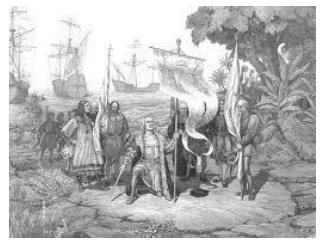
Columbus began his voyages thinking he could reach Asia by the sailing the Atlantic. • Was Italian, lived in Portugal, sailed for Spain • Columbus and crew left August 1492 on three ships (Nina, Pinta, Santa Maria) • Expected to be at sea 21 days; reached land October 12, 1492 • Thought he was in India; called natives “Indians” • Visited Cuba before returning to Spain
Columbus was made governor of all territory claimed • Sailed again to colonize portions of he territory and convert them to Christianity • Believed he had found Asia until the day he died
Continuing Search for Asia • Italian, Amerigo Vespucci followed Columbus’ route but knew the land was not Asia • The land was called “America” after Vespucci • Vasco Nunez de Balboa of Spain explored the Caribbean coast • Became the first European to see the Pacific Ocean
Ferdinand Megellan of Portugal set out to find an Atlantic-Pacific passage • Found a narrow passage connecting the two bodies of water, called a strait, at the southern tip of South America • Reached the Philippines, where he was killed • Members of his crew became the first to circumnavigate, or travel around, the earth
Columbian Exchange • Trips led to the Columbian Exchange, a transfer of people, products, and ideas between hemispheres • Positives: cows, hogs, wheat, oats • Negatives: smallpox, chickenpox, measles