1 / 13

Enhancing Photosynthesis Efficiency in Plants: Light Wavelength Considerations

Explore how photosynthesis converts sunlight into chemical energy in plants. Discover the raw ingredients for photosynthesis, the role of chloroplasts and leaf pigments, and the efficiency of the process. Learn about light absorption in photosynthesis and the impact of different wavelengths on filamentous green algae.

arnav
Télécharger la présentation

Enhancing Photosynthesis Efficiency in Plants: Light Wavelength Considerations

An Image/Link below is provided (as is) to download presentation Download Policy: Content on the Website is provided to you AS IS for your information and personal use and may not be sold / licensed / shared on other websites without getting consent from its author. Content is provided to you AS IS for your information and personal use only. Download presentation by click this link. While downloading, if for some reason you are not able to download a presentation, the publisher may have deleted the file from their server. During download, if you can't get a presentation, the file might be deleted by the publisher.

E N D

Presentation Transcript


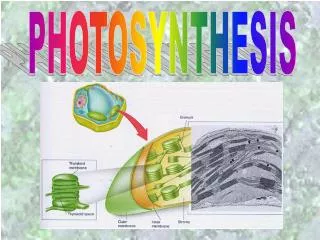
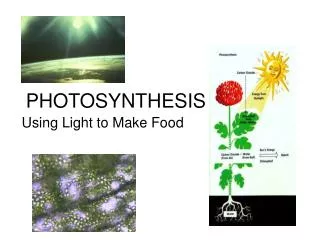
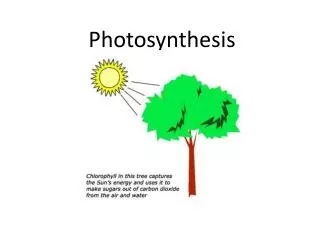
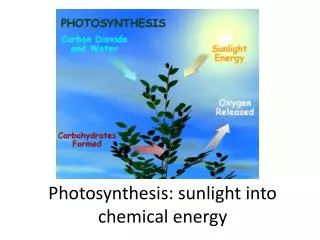
  1. Photosynthesis: sunlight into chemical energy

  2. Raw ingredients for Photosynthesis Light Leaf Pigment chloroplast

  3. Leaf

  4. Photosynthesis is not a very efficient process. Of the sunlight reaching the surface of a leaf, approximately how much is : • 75% is evaporated • 15% is reflected • 5% is transmitted through the leaf • 4% is converted to heat energy • 1% is used in photosynthesis 

  5. What wavelength of light is most effective in filamentous green alga?

More Related