Download
1 / 4
40 likes | 164 Vues
This section explores the tumultuous Radical Days of the French Revolution, focusing on the emigres who fled France, the radical Jacobins, and the formation of the National Convention. Key events include the execution of King Louis XVI and Marie Antoinette, as well as the establishment of the Committee of Public Safety led by Maximilien Robespierre. The Reign of Terror, marked by widespread executions, saw the guillotine as the "engine of terror" claiming tens of thousands of lives until Robespierre's own execution in July 1794.

E N D
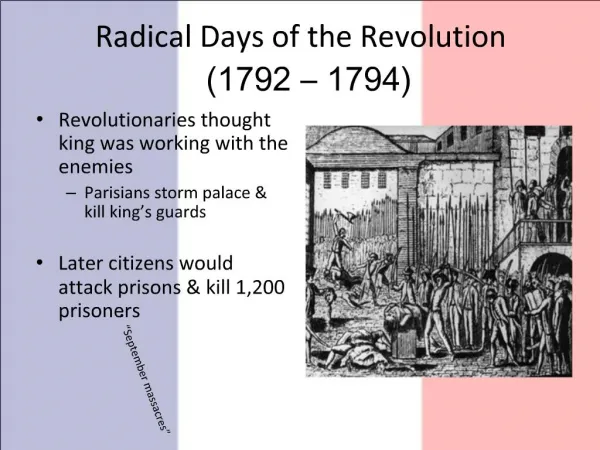
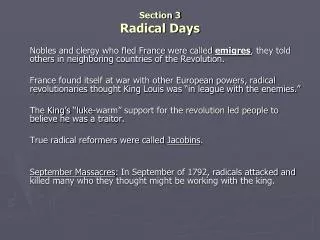
Section 3Radical Days Nobles and clergy who fled France were called emigres, they told others in neighboring countries of the Revolution. France found itself at war with other European powers, radical revolutionaries thought King Louis was “in league with the enemies.” The King’s “luke-warm” support for the revolution led people to believe he was a traitor. True radical reformers were called Jacobins. September Massacres: In September of 1792, radicals attacked and killed many who they thought might be working with the king.
Section 3Radical Days National Convention was formed and Louis XVI was put on trial for treason. In January 1793 Louis was decapitated by the guillotine. In October, Marie Antoinette was also executed. France is at war with most of Europe. To deal with threats the Committee of Public Safety was created. - 12 member committee - Absolute power - “Freedom Fever”
Section 3Radical Days Maximilien Robespierre: - Leader Committee Of Public Safety - Cold/humorless - Popular - “Liberty cannot be secured, unless criminals lose their heads.” Reign of Terror: - 40,000 deaths…half by the Guillotine - Many died in prison - 15% Clergy/Nobles - 15% Middle-class Guillotine: “engine of terror” July 1794 Robespierre was executed