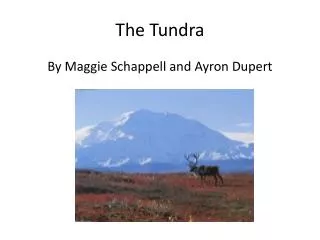
Exploring the Tundra: Climate, Geography, and Wildlife of the Arctic Circle
The tundra is a unique biome located above the Arctic Circle, stretching from Scandinavia across Russia to Northern Alaska and Canada. Characterized by its cold, dry climate, with summer temperatures rarely exceeding 50°F, it experiences short summers lasting only 6 to 10 weeks. The soil is mostly humus, with a permafrost layer beneath, influencing the vegetation of lichens, mosses, and small shrubs. Wildlife includes grizzly bears, wolves, and diverse bird species. Human activities, like oil drilling and the Chernobyl disaster, have impacted this once pristine environment.
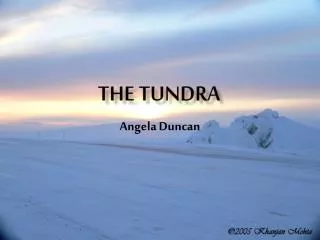

Exploring the Tundra: Climate, Geography, and Wildlife of the Arctic Circle
E N D
Presentation Transcript
The Tundra Angela Duncan
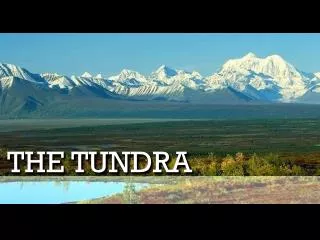
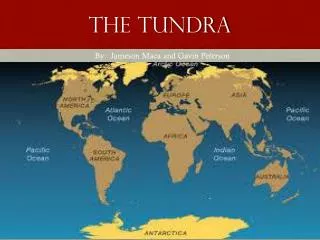
Geography • Located above the Arctic Circle • Stretches from northern Scandinavia, across Russia, Siberia, Northern Alaska, and finally to Canada. • Hugs the northern most ring of the planet
Climate • Generally cold and very dry • Short summers • 6 to 10 weeks long • Never gets warmer than 50°F • Cold winds continuously blow across the landscape • Average temperature is around -30°F
Soils • Topsoil composed mostly of humus due to slow decomposition rates • Layer of permafrost underneath • Constant freezing and thawing of the soil brings rocks to the surface • Polygonal pattern of stones on the surface
Biology • Vegetation: Lichens, Mosses, Grasses, Herbaceous Plants, Small Shrubs • Land Animals: Grizzly Bears, Gray Wolves, Caribou, Oxen, Weasels, Lemmings, Arctic and Red Foxes, Moose • Sea Animals: Walruses, Orcas, Beluga Whales, Sea Lions • Birds: Snowy Owls, Golden Eagles, Bald Eagles, Arctic Geese, Puffins, Arctic Loons
Human Influence • Used to be the only biomes untainted by humankind • Drilling for Oil • Pesticides from nearby civilization • Chernobyl Disaster • 1986 Ukraine • Great explosion of the power plant • Massive amounts of radiation released (cesium-137) • Covered the Norwegian tundra in the form of rainfall • Damage to the food chain