Nail Making Machine
0 likes | 35 Vues
A nail making machine automates the production of nails, efficiently crafting them from raw materials like metal wire. It streamlines the manufacturing process, shaping nails with precision and speed, capable of producing thousands per hour. This device revolutionizes nail production, enhancing productivity and consistency in various industries worldwide. For more information visit our website: https://www.asvrmachine.com/our-machines/<br>

Nail Making Machine
E N D
Presentation Transcript
Nail Making Machine bvNails have been a crucial component of construction, woodworking, and various other industries for centuries. Traditionally, the process of manufacturing nails was labor-intensive, involving skilled artisans hammering them out one by one. However, with the advent of wire nail making machines, this age-old practice has been transformed, revolutionizing the way nails are produced.
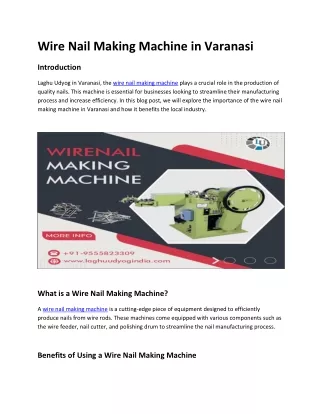
The Birth of Nail Making Machines: The origins of steel nail making machines can be traced back to the early 19th century when innovators sought more efficient methods of nail production. In 1790, Jacob Perkins patented the first machine designed to cut and head nails in one operation. This laid the foundation for further advancements in nail making technology. How Nail Making Machines Work: Modern nail making machines automate the process of nail production, significantly increasing efficiency and output. These machines typically consist of several components: 1. Wire Feeding Mechanism: Raw material in the form of wire is fed into the machine. This wire is usually made of steel or other suitable metals. 2. Cutting Mechanism: The wire is cut into the desired length by a cutting mechanism, which can be adjusted to produce nails of various sizes. 3. Head Formation: After cutting, the nail's head is formed using a separate mechanism. This can involve processes such as upsetting or punching, depending on the type of nail being produced. 4. Pointing Mechanism: Some iron nail making machines also include a pointing mechanism, which shapes the nail's tip to a sharp point. 5. Sorting and Packaging: Once the nails are formed, they are sorted according to size and packaged for distribution. Benefits of Nail Making Machines: The adoption of nail making machines has brought about numerous benefits for manufacturers and consumers alike: 1. Increased Efficiency: Nail making machines can produce thousands of nails per hour, far surpassing the output of manual labor. This increased efficiency translates to lower production costs and higher profits for manufacturers. 2. Consistency: Machines ensure uniformity in nail size, shape, and quality, eliminating variations that may occur with manual production. 3. Customization: wire nail making machines can be adjusted to produce nails of various sizes and specifications, allowing manufacturers to cater to diverse customer needs. 4. Reduced Labor Dependence: By automating the production process, Steel nail making machines reduce the reliance on manual labor, freeing up human resources for other tasks. 5. Improved Safety: Automated machines minimize the risk of workplace injuries associated with manual nail production, creating a safer working environment for employees.
The Future of Nail Making Technology: As technology continues to advance, so too will nail making machines. Innovations such as computerized controls, predictive maintenance systems, and enhanced material handling capabilities are likely to further improve efficiency and productivity in nail manufacturing. Furthermore, with growing emphasis on sustainability, there is a rising demand for eco-friendly nail production methods. Nail making machines can play a significant role in this by optimizing material usage and reducing waste. Conclusion Nail making machines have transformed the nail manufacturing industry, offering increased efficiency, consistency, and customization. As technology evolves, these machines will continue to shape the future of nail production, driving innovation and sustainability in the process.