CLASSIFICATION LAB 08
Dive into the classification and relationships of animals from Kingdom Animalia, study systematics and taxonomy, understand phylogenetic relationships, and analyze diverse characteristics for accurate classification.

CLASSIFICATION LAB 08
E N D
Presentation Transcript
CLASSIFICATION LAB 08
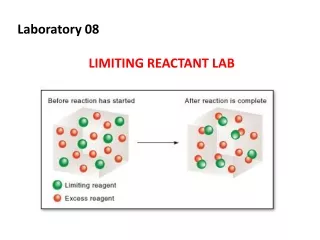
Purpose: • Review classification of organisms. • Construct and map the relationships of members from the Kingdom Animalia.
Systematics- studies diversity of life Taxonomy- study of classification I. Systematics
Classification: Six kingdom system : Eubacteria Archaebacteria E. coli Cyanobacteria Protista Paramecium Diatom Slime mold Plantae Fungi Animalia
Phylogentic Relationships of Animals Platyhelminthes Porifera Mollusca Chordata Arthropoda Annelida Cnideria Nematoda Echinodermata pseudocoelom segmentation acoelom Protostome: schizocoelem Deuterostomes: eucoelom radial symmetry bilateral symmetry no true tissues true tissue Ancestral Protist
Mode of Reproduction: binary fission, gametes Cell structure: multi or single celled, nucleus/no nucleus, cell wall/no cell wall, chlorophyll present/not present, Internal/External skeleton: back bone, bone/cartilage Energy: autotrophic, heterotrophic, chemotrophic Respiratory system: gills, lungs, gas exchange across skin/epithelium Embryonic development: deuterostome, protostome Circulatory system: closed/open, # of chambers in a heart What are some of the ways we can classify animals?
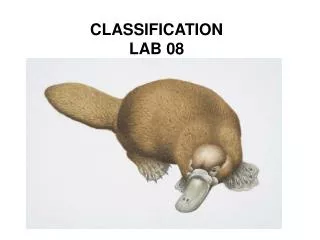
Class Mammalia Metatherians Eutherians Prototherians True placental Live births Have fur/hair, warm blooded, suckle young
Rhipidistians Placodermi Chondrichthyes (sharks & rays) Osteichthyes Amphibians Reptiles Mammalia Birds Lungfish Coelacanth Ray-finned fishes Tetrapods Lobed-finned fishes Fleshy-finned fishes Ancestral jawed fishes of the Devonian period
Two main objectives of taxonomy: 1. Sort out closely related organisms, assign them to a species, and describe diagnostic characteristics that distinguish the species from one another. 2. Classification of species- arrange species in broader taxonomic categories.
School of Systematics Classical Evolutionary Systematics • Classification based on observed similarities and differences • Darwinian approach • Phylogram
Features Pear orange grapefruit apple plum greengage hard + + + + - - stone - - - - + + round - + + + - + thin skin + - - + + + smooth + - - + + + sweet + + - + + + stalk + - - + + + segments - + + - - - Similarities pear orange 3 grapefruit 2 7 apple 7 4 3 plum 6 1 0 4 greengage 5 2 1 6 7 pear orange grapefruit apple plum
mouse chimp hawk lizard salamander trout hagfish feathers Fur; mammary glands Claws or nails lungs jaws Classification based on branching pattern in a phylogenetically related group of organisms Cladogram
Divide into 4 research teams. Make a classification scheme. Include all of the categories from phylum to species. Take a bag containing fasteners. Develop a classification system. Exercise1: The Nuts and Bolts of Classification Complete assignment and answer all questions
Exercise 2: Animal Classification • Divide into teams of 2 or 3. • Select 5 animals • Sort animal specimens based traits. • Make a classification scheme. Include all of the categories from phylum to species.
Construct a phylogenetic tree based only on examination of your specimens. The Comparative Approach to Phylogenetic Analysis 2 species evolving from x (dichotomous split) Use with 3 or more species