
Conflict management
Conflict management is the process by which disputes are resolved, where negative results are minimized and positive results are prioritized. This key management skill involves using different tactics depending on the situation, negotiation, and creative thinking
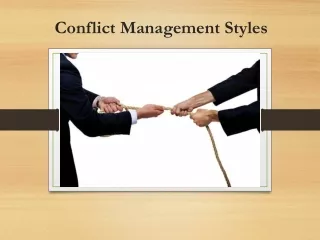

Conflict management
E N D
Presentation Transcript
Action plan 1- What is Conflict? 2- What is a conflict management style? 3- Conflict: Where does it come from? 4- The Positive Side of Conflict 5- Five Styles of Conflict Management
What is Conflict? “Conflict is a relationship between two or more parties (individuals or groups) who have, or think they have, incompatible goals and who act on the basis of those perceived incompatibilities”
What is a conflict management style? • Conflict Management Style: Form of behavior that a person practices in response to conflict with others. • When living and interacting with others on campus, you need to know how to resolve issues in different situations.
Conflict: Where does it come from? • Goals • Personality conflicts • Scarce resources • Styles • Values
The Positive Side of Conflict • Leadership opportunity. • Transform the situation into something better.
Five Styles of Conflict Management Thomas–Kilmann Conflict Mode Instrument
Accommodating People who accommodate are unassertive and very cooperative.
Competing People who approach conflict in a competitive way assert themselves and do not cooperate while pursuing their own concerns at another’s expense.
Avoiding People who avoid conflict are generally unassertive and uncooperative.
Collaborating Collaborators are both assertive and cooperative.
Compromising Compromisers are moderately assertive and moderately cooperative.
Conclusion • Different conflict management styles may be used when faced with different situations. • Knowing yourself and fully understanding each situation will help you understand the conflict management style needed. • Try a scenario-based approach to test the effectiveness of different approaches to specific situations.
To Meditate There is no BEST way to handle conflict. Each conflict is different and requires a different response. “Two heads are better than one.” (Collaborating) “Kill your enemies with kindness.” (Accommodating) “Split the difference.” (Compromising) “Leave well enough alone.” (Avoiding) “Might makes right.” (Competing)
References • Thomas, K. W., & Kilmann, R. H. (2018). Five conflict management styles at a glance. Retrieved from http://sourcesofinsight.com/conflict-management-styles-at-a-glance/ and http://peacebuilding.caritas.org/index.php/Conflict_Handling_Styles