SEO Optimization
E N D
Presentation Transcript
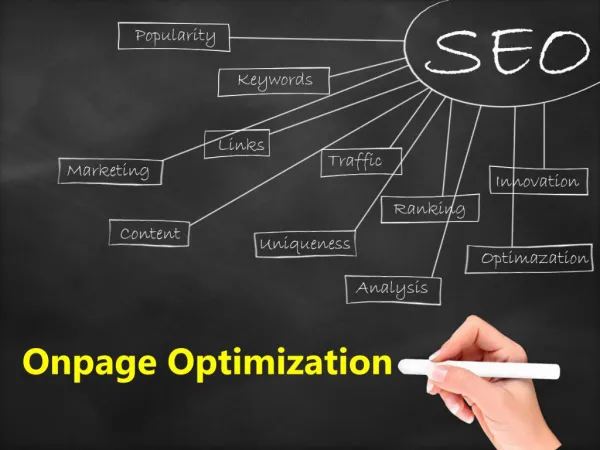
Table of Contents 1. Introduction to SEO Optimization 2. Keyword Research: Finding the Right Words 3. On-Page Optimization: Perfecting Your Website 4. Content Marketing: Creating Engaging Content 5. Technical SEO: Optimizing for Search Engines 6. Link Building: Earning Quality Backlinks 7. Local SEO: Optimizing for Local Search 8. Mobile Optimization: Making Your Website Mobile-Friendly 9. Measuring and Analyzing Results: Understanding Your Data 10. The Future of SEO Optimization: Emerging Trends and Best Practices 11. Conclusion and Summary 2
1.1 Understanding the Concept of SEO Optimization Search Engine Optimization (SEO) is the process of improving the visibility of a website or a web page in search engine results pages (SERPs) through the use of organic and natural methods. The goal of SEO optimization is to make a website appear as high as possible in the SERP ranking, resulting in more traffic and potential customers. 1.2 Importance of SEO Optimization In today's digital age, having a strong online presence is crucial for any business. With millions of websites vying for attention on the internet, SEO optimization is what helps your website stand out and get noticed by search engines and potential customers. It also ensures that your website is easily accessible and user-friendly, which is crucial for retaining visitors and converting them into customers. 1.3 The Components of SEO Optimization SEO optimization involves several components, including on- page optimization, off-page optimization, technical optimization, and content optimization. On-page optimization refers to elements on your website that can be optimized, such as title tags, meta descriptions, and header tags. Off-page optimization refers to elements outside of your website that can impact your SEO, such as backlinks and social media presence. Technical optimization involves optimizing your website’s infrastructure, such as website speed and mobile responsiveness. Content optimization involves producing high- quality, keyword-rich content that provides value to users and helps your website rank higher in search engines. 1.4 Keyword Research Keyword research is an important aspect of SEO optimization, as it helps you determine which keywords and phrases your target audience is searching for. By understanding which keywords and phrases are most relevant to your business, you can optimize your website and content to rank higher in search engines for those keywords. 4
1.5 On-Page Optimization On-page optimization involves optimizing various elements on your website to make it more search engine-friendly. This includes optimizing your title tags, meta descriptions, header tags, and other elements that help search engines understand what your website is about. Additionally, it involves optimizing the structure and content of your website to make it easier for search engines to crawl and index your website’s pages. 1.6 Off-Page Optimization Off-page optimization refers to optimizing elements outside of your website that can impact your SEO, such as backlinks, social media presence, and local search optimization. By building high-quality backlinks from reputable websites, you can improve your website’s domain authority and help it rank higher in search engines. Social media presence and local search optimization can also help increase your visibility online and drive more traffic to your website. 1.7 The Future of SEO Optimization SEO optimization is constantly evolving as search engines continue to update their algorithms. As technology continues to advance and user behavior changes, it's important to stay up- to-date on the latest SEO trends and best practices to ensure that your website remains optimized and continues to rank well in search engines. 5
2.1 What is Keyword Research and Why is it Important? Keyword research is the process of discovering the phrases and terms that people use when searching for a specific product, service, or information. It is important for SEO optimization because it helps you to understand what your target audience is searching for and what words they use to find it. This information is then used to help you create content that is optimized for those keywords, which will help you rank higher in search results. 2.2 How to Conduct Keyword Research There are several methods for conducting keyword research, including the use of keyword research tools, analyzing your competitors' websites, and monitoring your search engine rankings. The most effective method is to use a combination of these techniques to create a comprehensive keyword research strategy. Some popular keyword research tools include Google Keyword Planner, SEMrush, Ahrefs, and Moz. 2.3 Understanding Keyword Metrics When conducting keyword research, it is important to understand several key metrics, including keyword volume, keyword difficulty, and keyword competition. Keyword volume refers to the number of times a keyword is searched for in a specific period. Keyword difficulty measures how difficult it would be to rank for a particular keyword. Keyword competition refers to the number of websites that are competing for the same keyword. 2.4 Long-Tail Keywords Long-tail keywords are longer and more specific phrases that are less frequently searched but are more targeted to your target audience. They can be highly effective for SEO optimization because they are less competitive, which makes it easier to rank for them. They also allow you to target a specific audience, which can result in higher engagement and conversions. 7
2.5 Local Keywords Local keywords are terms or phrases that are specific to a geographic location. They are useful for businesses that serve a specific geographic area, as they help to increase visibility for local search results. Some examples of local keywords might include “best pizza in [city name]” or “[city name] hair salon”. 2.6 Keyword Clustering Keyword clustering is the process of grouping related keywords together and using them in your content. This helps you to create more targeted and relevant content that is optimized for your target keywords. By using keyword clustering, you can also create a more structured approach to your SEO optimization, which can help you to achieve better results. 2.7 Keyword Optimization in Content Creation Once you have conducted your keyword research, it is important to use the keywords you have discovered in your content creation process. This involves including the keywords in the title, meta description, headings, and body of your content. However, it is important to use the keywords in a natural and organic way, as overuse of keywords can result in penalties from search engines. 8
3.1 Importance of On-Page Optimization On-page optimization is critical for improving the visibility of your website in search engine results. It refers to the various elements of your website, including the content and the structure, that can be optimized to improve your website's ranking. Proper on-page optimization can greatly increase the chances of your website appearing at the top of search engine results. 3.2 Title Tag Optimization The title tag is one of the most important elements of on-page optimization. It is the text that appears in the search engine results and provides a brief description of what your website is about. It should be short, descriptive, and include the main keyword you are targeting. When optimizing the title tag, make sure it accurately reflects the content on your website. 3.3 Meta Description Optimization The meta description is another important element in on-page optimization. It is a summary of the content on your page that appears in search engine results. It should be written in a way that entices the reader to click on your website. Like the title tag, it should be concise, descriptive, and include the main keyword. 3.4 Header Tag Optimization Header tags, such as H1 and H2 tags, provide structure to the content on your website. They help search engines understand the hierarchy of the content on your page. Make sure to use header tags appropriately and include your main keyword in at least one of the tags. 3.5 Content Optimization The content on your website should be unique, relevant, and of high quality. It should be optimized for the main keyword you are targeting and provide value to the reader. Make sure to include the main keyword in the first paragraph and throughout the content. The content should also be optimized for readability, with short paragraphs and subheadings. 10
3.6 URL Optimization The URL of your website should be short, descriptive, and include the main keyword. This makes it easier for search engines and users to understand what your website is about. Make sure to use dashes instead of underscores in the URL, and avoid using special characters or symbols. 3.7 Image Optimization Images can greatly enhance the user experience on your website. However, they can also slow down the loading time of your website. To avoid this, make sure to optimize the images by reducing their file size and using descriptive file names that include the main keyword. Additionally, make sure to include alt tags for the images, which describe what the image is about. 11
4.1 Understanding the Importance of Content Marketing In today's digital world, content marketing has become a crucial aspect of SEO optimization. It helps businesses to attract and retain customers by providing them with valuable and informative content. By creating engaging and relevant content, businesses can build trust and credibility with their target audience, which ultimately leads to increased conversions and sales. 4.2 Defining Your Target Audience The first step in content marketing is to define your target audience. This involves identifying the demographics, interests, and needs of your potential customers. Understanding your target audience will help you to create content that resonates with them and addresses their pain points. By providing content that is relevant and valuable to your target audience, you can increase the chances of your content being shared and attract more traffic to your website. 4.3 Creating a Content Strategy Once you have defined your target audience, it is time to create a content strategy. This involves identifying the types of content that you want to create and the channels that you want to use to distribute your content. Your content strategy should also include a plan for measuring the success of your content marketing efforts. 4.4 The Different Types of Content There are several types of content that businesses can use for their content marketing efforts, including blog posts, infographics, videos, e-books, and webinars. Each type of content has its advantages and disadvantages, and it is important to choose the type that is best suited to your target audience and your business goals. 4.5 The Benefits of Blogging Blogging is one of the most popular forms of content marketing. It provides businesses with an opportunity to share their expertise and insights with their target audience. 13
Regular blogging can help to improve your website's search engine ranking, increase traffic to your website, and generate leads. 4.6 The Importance of Video Marketing Video marketing is another effective form of content marketing. It allows businesses to engage with their target audience in a visually appealing way and provides them with an opportunity to showcase their products and services. Video marketing has become increasingly popular in recent years, and it is an effective way to reach and engage with your target audience. 4.7 Measuring the Success of Your Content Marketing Efforts To determine the success of your content marketing efforts, it is important to track and measure the results of your efforts. This can include monitoring website traffic, lead generation, and engagement metrics. By measuring the results of your content marketing efforts, you can make informed decisions about what is working and what needs to be improved. 4.8 Conclusion In conclusion, content marketing is a crucial aspect of SEO optimization. By creating engaging and relevant content, businesses can build trust and credibility with their target audience, which ultimately leads to increased conversions and sales. By following the steps outlined in this chapter, businesses can create a successful content marketing strategy that drives traffic, generates leads, and improves their search engine ranking. 14
5.1 Introduction to Technical SEO Technical SEO refers to optimizing the backend of a website to make it more accessible and readable to search engines. It involves fixing technical issues, improving site speed, and ensuring a website's structure is easily crawlable. Technical SEO lays the foundation for a website's success in search engines and should not be overlooked. 5.2 Website Speed Optimization Website speed has a direct impact on the user experience, and it's a critical aspect of technical SEO. A slow-loading website will lead to high bounce rates, lower rankings in search engines, and decreased user engagement. There are various ways to improve website speed, such as using caching, compressing images, and using a content delivery network (CDN). 5.3 Crawling and Indexing Crawling refers to the process where search engines visit a website and extract information from it. Indexing is the process where this information is stored in the search engine's database. Improving crawling and indexing can have a significant impact on a website's visibility in search engines. 5.4 Robots.txt and Sitemap The robots.txt file is used to give search engines instructions on which pages of a website they can crawl. A sitemap is a file that lists all of the pages on a website, making it easier for search engines to crawl and index them. Having an accurate robots.txt file and sitemap can greatly improve a website's technical SEO. 5.5 Structured Data Structured data is a type of code that provides search engines with additional information about a website's content. It helps search engines understand the context and relevance of a website's content, leading to better visibility in search results. Implementing structured data can greatly enhance a website's technical SEO. 16
5.6 Mobile Optimization Mobile optimization is essential in today's world, where the majority of internet traffic comes from mobile devices. A mobile-friendly website not only provides a better user experience, but also has a positive impact on search engine rankings. Ensuring a website is optimized for mobile devices is a critical aspect of technical SEO. 5.7 HTTPS Security HTTPS security is a critical aspect of technical SEO that provides a secure connection between a website and its visitors. A website with HTTPS security is more trustworthy and has a better chance of ranking higher in search engines. Implementing HTTPS security is an essential step in enhancing a website's technical SEO. 5.8 Conclusion Technical SEO is a critical aspect of optimizing a website for search engines. It involves fixing technical issues, improving site speed, and ensuring a website's structure is easily crawlable. Implementing the various technical SEO strategies discussed in this chapter can greatly enhance a website's visibility in search engines and provide a better user experience. 17
6.1 Introduction to Link Building Link building is a critical component of SEO optimization. It refers to the process of acquiring backlinks, or links pointing to a website, from other authoritative websites. These backlinks act as "votes" of confidence in the eyes of search engines, telling them that the website being linked to is a trusted and authoritative source of information. 6.2 Why Link Building is Important Link building is important for several reasons. Firstly, it helps search engines determine the relevance and authority of a website. If a website has a large number of high-quality backlinks, it is seen as a reliable source of information, which can lead to higher search engine rankings. Secondly, backlinks can drive traffic to a website, as users often follow links to find new information or products. 6.3 Types of Backlinks There are two main types of backlinks: dofollow and nofollow. Dofollow links are those that pass on "link juice," or ranking power, to the linked website. On the other hand, nofollow links do not pass on any ranking power, but they can still drive traffic to a website. 6.4 How to Acquire Backlinks There are many ways to acquire backlinks, including creating high-quality content, reaching out to other websites for links, and participating in link exchanges. It is important to note that not all backlinks are created equal, and it is essential to focus on acquiring high-quality, relevant backlinks from reputable sources. 6.5 Common Link-Building Techniques Some common link-building techniques include guest blogging, broken link-building, and creating infographics. It is important to choose techniques that align with a website's niche and target audience, as well as the overall goals of the website. 19
6.6 The Risks of Link Building Link building can be a double-edged sword, as it can bring both benefits and risks. It is important to be cautious when acquiring backlinks, as low-quality or spammy links can lead to penalties from search engines. It is essential to only focus on acquiring high-quality, relevant backlinks from reputable sources. 6.7 Best Practices for Link Building The best practices for link building include focusing on high- quality, relevant backlinks, creating valuable and engaging content, and building relationships with other websites and influencers. By following these best practices, a website can improve its search engine rankings, drive traffic, and build its online presence. 6.8 Conclusion Link building is an essential component of SEO optimization, as it helps search engines determine the relevance and authority of a website. By focusing on acquiring high-quality, relevant backlinks, a website can improve its search engine rankings, drive traffic, and build its online presence. 20
7.1 Introduction to Local SEO Local SEO is the process of optimizing your website to rank highly for local searches related to your business. This type of optimization focuses on improving your online visibility in local search results, including Google Maps and the local pack. 7.2 Understanding Local Search Results Local search results are different from traditional search results in that they prioritize businesses that are physically close to the searcher. This type of search result is intended to help users quickly find the information they are looking for, such as the address, hours, and phone number of a local business. 7.3 Claiming and Optimizing Your Google My Business Listing Google My Business is a free tool provided by Google that allows you to manage your business's online presence across Google, including search and maps. By claiming and verifying your Google My Business listing, you can improve your local search visibility and increase the chances of appearing in the local pack. 7.4 Utilizing Local Keywords When optimizing for local search, it's important to include relevant local keywords in your website content and metadata. This includes keywords such as your city, state, and neighborhood, as well as industry-specific keywords related to your business. 7.5 Building Citations and Local Directories Citations are online mentions of your business's name, address, and phone number (NAP). Building citations for your business on local directories and data aggregators can help improve your local search visibility and establish your business as a trustworthy, local authority. 22
7.6 Encouraging Customer Reviews Customer reviews play a significant role in local search ranking and can greatly impact your business's online reputation. Encourage your customers to leave reviews on your Google My Business listing and other popular review sites like Yelp and TripAdvisor. 7.7 Integrating Local SEO into Your Overall Marketing Strategy To maximize the benefits of local SEO, it's important to integrate it into your overall marketing strategy. This includes regularly updating your Google My Business listing, building citations and local directories, and creating content that is optimized for local search. 7.8 Measuring and Analyzing Your Local SEO Performance To determine the success of your local SEO efforts, it's important to regularly measure and analyze your local search performance. This includes tracking your website's local search rankings, the volume of local traffic and leads, and the impact of your reviews and citations on your online reputation. 23
8.1 Importance of Mobile Optimization Today, the majority of internet users access the web through their smartphones. This means that having a mobile-friendly website is crucial for reaching your target audience. A website that is optimized for mobile devices provides a better user experience and is more likely to rank higher in search engine results. 8.2 Key Elements of Mobile Optimization Mobile optimization involves several key elements, including responsive design, fast page load speed, and a mobile-friendly layout. These elements ensure that your website is easily navigable and accessible on all devices, including smartphones and tablets. 8.3 Responsive Design Responsive design is a technique that allows a website to adapt to different screen sizes and devices. This means that the layout and content of your website will automatically adjust to fit the device being used, providing an optimal viewing experience for the user. 8.4 Page Load Speed Page load speed is a critical factor for mobile optimization. Slow-loading websites are frustrating for users and can result in a high bounce rate. This can hurt your search engine rankings, as well as your overall online presence. 8.5 Mobile-Friendly Layout Having a mobile-friendly layout means that your website is optimized for touch-based navigation. This includes larger buttons, easy-to-read text, and a simple layout that makes it easy for users to find the information they need. 25
8.6 Content Optimization Optimizing your content for mobile devices is important to ensure that users can access and engage with your content on the go. This includes optimizing images, videos, and other multimedia elements for mobile devices. 8.7 Analytics and Testing Using analytics tools, such as Google Analytics, to track the performance of your mobile website is crucial for making informed decisions about your mobile optimization strategy. Regularly testing your website on different devices and screen sizes will help you identify and fix any issues that may affect the user experience. 8.8 The Future of Mobile Optimization As mobile usage continues to grow, mobile optimization will become even more important for businesses and website owners. Keeping up with the latest trends and advancements in mobile technology will be key to staying ahead in the ever- evolving world of SEO. 8.9 Conclusion Mobile optimization is a critical component of any comprehensive SEO strategy. By creating a mobile-friendly website that provides a great user experience, you can improve your search engine rankings and reach your target audience more effectively. 26
9.1 Introduction to Measuring and Analyzing Results In order to effectively evaluate the success of your SEO efforts, it is crucial to measure and analyze results. This chapter will explore the importance of monitoring progress and the various tools and techniques used for tracking and analyzing your data. 9.2 Setting Measurable Goals and Objectives Before embarking on your SEO journey, it is important to establish clear and achievable goals. This will allow you to track your progress and make adjustments to your strategy as needed. 9.3 Understanding Analytics and Webmaster Tools Google Analytics and Google Search Console are essential tools for measuring and analyzing your SEO results. These platforms provide valuable insights into your website's traffic, keyword rankings, and backlinks. 9.4 Tracking Keyword Rankings Tracking keyword rankings is a critical component of measuring your SEO progress. This will help you to understand which keywords are driving traffic to your website and identify areas for improvement. 9.5 Monitoring Traffic and User Behavior Analyzing website traffic and user behavior can provide valuable insights into the effectiveness of your SEO strategy. This information can help you to identify any potential problems and make adjustments to improve the user experience. 9.6 Measuring Conversions and Sales Conversions and sales are the ultimate measure of success for many businesses. Tracking conversion rates and sales can help you to understand how your SEO efforts are impacting your bottom line. 28
9.7 Using Tools to Measure and Analyze Results There are many tools available to help you measure and analyze your SEO results, including keyword rank tracking tools, backlink analysis tools, and website analytics platforms. 9.8 The Importance of Continuous Monitoring and Analysis Continuous monitoring and analysis are key to the success of any SEO strategy. Regularly tracking and analyzing your results will help you to identify areas for improvement and adjust your strategy as needed. 9.9 The Role of Data in SEO Optimization Data is the foundation of any effective SEO strategy. By understanding and analyzing your data, you can make informed decisions and optimize your website for maximum search engine visibility. 9.10 Conclusion: Making Data-Driven Decisions for SEO Success In conclusion, measuring and analyzing results is a critical component of any SEO strategy. By monitoring progress and making data-driven decisions, you can achieve long-term success and reach your desired audience effectively. 29
10.1 The Importance of Staying Up-to-Date with SEO Trends SEO is an ever-evolving field and marketers and website owners need to stay updated with the latest trends and best practices. Staying ahead of the game can give a significant advantage and help businesses rank higher in search results. 10.2 The Rise of Voice Search Optimization With the increasing popularity of voice-activated devices like Amazon Echo and Google Home, voice search optimization is becoming an important aspect of SEO. Optimizing content for voice search requires a different approach compared to traditional text-based search. 10.3 Artificial Intelligence and Machine Learning in SEO AI and machine learning are changing the way search engines operate. With algorithms becoming smarter, businesses need to stay ahead of the curve by incorporating AI and machine learning into their SEO strategy. 10.4 The Growing Importance of Video Content Video content is becoming increasingly popular and is projected to continue to grow in the coming years. Optimizing video content for search engines can help businesses rank higher in search results and reach a wider audience. 10.5 The Role of Social Media in SEO Social media is becoming an increasingly important factor in SEO. Search engines are now considering social signals, such as the number of shares, likes, and followers, in their ranking algorithms. 10.6 The Future of Local SEO Local SEO is becoming increasingly important as search engines prioritize local results for search queries. Businesses should focus on building a strong local presence by creating local listings, using local keywords, and promoting local content. 31
10.7 The Importance of Mobile-First Indexing As mobile devices continue to become more prevalent, mobile- first indexing is becoming a critical aspect of SEO. This means that search engines will prioritize mobile versions of websites when ranking results, making it important for businesses to optimize their websites for mobile devices. 10.8 The Emergence of Virtual and Augmented Reality in SEO Virtual and augmented reality are becoming increasingly popular and are expected to play a significant role in the future of SEO. Optimizing these technologies can help businesses stand out from the competition and reach a wider audience. 10.9 The Importance of Privacy and Security in SEO Privacy and security are becoming increasingly important factors in SEO. Search engines are now considering the privacy and security of websites when ranking results, making it important for businesses to prioritize these aspects of their websites. 10.10 Conclusion: Embracing the Future of SEO Optimization The future of SEO optimization is constantly changing, and businesses need to stay ahead of the curve by incorporating emerging trends and best practices into their SEO strategy. Staying up-to-date and adaptable will help businesses achieve higher search rankings and reach a wider audience. 32
11.1 Summing Up the Key Takeaways In this comprehensive guide to SEO optimization, we have covered a wide range of topics, from keyword research and on- page optimization, to content marketing, technical SEO, link building, local SEO, mobile optimization, and data analysis. We hope that this guide has given you a solid understanding of the essentials of SEO and how to apply these principles to your own website. 11.2 Importance of Continual Learning SEO is an ever-evolving field, and it is important to stay up-to- date with the latest best practices and trends. As search engines continue to change and improve their algorithms, it is essential to continuously analyze and adjust your strategy to stay ahead of the competition. 11.3 Final Thoughts By implementing the strategies outlined in this guide, you will be well on your way to improving your website's visibility, ranking, and overall online success. Remember, SEO optimization is a continuous process that requires patience, persistence, and a willingness to experiment and learn. 11.4 Acknowledge the Benefits Optimizing your website for search engines is a valuable investment that can bring long-term benefits to your online presence. Not only will it help attract more traffic and customers to your site, but it will also enhance the user experience, making your website more accessible and user- friendly. 11.5 Take Action Now We hope that this guide has inspired you to start implementing SEO optimization on your website. Don't hesitate to take the first step, and remember, even small changes can make a big impact over time. 34
11.6 A Final Reminder SEO optimization is a long-term strategy, so it's important to stay committed and focused on your goals. By following the best practices outlined in this guide, you will be well on your way to achieving success and reaching your full potential as a website owner. 35