Download
1 / 73
730 likes | 854 Vues
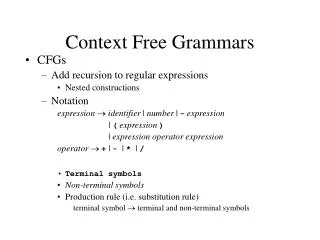
This work explores a novel approach to self-assembly using simple particles that coalesce into complex superstructures. Focusing on DNA tile systems and their application in synthetic and natural self-assembly, the study presents an abstract model based on polyomino context-free grammars. We analyze staged self-assembly mechanisms, establish rules, and evaluate the computational complexity of small system configurations. Key insights include the challenges of finding solutions in NP-hard scenarios and the efficiency of one-dimensional staged systems as compared to two-dimensional grammars.

E N D
Staged Self-Assembly andPolyomino Context-Free Grammars Andrew Winslow Defense Edition
Self-Assembly Simple particles coalescing into complex superstructures.
Self-Assembly Simple particles coalescing into complex superstructures.
Self-Assembly Simple particles coalescing into complex superstructures.
Self-Assembly Simple particles coalescing into complex superstructures.
Our work: Study an abstract self-assembly model based on DNA tile systems.
Input Output (polyomino) (small staged assembly system)
Input n
n Θ(n) Θ(log(n))
Finding small systems is (NP-)hard. Study a simplified model.
One dimension Ο(1) ? ? ? ? ? ? Ο(#glues2) Ω(n1/2/log(n)), Ο(n2/3) Staged System Grammar E. D. Demaine, S. Eisenstat, M. Ishaque, A. Winslow, One-dimensional staged self-assembly, DNA 17, 2011.
Two dimensions Ο(log(n)) w/scaling Macrotile … … Ω(n/log3n) Grammar Staged System A. Winslow, Staged Self-Assembly and Polyomino Context-Free Grammars, DNA 19, 2013.
? ? ? ? ? ?
Values are distinct Values are contiguous