The Cell Membrane and Homeostasis
110 likes | 235 Vues
This overview explores the critical role of the cell membrane in maintaining homeostasis by regulating nutrient concentrations, water balance, and waste elimination. The cell membrane is selectively permeable, allowing certain substances to pass while blocking others. We discuss two main types of cellular transport: passive transport (including diffusion and osmosis) and active transport (requiring energy), alongside processes like endocytosis and exocytosis. Understanding tonicity—hypertonic, hypotonic, and isotonic solutions—is essential for grasping how cells interact with their environments.


The Cell Membrane and Homeostasis
E N D
Presentation Transcript
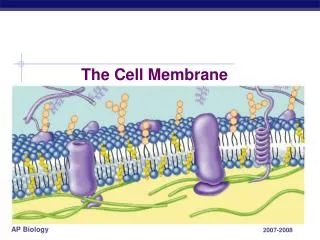
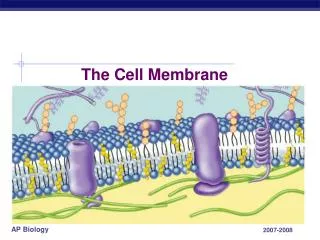
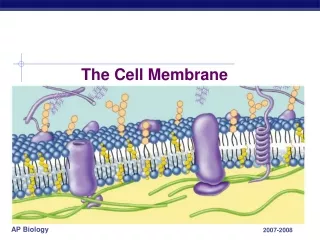
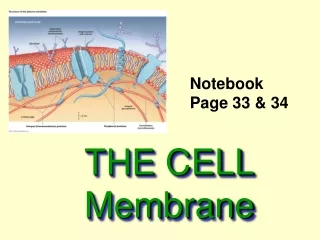
Homeostasis – Maintaining a Balance • Cells must keep the proper concentration of nutrients and water and eliminate wastes. • The cell membrane is selectively permeable – it will allow some things to pass through, while blocking other things.
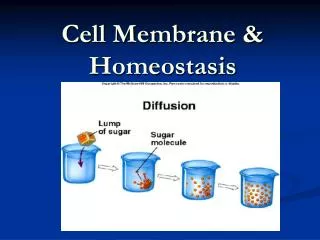
Types of Cellular Transport • 1. Passive transport – no energy is needed to move particles. • Diffusion – movement of particles from an area of high concentration to an area of low concentration. • Facilitated diffusion – embedded proteins act as tunnels allowing particles to “fall” through. • Channel Proteins • Carrier Proteins
Osmosis – a special type of diffusion • Diffusion of water across a selectively permeable membrane. • Occurs until water is balanced on both sides of the membrane.
2. Active transport – energy is needed (by the mitochondria) to move particles. The particles move from a low concentration to a high concentration. • Endocytosis– taking something into the cell. • Exocytosis – expelling something from the cell.
Cell Concentrations - Tonicity • Hypertonic solutions – more dissolved solute. • Hypotonic solutions – less dissolved solute. • Isotonic solutions – the same dissolved solute. http://www.zerobio.com/flashmx/tonicity.swf