Understanding U.S. Citizenship: By Birth and Naturalization Processes
160 likes | 276 Vues
Explore the pathways to U.S. citizenship, including birthright citizenship and naturalization. Learn about being born in the 50 states, D.C., or U.S. territories, as well as the requirements for children of U.S. citizen parents born abroad. Understand the naturalization process: from filing an application with USCIS, living in the U.S. for at least five years, to passing the citizenship test and oath of allegiance. Discover the distinctions between legal residents, immigrants, and aliens, and the implications of citizenship privileges and responsibilities.


Understanding U.S. Citizenship: By Birth and Naturalization Processes
E N D
Presentation Transcript
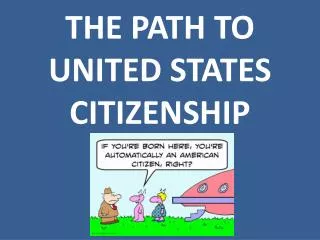
By birth • Born in 50 states and DC • “ “ American territory (Puerto Rico, Guam, military base)
If one or both parents are cit and have lived here • Born to immigrant parents on US soil (except diplomats)
Child born to American parents in foreign country. May hold dual cit
By naturalization Naturalization: the legal process that allows foreigners to become citizens Aliens: noncitizens Immigrants: people who move permanently to a new country
To become a citizen • Sign Declaration of Intention • File with USCIS
3. Must live in US at least 5 years, unless married to citizens (3) • 4. File an application
5. Interview with USCIS officer • 6. Citizenship test • 7. USCIS decides
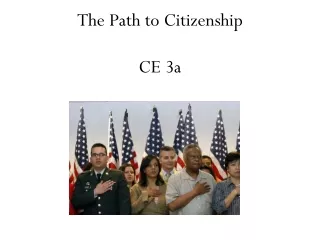
8. If granted, attend a ceremony and pledge an oath of allegiance
Citizenship is a privilege • Only Fed govt can give cit & take it away • State govts can deny some privileges but can’t take cit away
Can revoke cit in a foreign country • Can’t ever get cit back
Illegal aliens • App 5-6 million in US • “just want to work & have a better life” • Do not have legal right to work in US
Deport: send people back to their own country • Border Patrol law enforcement arm of USCIS
Legal aliens • May hold jobs, own property, attend public schools • Pay taxes; entitled to legal protection
May not vote or run for office • May not hold govt jobs • Must carry ID card at all times