Enhancing Airport Security: History, Challenges, and Outlook
440 likes | 597 Vues
This concise and comprehensive guide explores the evolution of airport security, including major considerations in terminal planning and design, the critical need for security measures like passenger screening and baggage checks, and the impact of historical incidents. Delve into the roles of various threats, from terrorists to disruptive passengers, and learn about the pivotal moments that prompted significant changes in security protocols, such as the tragic events of September 11, 2001. Discover the key players in airport security, including the Transportation Security Administration (TSA) and the measures taken to ensure the safety and protection of airport personnel and travelers. Gain valuable insights into the ongoing efforts to enhance security protocols, manage risks, and create a safer environment in airports worldwide.


Enhancing Airport Security: History, Challenges, and Outlook
E N D
Presentation Transcript
Airport Security Outline • Major consideration in Terminal planning and design • Who? What? • History – Why? • How? • Airport Security Program • “Failure of Imagination”
Airport Security • How much delay due to security?
Terminal Design Objectives • Walking distances • Aesthetic design • Services • Security • Cost effectiveness
Flight Interface • Arriving passenger areas • Security • Departure lounges • Corridors • Departure Gates All are important for different reasons, mostly to be more efficient, make more money… But Security is only to protect life/property!
Introduction • Safety vs. Security • Safety-freedom from unintentional danger, etc. • Security-freedom from intentional acts of violence, danger, risk of injury, loss, etc. • Who is/are the problem? • Terrorists • Hijackers • Suicide bombers • Criminals – “Inside Threat”/Outside job • Disruptive Passengers – intentional and not
Introduction • What is the problem? • Individual attacks to… • Weapons of Mass Destruction (WMDs) • Nuclear • Full nuclear detonation to “dirty” bomb • Biological • Chemical • Conventional weapons – large explosives • Vehicle Born Improvised Explosive Devices (VBIED) • Mass attacks with military weapons • Unconventional weapons – large A/C flown into targets…
Introduction • Why airports? • Vital to a stable economy • Important to community operation • High density of people – targets • Very visible, high profile facilities
History of Airport Security • FAA/TSA regs are written in blood • Crash/incidentNew regulations • First hijacking - 1930 Lima, Peru • Revolutionaries dropping leaflets • 1930s to ‘55 - Several hijackings • Eastern Europeans seeking asylum • 1st Fatal ‘47 – Romanians killed a crew • 1955 First Major Criminal Act • Jack Graham blew up A/C, 33 dead • Killed his mother for insurance money
Airport Security Hist. (Cont’d) • 1960 First Suicide Bomber • Again, for a heavy life insurance payout • Political/public demand for baggage inspection • Flying down to Cuba- 1959 to ‘80s • First hijackings to escape Cuba, then… • Hijacking to Cuba for money or politics • Political/public demand for Pax screening and hijacker profiling* • 1972 – Southern Airways Flight 49 • DC-9 diverted LEX, hot refueled, next - Havana • December- LEX Pax/carryon screening begins
Airport Security Hist. (Cont’d) • 1972-Part 107 Fed Aviation Regulations • Screen all pax, carry-on and baggage • All airports must: • Identify their Air Operations Area (AOA) • ID those areas with little/no protection against unauthorized access due to poor infrastructure • Create their Airport Security Plan to upgrade their facilities to comply with current and future regulations with a timetable and budget estimate • Successfully reduced security incidents
Airport Security Hist. (Cont’d) • 1980s International Incidents USA • 1985 TWA in Lebanon – Pax murdered • 1988 Pan Am Lockerbie Scotland-all dead • Threats to US personnel - gaining access through foreign security • New US Regulations applied to foreign facilities • Screen all pax, carry-on and baggage • Reconcile pax/bags or “no go” • 1990s - FAA sponsored more research • New Equipment to detect bombs/weapons • Upgrade facilities/procedures…then…
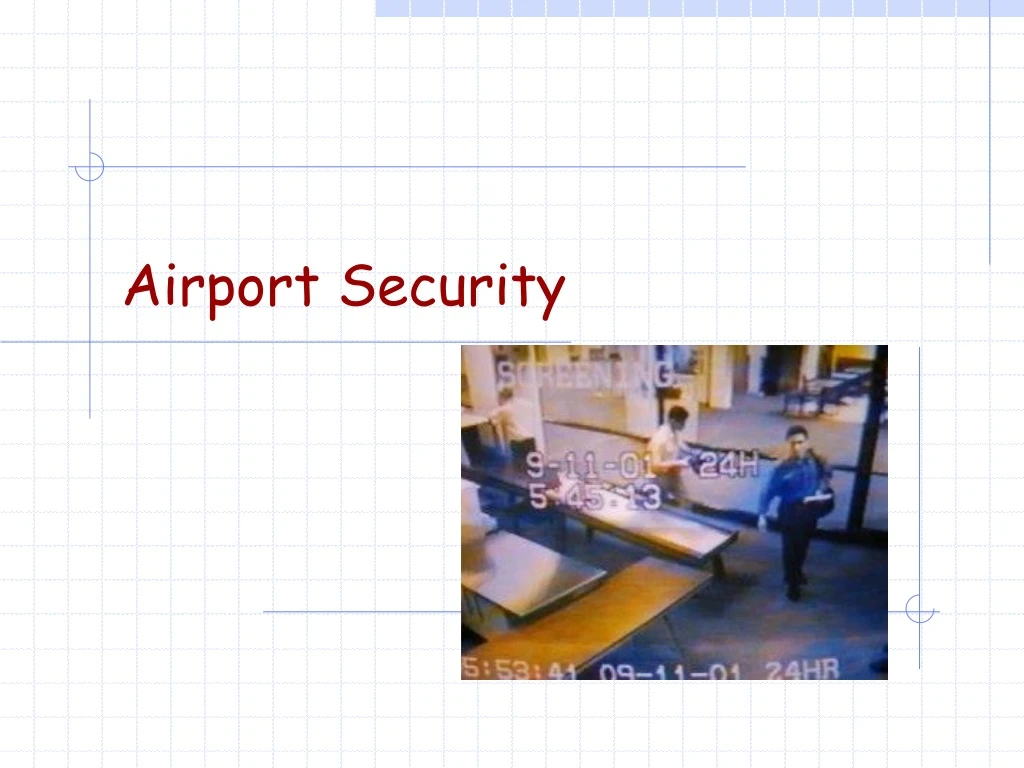
History of Airport Security • September 11, 2001 • Airport Security world changed • “Failure of Imagination” –routine security • ALL A/C ordered to “Land immediately” • @0945 over 4500 A/C IFR + 1000s VFR • LEX tasked to create plan for 30-50 A/C • 1215 nothing but Mil A/C - unprecedented • All regs RE:airport sec’ty/air opsTSA responsibility • Airports begin improvised security checklist • LEX begins flight ops 1250 September 13 • KyANG airmen/soldiers stand guard
History of Airport Security • 9/11/2001
History of Airport Security • Aviation & Transportation Security Act • Transportation Security Admin (TSA) created • Develop/enforce new guidelines • Title 49 CFR – Transportation • All regs RE:airport sec’ty/air opsTSAresponsibility • Part 107 cancelled… • 2003 US Dept. of Homeland Security (DHS) • TSA/USCG/Customs/INS combined
Airport Security Program • TSA is responsible for Airport Security • Main source for planning/design guidelines • Air Operations Area (AOA) • Secure Area • Sterile area • Security Identification Display Area (SIDA) • Exclusive Area • Risk Management/Assessment
Airport Security Program • Security Identification Display Area(SIDA)
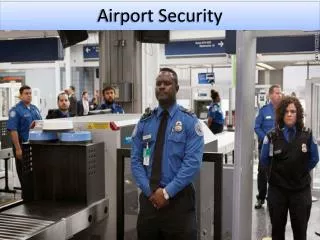
Security @Commercial Airports • Passenger Screening • Baggage Screening • Employee Identification • Perimeter Security
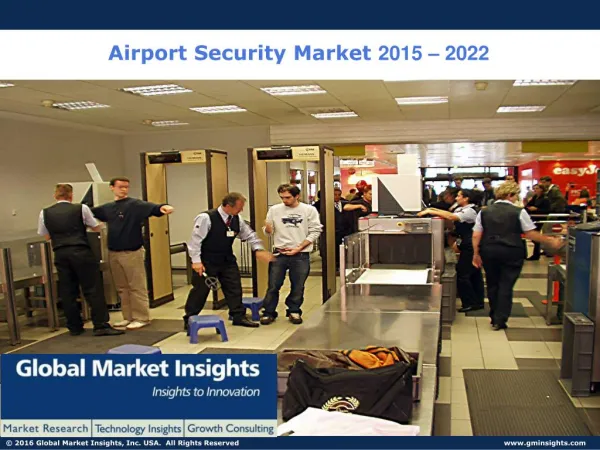
Passenger Screening • Major changes/overhaul since 9/11 • Since 2003 managed/operated by TSA • Prior by Airlines under FAA regulation • Significant impacts on planning/design • Continuously reviewed and evolving • Facilities/Equipment include: • Automatic process: magnetometer, explosive trace detection, body scanning, biometrics, etc • Manual search procedures/areas • Each airport is unique
Passenger Screening • Typical Passenger Screening Layout
Baggage Screening • Since 2003, every bag screened • “100% EDS rule”, Explosive Detection System • Like a CT scan • Magnetometer • Greatly complicates baggage handling • Usual solution – Automation (LEX) • 1st in Lobbies, then moved behind counters • Search areas “blast resistant”
Baggage Screening • Inline Screening • Initial Standalone Screening in lobbies-exposed
Employee Identification • All personnel in the Security Identification Display Area (SIDA): • Must have criminal background check/OK • Trained in facilities and security issues • Prominently display SIDA badge at all times • SIDA Facilities/Equipment needs: • Secure defined perimeter • Automatic electronic controls • Electronically controlled gates, card readers • CCTV, card reader monitoring, personnel
Perimeter Security • Airport Security Plan must have a defined perimeter • Perimeter fencing • Title 49 Part 1542 Aviation Security--Airports • Controlled access gates • Kept to a minimum • Security lighting • PSO patrols • NOT routine
Vulnerability Assessment • Important for planning and design • ID where security enhancements are needed • Intro security issues early in design • Wide range of threats/vulnerabilities • Threat-anything that may cause harm • Vulnerability-anything the bad guys can take advantage of to carry out a threat • Cannot completely eliminate • Play out scenarios • Implement protective measures/procedures
Vulnerability Assessment • Flow diagram
Special Design Issues • TSA controls most Security Design… • TSA used to post links on website for design • Mark Day – Must have need to know & get OK • Public Facilities • Limit concealment points, entry control points • Harden emergency systems
Special Design Issues • Blast Resistant Design/Mitigation
Special Design Issues • Blast Resistant Design/Mitigation
Special Design Issues • Blast Resistant Design/Mitigation • Glazing and screens • Structure – harden columns, blast walls, etc. • Mimimize “progressive collapse” • Blast Analysis Plan (BAP) • VERY specialized contractors/suppliers
Special Design Issues • Security Facilities • Fencing, gates, controls, CCTV, TSA areas, road barriers, vehicle inspection areas, etc • Joint Military Facilities • Coordinating force protection with TSA • Avoid “Security Theater” • Countermeasures to provide the “feeling” of security…but do little or nothing to achieve it • Sometimes perception is beneficial but… • Actual benefits very debatable
Special Construction Issues • All personnel get criminal background checks before access approval • Security during construction • Workers can’t go sightseeing! Areas off-limits! • Security of classified equipment • Fencing, gates, controls, CCTV, etc. • TSA screening areas • Only cleared workers handle the installation
Special Security Issues • Presidential/US VIP visit • Secure Ramp/buildings/ • Detailed access to your info • Shut down airspace/terminal/roads/comm • Foreign VIP visit • Queen of England • Emir of UAE and family • Con Air • Federal/International prisoner exchange
Security at GA Airports • TSA has not required the same level of security effort at GA airports…but… • Encourage GA airports to develop their own security initiatives • Like Commercial Airports • Awareness programs • Reporting methods • Develop security plans similar to commercial
Future Security • Changing/Increasing securityNorm • Keep up with TSA/FAA regulation changes • Airport/perimeter security technology changes • Cannot completely eliminate threats • Continuous vulnerability assessment • Watch the news • Criminals/terrorists are copycats AND innovators • Scare du jour (disease, terrorism) • Europe warning - five A/C bombings for Xmas • Failure of Imagination
Airport Security • Questions?
Airport Security • References, Links • http://www.bluegrassairport.com/ • http://www.faa.gov/ • http://www.boeing.com/boeing/ • http://www.aaae.org/ • R. Horonjeff, F. McKelvey. Planning & Design of Airports. McGraw-Hill, New York, 2010 • TSA. Recommended Security Guidelines for Airport Planning, Design and Construction. 2006 • R. Souleyrette. CE 633 Lectures • John Cassel, majordadjohn@msn.com • Mark Day, MDay@bluegrassairport.com • * - http://www.kentucky.com/2014/12/16/3596907/tsa-chief-travelers-from-some.html?sp=/99/101/