The Essentials of Viruses: Structure, Classification, and Replication Cycles
This guide delves into the fascinating world of viruses, starting with their definition as non-cellular particles containing DNA or RNA, often encapsulated in protein coats called capsids. We will explore the lytic and lysogenic cycles, the unique ways viruses replicate, and their specific types, including animal, plant, and bacterial viruses. Key examples such as HIV, polio, and smallpox will be discussed, along with critical questions related to virus behavior and the implications for infection and vaccines. **Relevant

The Essentials of Viruses: Structure, Classification, and Replication Cycles
E N D
Presentation Transcript
What is a Virus? • Virus Latin for Poison • Non-cellular particle with • DNA or RNA • 1 or 2 Protein Coats (Capsids) • May have Viral Envelope - Phospholipids • DO NOT respire or grow • ONLY function in a living cell
Questions/Discussion • Do Viruses Respire? • What type of genetic material do viruses have? • Can they have both DNA and RNA?
How are they Classified? • Shape of their protein coat (capsid) • Important in infection • Type of nucleic acid they contain • DNA or RNA • NEVER Both
How do Viruses Replicate? • The lytic cycle: 1- absorption/attachment 2- injection/entry 3- replication of viral parts 4- assembly 5- release by lysis • Results in death of host cell • Virulent virus (only lytic cycle)
Lysogenic Cycle • First steps just like lytic!! • Does NOT destroy the host cell • Nucleic acid joins the cell’s DNA. Viral DNA becomes a part of hosts cell DNA (prophage) • Could go on for years • Temperate virus (capable of using the lytic and lysogenic cycles) • i.e. HIV, cold sores, shingles
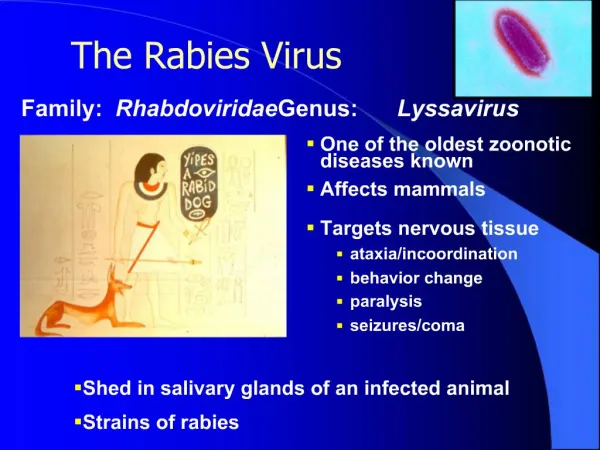
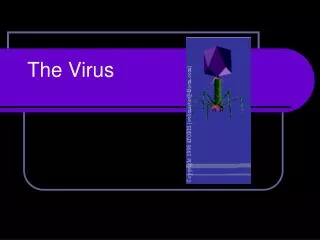
Types of Viruses • Animal viruses: Rabies, Polio, Mumps, Chicken pox, Small pox, and Influenza. • Plant Viruses: Tobacco mosaic virus (TMV), Banana streak virus, Carrot thin leaf virus • Bacterial Virus: Bacteriophages ( T1, T2, T3, and T4.) • SPECIFIC in what type of cell and what type of organism they infect • Polio – human nerve cell • T4 – only certain strains of E. coli
Different Types of Viruses • ADENOVIRUS • Respiratory infections; colds
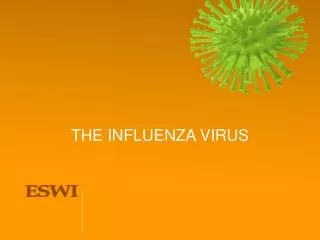
Influenza Virus • Virus that causes the flu
How the Flu virus infects you? • http://www.youtube.com/watch?v=Rpj0emEGShQ
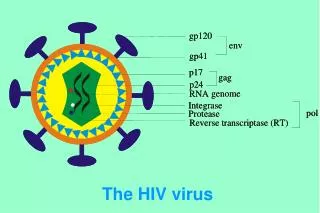
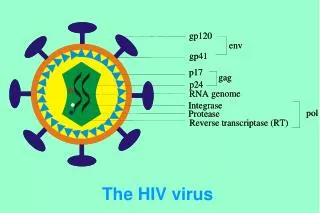
Retroviruses • RNA viruses that contain reverse transcriptase • This enzyme allows RNA to produce DNA • HIV is an example of the virus
How HIV works? • http://www.youtube.com/watch?v=mzfnxCEsck4
How Vaccines Work • http://www.youtube.com/watch?v=kwVfcc1S7IU
Questions/Discussion • What some differences between the lytic and lysogenic cycle? • What type of virus is HIV? • How is HIV one of the most successful viruses in reproducing?