
Urbananization
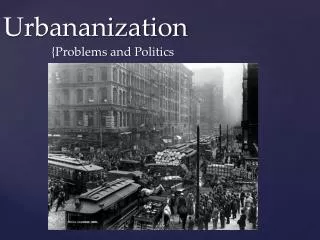
Between 1860 and 1900, New York City experienced explosive growth, from 800,000 to 3.5 million residents. This transformation saw a burgeoning middle class and stark divides between wealth and poverty. The rise of skyscrapers and mass transit highlighted the city's evolution, while social issues, including crime, sanitation problems, and political corruption, loomed large. Immigrants were often scapegoated for crime, despite its prevalence across all classes. Political machines like Tammany Hall manipulated power, promising jobs and aid in exchange for votes, reinforcing the challenges of urbanization.

Urbananization
E N D
Presentation Transcript
Urbananization {Problems and Politics
New York City: • 1860 = 800,000 people • 1900 = 3.5 million • Middle class now, but with bigger divide between rich and poor • Skyscrapers being built • Mass transit being developed (horse cars and cable cars) Rapid Growth
Upper – mansions - big business owners • Middle – suburbs - doctors, lawyers, teachers, etc. • Lower – tenements – factory labor, child labor • Tenement: multi-family, crowded apartments Class Separation
Violent Crime increases • Often blamed on immigrants, but research shows it affected all types fairly equally • Alcohol - was blamed by some for increasing crime, corrupting politics, and bringing suffering to wives and children • Sanitation – typhoid fever and cholera • Disease • Political Machines – an informal political group designed to gain and keep power Urban Problems
In exchange for votes, “party bosses” would promise people jobs, heat, food, and protection • Party bosses also controlled the city’s finances • Would often accept bribes from certain businesses to let them do things illegally or not up to code • Tammany Hall political machine • Willaim M. “Boss” Tweed • Corrupt leader • Eventually went to prison • http://www.youtube.com/watch?v=lSH1EIvTDGw • http://www.youtube.com/watch?v=YildL_ilQFY Political Machines
